From fat to fit: How the marathon changed SG International Marathon chief Leon Lai’s life - The Straits Times
In this series, The Straits Times speaks to key personalities in the Singapore sports industry. Today, the spotlight is on Leon Lai, chief executive of SG International Marathon, which is running the BYD Singapore International Marathon.
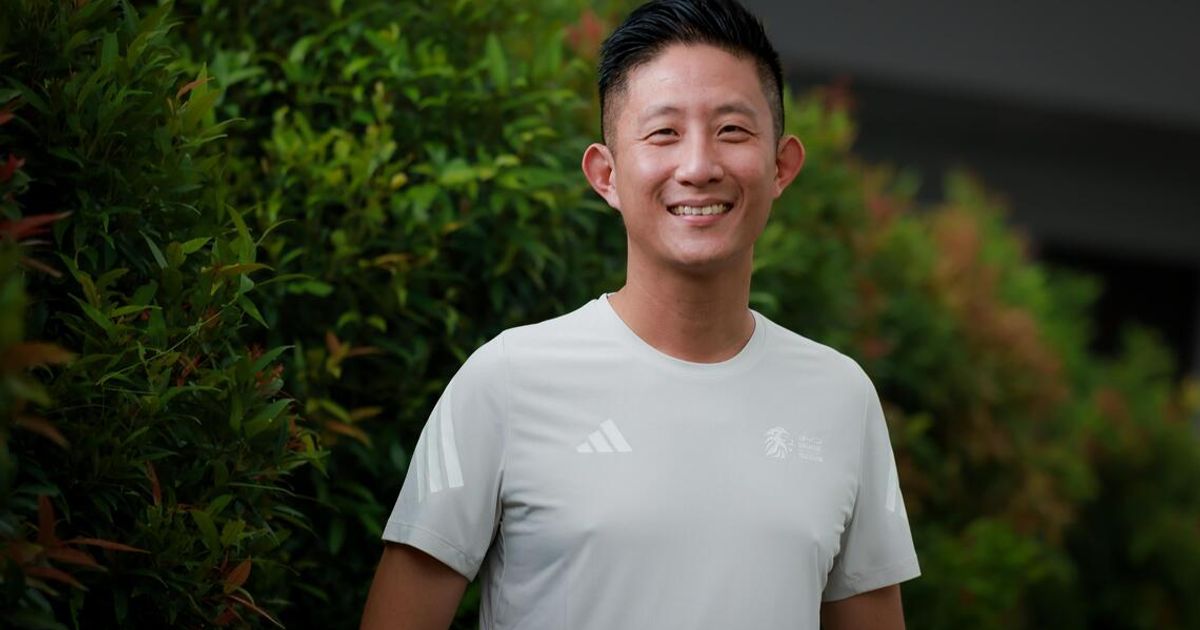
SG International Marathon chief executive Leon Lai once weighed 100kg, but lost 25kg as he was determined to keep fit.
We were first appointed by Sport Singapore last August as the official promoter for the BYD Singapore International Marathon.
My background has always been in consulting, in communications. But I’ve always had a passion for sports and... I realised that there was a very interesting way that I could contribute to the sports fraternity with my experience.
About six years ago, I weighed around 100kg – I was working a lot in Japan, it’s a country of good food and I was also very heavily involved in the alcohol industry.
A lot of my time was spent not just wining but also dining, and no surprise I expanded in size. When I came back to Singapore in December 2019, I was a father with a young child.
One day, I was sending my kid to school and I almost got into a very bad accident and for a very long time, I knew that I was getting fatter and was very unhealthy. But I refused to admit it because we didn’t want to face the truth...
SG International Marathon chief executive Leon Lai was a father with a young child when he came back to Singapore in December 2019.
That day gave me a bit of a wake-up call. I went to my family doctor, who did a couple of tests on me and he said, ‘Leon, at the rate you are going, you will get a stroke in three to four years’, and that really scared me.
For the next three months, I changed the way I ate, I started running every day, and I hate running... I am a team sports person, I play football and I don’t like running.
I remember the very first time that I ran, it was an incredibly slow pace, just a bit faster than walking. I vomited twice, and I think the hardest thing in life is to really wake up the next day and do it again.
So for three months, every day I ran 5km, rain or shine, indoors or outdoors. I changed the way I ate and I shrank from 100kg to 90kg in three weeks, and then after I went down to 80kg, and then you start getting very motivated because all of a sudden, you go from XL to M size, and you’re like, ‘Hey, I look quite good ah,’ and that’s what kept me going.
I got my health back and I fell in love with running, and now, organising a running event is what I do for a living.
My first race was the Sundown Marathon in 2023 and I did the half-marathon. My aim then was just to complete it.
Subsequently, I got hooked by going on “runcations”’ overseas and seeing how the running world was actually like, I felt inspired that I could make a difference.
The Kuala Lumpur Standard Chartered Marathon (in 2024) was my favourite and that was the moment where I believed South-east Asia had the potential. The city came alive, and you look at how communities rallied around each other, whether it’s run clubs or small businesses, the organisers allowed things to happen organically without trying to stifle and control. I think that was the most beautiful thing.
I wouldn’t use the word ‘change’ because I think that Ironman Asia has built a fantastic foundation for the Singapore Marathon over the past 10 years... what we’re aiming to do is how we can build upon those very solid foundations.
For example, we are coming up with this scheme called the Medic Runners Programme.
We have over 1,500 people this year who volunteered for the programme and we selected 238 of them. These medic runners are purely altruistic. They go through a first aid course together and participate in two training sessions with us.
We deploy them to the half-marathon and full marathon day. Their job is not to run for timing. Their job is, if at any point in time, they see someone down, they’ll be the first to act, because this is what we believe can save people’s lives.
The first thing I did was I brought back the Benjamin Sheares Bridge. As long as I receive the blessings, not just from the authorities but also from our runners, I would like Sheares Bridge to be a hallmark of our marathon.
We want to mitigate the weather conditions, but I cannot start the race earlier than 4.30am because there are certain rules that are in place to ensure that we don’t disrupt it. But what I can do is to ensure that I design the course to be as safe as possible, and that means making it mono-directional (99% of the race).
If we look at the course design this year, everything is mono-directional. Running down Marina East, where Founders’ Memorial is, to East Coast Park. All these are actually very important because it reduces congestion and it allows for medical assets to be placed over there, so the evacuation can happen if needed.
The three-day event is one of the ways that we as a first-time promoter wanted to see how that affects the participant and the runner experience.
This also required the blessings of our authorities because as much as I want our local businesses and Singaporeans to rally behind us, it cannot be at the expense of convenience.
I apologise that, on certain days, the cars cannot pass through certain areas. But it’s just for a few hours... by 2pm the roads will all be back to normal already.
At the end of the day, if we have an event that is lauded by the world, then it would all have been worth it, and I think Singapore can show that we can be one of the great running cities in the world.
Another part of our business is also about athlete representation. I know it sounds very sexy, like for us as football fans, we see football agents, but that’s not what we do.
I realised I had a very unique resource where I could help these athletes... I can free up certain mind space for them, which was hindering their development.
Shaun has broken seven national records this year and before joining us at the start of the year, he was working full time as a data analyst in a tech company.
I’ve known him for two years and knew that he had great potential and he’s one of the hardest working boys that I’ve ever met.
He has improved. However, when he went to the SEA Games in Bangkok, his competitors improved even more because they were full-time athletes.
They raced as much as they could, but Shaun couldn’t. He has 21 days of annual leave. It required a special kind of understanding from the employers for him to go and race.
For some of us who used to be athletes, we all know the importance of being in competitive environments. If you don’t, then you’re just practising against yourself.
We don’t lay claim to spotting his talent, but we gave him the opportunity to flourish, and that’s what athlete representation is to me. I wanted to be somebody who could help an athlete.
Melvyn Teoh is a sports journalist at The Straits Times.