From kachoris to tiramisu, why food is the new fuel for run clubs
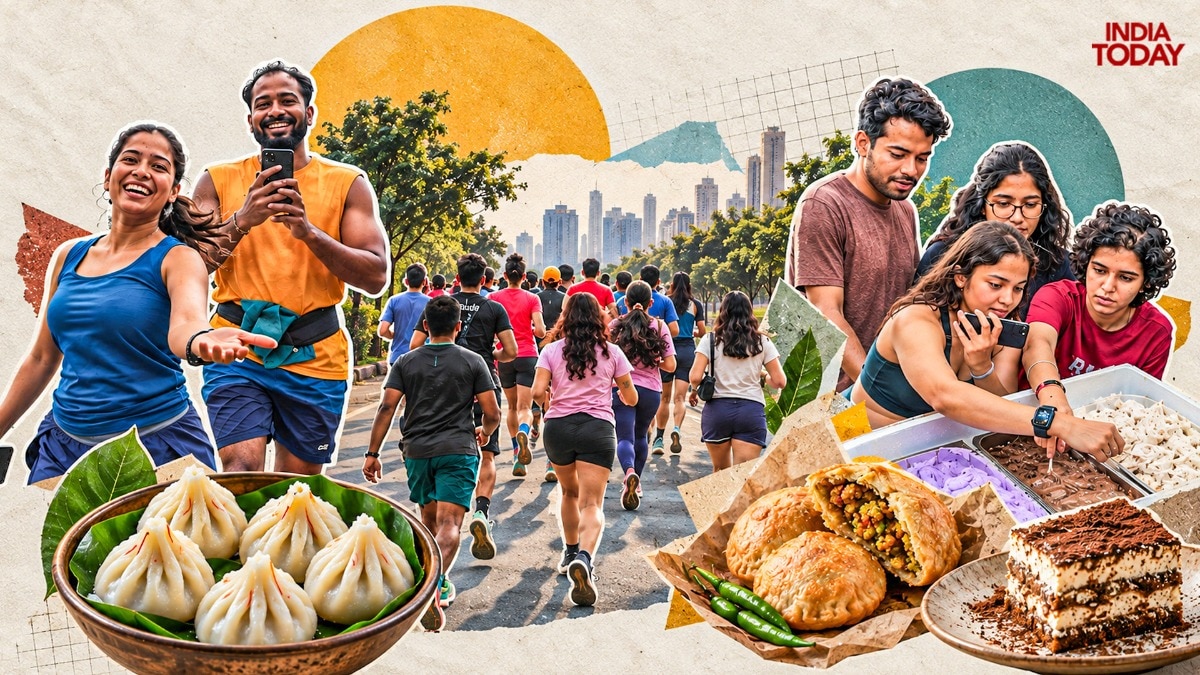
Several Indians now have a new reason to get out of bed at 5 am: a run, followed by a plate of tiramisu, or a plate of kachori.
Run clubs are no longer just about running. Across Tier 1 and Tier 2 cities, these communities are turning their weekly runs into social experiences, with coffee, cafe offerings and, increasingly, food-themed pit stops. Think kachori after a few kilometres, tiramisu at the finish line, or ice cream and modak waiting at the end of a route.
The idea is simple: run a little, eat a little, meet people and keep moving.
But as food becomes part of the running experience, a question follows: how much does the indulgence offset the exercise? From what’s on the menu to why these runs are gaining popularity - and whether they make sense from a health perspective - we bring you a generous scoop of the food-themed run clubs making noise on social media.So, what exactly happens at a food run?
There isn't one fixed format. Sometimes the food is waiting at the finish line, sometimes a cart moves along with the runners, and sometimes cafes and bakeries become pit stops along the route.
Bikaner Run Club, for instance, went crazy viral for their kachori run. The participants were seen relishing deep-fried kachoris right after running. They called it a 'Sunday cheat day' run. View this post on Instagram A post shared by Bikaner Run Club (@bikanerrunclub)At Stride Run Club in Bengaluru, you run from one bakery to another, stop for bite-sized portions of their signature offerings, get a stamp which is your entry ticket to the next bakery, and then move on to the next one. The route usually covers 5 to 7 km and has few bakeries along the way. The final stop ends with a dance party. The Bakery Hop Run is a food run organised by Stride Run Club, where participants are given a map marking the cafe pit stops. (Photo: Stride Run Club/Special Arrangement)
Sidharth Yadav, founder of Stride Run Club Bengaluru and advisor at Slay Run Club, says the idea came from his own love for cafe hopping.
"I had spent days moving from one cafe to another in Bengaluru's Indiranagar, trying different food. Combining that with running meant participants could discover new places, eat along the way and meet people at the same time."
On the other hand, Hyderabad Stride Club organises tiramisu and ice-cream runs involving participants chasing a moving tiramisu cart, with the food acting almost like a carrot dangled in front of them. For the founder, Eswar, the idea was to make running feel less intimidating and more fun. From the viral ice cream run in Hyderabad. (Photo: Hyderabad Run club/Special Arrangement)
Meanwhile, in Mumbai, the Hundredmile Society organised a similar run but gave it a local spin with modaks.
"I got inspired partly by the viral kachori run by Bikaner Run Club but wanted something that was light enough to eat during the experience and also felt connected to Mumbai, hence the choice of ukadiche modak," Karun Aranakkal, founder of Hundredmiles Society, told India Today.
Now, the key point is that these runs are deliberately not competitive, and the food is served in small portions rather than as a full meal. So, what exactly is drawing people to them?The social network
Perhaps the biggest appeal of these run clubs is that they give people somewhere to go beyond home and work. A “third space”, if you will. And for many of the people we spoke to, running is only part of the reason they keep showing up. The other is the chance to meet, chat and build a community.
Pratyush Mathur, a 29-year-old IT professional based in Pune, joined a run club for both.
“It’s a different kind of experience where early morning you are running and meet new people. For me, both running and socialising were the two things I joined these clubs for.”
And the social side can go beyond making a few running buddies.
“Everyone has a different perspective on joining these. Several people also see these communities as a space to promote their businesses, and for the most part, people take it in a positive stride and show their support as well,” Mathur said. Participants network, make friends with like-minded people and often meet beyond the runs too. (Photo: Stride Run Club Bengaluru/Special Arrangement)
Sowmya Inamdar, a 28-year-old tech lead in Bengaluru, has been into fitness for years, mostly out of passion. “Essentially, I always wanted to get started with my running journey, but for some reason, I couldn’t. Then I found something on Instagram and started trying to attend their runs. I missed a couple, but finally, one day, I showed up, and that’s how it all started.”
So, when she came across Stride’s cafe-hop run, she was intrigued. She found it a “fresh and fun change” from the usual run.
“When it comes to running, there’s often a performance-oriented mindset. But this brings in a whole new element of discovery: running from cafe to cafe, through the heart of the city, with the community, and stopping for those cute little experiences.”The social media effect
Social media also played a role in making these food runs so popular.
"Running can look repetitive online, but combine it with a food or cultural experience, and it creates a much stronger visual story. I believe Instagram amplifies the idea," Aranakkal shared.
Not everyone showing up is necessarily there to become a runner. Some are there because they saw a bizarre-looking Reel and wanted to have that social experience. Â A modak run during Ganpati in Mumbai (Photo: Hundred Mile society/Special Arrangement)
Mathur admitted that social media sparked his curiosity. He’s attended running raves, and food runs are next on his bucket list. But running and indulging in junk food at the same time, does that even make sense? Hold on, we will get to the health side a bit too.
Essentially, the appeal of the food-run format is it gives people something to do, but also something to post. Interestingly, that's how the modak run got in place too.
“This tiramisu run, and especially the kachori run, was getting famous. A few of our members sent me those clips, and suggested we try putting up something like that. So I also thought about making something which is light on the stomach and which you can eat without getting choked,” Aranakkal shared.
According to Inamdar, while social media plays a crucial role in advertising and raising awareness, people sometimes participate merely to showcase it online.Anyway, the health bit
Is running and eating together even okay? That’s the doubt most people have.
We reached out to Dr Harsh Kapoor, chairman, Metro Centre for Liver & Digestive Diseases, Metro Group of Hospitals. He said: "The intake of smaller amounts of food while participating in low-intensity exercises such as walking or even slow jogging does not normally pose any serious health risks to a normal person. Nonetheless, digestion while exercising is also affected by the nature of the food consumed and its amount."
But he cautioned that heavier foods, particularly those rich in fats and sugars (yes, kachori and tiramisu are among those), may lead to discomfort, bloating and acid reflux, especially when consumed while running. It would be better to eat just a little or even simply taste the food.
Yadav of Stride Run Club Bengaluru pointed out that consuming solid food while actually running can pose a choking risk, particularly when someone is breathing heavily. The pace and format of each run, therefore, matter.
He said food runs are largely a social experience, with people walking or slow jogging most of the time. They are not as much about fitness or nutrition. For that, people opt for regular marathons and runs.
The intensity, he said, matters too. A leisurely 5K social jog is very different from a half-marathon.
Dr Kapoor, meanwhile, adds that these food runs are generally not designed around physical performance, so consuming small amounts of calorie-dense food is unlikely to affect the performance. But that doesn’t give you a licence to overindulge.
But what is even the point of running if you’re going to end it with a plate of kachoris or calorie-loaded tiramisu? Turns out, that’s not what these runs are really about. These are not for serious runners, but for those looking for an entry point into fitness, a chance to socialise, or simply an interesting event to be part of.
"Group runs where food and community interaction play roles can take away the mental resistance that some people have towards exercising," said Dr Kapoor.
"The actual concept is to make people run. There are lots of people who want to run, but they are very shy, or maybe a little lazy or something like that. So when we implement food, we get a new audience who have never run in their life," said Eswar.
Yadav emphasised that these are fun, community-driven events that people should not be puritanical about. "Our food runs get sold out the fastest in comparison to normal runs. These are beginner-friendly, inclusive and have their own merit."
Run clubs started as a way to get people moving together. Food runs have simply added another reason to show up. But those who are very serious about their fitness and health are perhaps less likely to turn up, especially to indulge in food offerings like kachoris. Some will come for the kilometres, some for the community, some for the content and, yes, some will come for the tiramisu.- EndsPublished By: Jigyasa SahayPublished On: Sep 21, 2026 14:05 IST