
From moneylenders to merchants: the debt networks shaping Indian life in colonial Natal - IOL
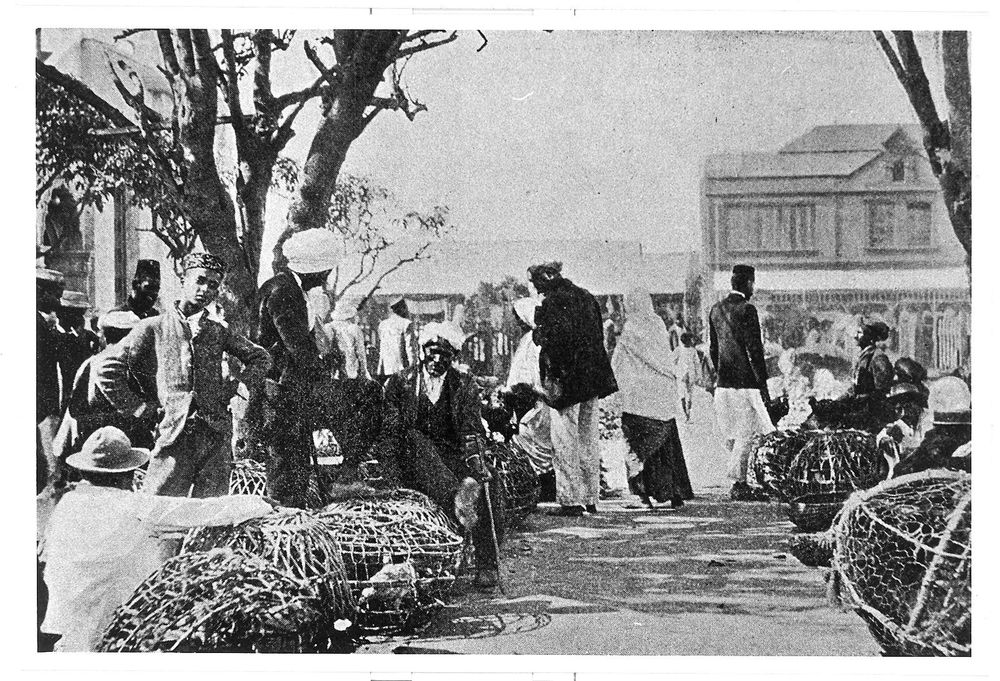
Basket sellers at the Farmers Market at the Mosque yard.
UNDER colonial rule, impoverished farmers and landless peasants in India faced high land taxes and crop failures. Desperate families borrowed money or grain from moneylenders called Sahukars, or Kandan Koduppavars, at exorbitant interest rates for survival or marriages. Often, unpayable compounding interest forced borrowers into permanent destitution, stripping them of land and livestock.
Money lending and rural debt in 19th-century India drove vulnerable villagers to leave their homeland and be recruited into the system of indenture across the colonial world.
On colonial plantations from Mauritius, Trinidad and Tobago, Guyana, Surinam, Fiji and Natal, indentured workers often remained trapped in cycles of debt and low wages, long after crossing the Kala Pani. In colonial Natal, well after their contracts ended, indentured workers were forced to re-indenture for two or three terms to escape perpetual debt bondage.
Sirdars or Kanganis, Indian foremen, overseers, and labour recruiters, acted as key intermediaries between plantation owners and indentured workers across the colonial empires.
In a study titled Sirdars as intermediaries in nineteenth-century Indian Ocean indentured labour migration by Marina Carter and Crispin Bates: “Sirdars functioned not only as collectors and agents of labour in village, ship and depot, but also as foremen, as spokesmen for gangs of labourers, and as pioneers of settlement. They acted as mahajans (moneylenders), played a key role in re-engaging bands at the end of their contracts of employment, and both resisted and assisted the planters in maintaining discipline and order within the plantations.
"Moneylending and pooling of resources became an important aspect of sirdar functions on the estate… The sirdar might also lend money (at a price) for special purposes, such as a marriage, or even to assist a labourer who needed to return to relatives in India, for a funeral or other emergencies.”
On the plantations, the agreement became an inescapable shackle of bondage where workers were forced to remain when absence from work or minor breaches brought fines and imprisonment that extended five-year contracts into 10 years of servitude.
A Farmer’s Market held in the mosque yard, in the early 1900s.
The extent of the desperation of former indentured workers was revealed by Mr Richardson, a plantation owner, in his deposition to the 1885 Wragg Commission.
“There are many Indian money-lenders in the Colony, who make it a business. They charge a most exorbitant rate of interest, sometimes two shillings and sixpence in the pound a month. The money lent to an indentured Indian cannot be recovered legally; it is only obtained from them by threats; in many cases it is never recovered at all.
"This often leads to assaults. A man here gets ten shillings a month as wages; he goes and borrows five shillings of a man, pledging his future pay; in a few months the interest exceeds the amount borrowed, and, at the end of the indenture, the man may be at the mercy of the money-lender: this sometimes has the effect of leading the man to desert (the plantation).
"In my opinion, this money-lending cannot be put a stop to; hence a great deal of unhappiness and misery is occasioned, the man not being able to purchase any little luxuries which otherwise he would have enjoyed.”
Johannesburg Market Indian Traders. Postcard 1903.
Beyond the indebtedness to the system of indenture, indentured workers, free from their contract, were forced into debt to moneylenders in order to survive.
Money lending also affected passenger Indians who came to Natal. The Indian Immigration files located in the KwaZulu-Natal Archive Repository in Pietermaritzburg hold an interesting transcript on the movements of Daya Purbhoo, who resided at 26 Doornfontein, Johannesburg.
Purbhoo stated that he was born in Uttarakhand, where he was the owner of 20 to 25 beggars of agricultural ground in the village.
He first came to Durban with his cousin Rama Bhana in 1906. Purbhoo did not go to the immigration office in Durban when he first arrived in South Africa. Two years later, he boarded a ship, having slipped off at Delagoa Bay, to go to the Transvaal in 1908, when pass permits were being burnt at the time that Mahatma Gandhi led massive pass-burning protests.
A year later, Purbhoo went to Volksrust, the border between Newcastle and Transvaal, to meet his cousin Rama Bhana. From here, Purbhoo was able to send money to India. The land that he owned in India was ancestral family land, but it was owned by money lenders who he was paying while he lived in Natal. He could not say how much money he owed, as there was no account.
Ex-indentured workers shopping at the Farmers Market.
Well before Dayal Purbhoo, the first recorded passenger Indians arrived in 1877 and travelled to the diamond fields of Griqualand West, near Kimberley in the Cape Colony, arriving in Port Elizabeth from India via Mauritius.
Maureen Swan’s Gandhi, The South African Experience, the first book to challenge the orthodox account of Gandhi in South Africa, brings a sharper focus on the relationship between the classes of the Indian community living in South Africa.
Her research speaks of the usurious relationship that existed within the trader network and their relationship with indenture and ex-indentured workers.
“In Durban, merchant traders were linked to one another and to smaller traders in an extensive network of trade, credit extension and money lending. Large merchants rented property to small traders and provided loans. For example, about 400 Natal storekeepers owed over £25 000 to MG Camroodeen in 1898.”
The vicious circle of usury was often very difficult to escape. In many instances merchants established a bondage relationship with newly freed Indian labourers, setting them up on smallholdings under conditions which were as stringent as the contract of indenture.
In 1911, a Magistrate's report noted that some tenancy agreements included the condition that the cultivator's produce must be sold to the landlord at an essentially unfavourable rate. Seminal work by Professor Goolam Vahed in a paper titled Unhappily Torn by Dissensions and Litigations: Durban's Memon' Mosque, 1880–1930, highlights that the links between the ex-indentured community and the commercial elite were well defined.
“An important point of contact was merchant marketing of Indian produce. Between the early 1890s and 1910 most Indian market gardeners and petty farmers sold their produce in the Grey Street Mosque Market. Durban's leading Indian merchants were approached by a deputation of producers who complained about the lack of marketing facilities. Some land owned by the Porbunder Madressa was then set aside by its trustees as a market ground. The fee for the use of this ground was an optional donation to the school.
"At some point after this, a mandatory fee was established, and by 1909 the Madressa's annual income from the market was estimated at £1 400 or £1 500. Ironically, Durban's main Muslim school should have been so handsomely supported by Indian cultivators, few of whom were Muslim, and whose children were sadly lacking in educational facilities.
"The question of feeding market returns into the community became the major issue which Swami Shankeranand used to mobilise popular support during his brief involvement in Indian politics between 1909 and 1910.”
There is insufficient evidence to determine conclusively how and why the moneylenders came to dominate Indian commerce in Natal and, later, the Transvaal. Maureen Swan’s research reveals that the traders, especially those who came earliest, appear to have arrived in Natal with relatively large sums of capital against which ex-indentured labourers found it increasingly difficult to compete.
Naidoo is the great-great-grandson of Camachee, indenture no 3297. He also co-authored The Indian Africans with Paul David, Kiru Naidoo and Ranjith Choonilall.

