From queues to QR codes: Keralam govt is changing the Sabarimala experience
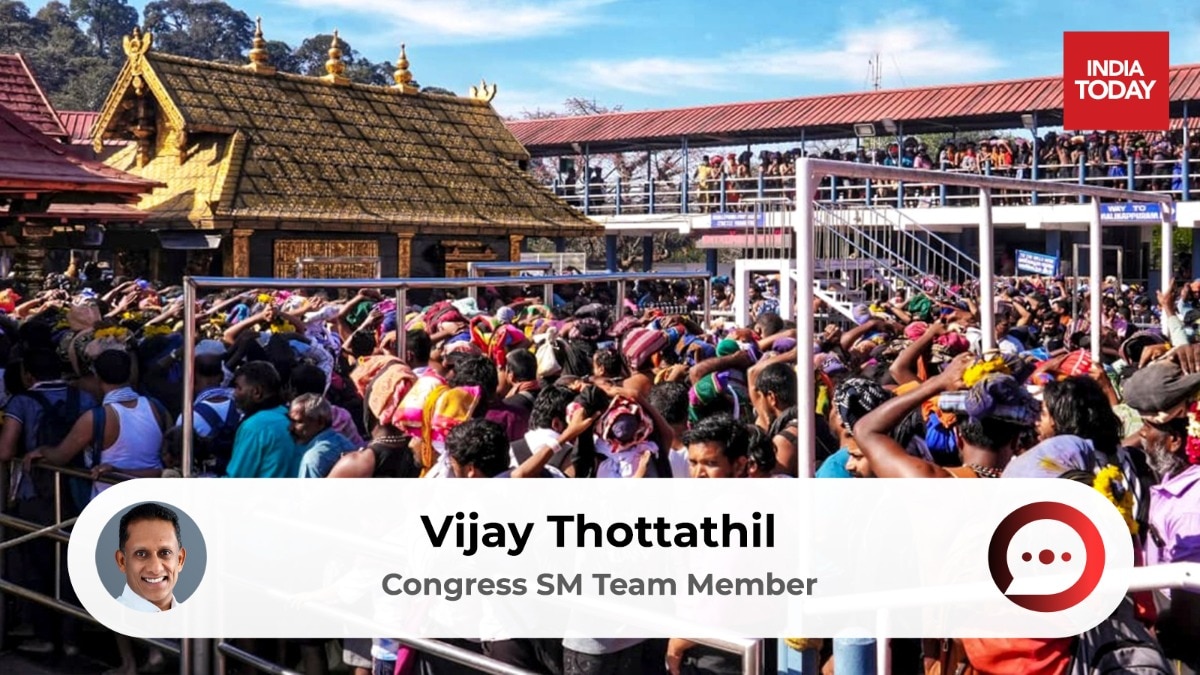
The Sabarimala pilgrimage, one of the largest religious gatherings in the country, attracts millions of devotees from Keralam and across India. But ensuring a safe, smooth and comfortable pilgrimage for such a massive number of people, particularly in a challenging forest and hill environment, requires more than routine seasonal arrangements. It calls for exceptional planning, coordination and administrative commitment.
For the 2026–27 pilgrimage season, Chief Minister VD Satheesan and the Congress-led Keralam government are all set to change this approach, with a focus on advanced planning, infrastructure improvements, technology and devotee welfare.
Instead of waiting for the pilgrimage season to begin and reacting to challenges as they arise, the Congress-led UDF government took a proactive approach by convening review meetings well in advance. CM Satheesan, along with Devaswom Minister K Muraleedharan, PWD Minister PK Basheer and other leaders, reviewed the ground realities, assessed infrastructure gaps, identified areas requiring urgent attention and formulated time-bound action plans.
The government brought together the Devaswom Board and various departments, assigned responsibilities and established a coordinated mechanism to ensure that decisions were translated into action. The CM and other ministers also maintained continuous personal monitoring through review meetings and follow-ups, ensuring that essential works progressed within the stipulated timelines.
The approach was not limited to administrative discussions by the leaders. It focussed on actual implementation, from road renovation and patchwork to free sanitation facilities, waste removal, accommodation, healthcare, transportation, security and modern digital services. The emphasis was on identifying problems before the arrival of millions of pilgrims and ensuring that necessary arrangements were in place well ahead of the peak rush.
In coordination with the Travancore Devaswom Board and various authorities, the Keralam Government has undertaken a wide range of initiatives for the 2026–27 pilgrimage season. Together, these seek to redefine the pilgrim experience by moving beyond routine seasonal arrangements and crowd management towards a more organised, proactive, accessible, safe and convenient pilgrimage.RS 15-CRORE ROAD RENOVATION, INCREASED BUSES FOR IMPROVED JOURNEY
For millions of Ayyappa devotees, the pilgrimage begins long before they reach Sannidhanam (Temple). The difficult terrain and roads leading to Sabarimala make transportation and road safety particularly important.
The VD Satheesan-led government has given considerable attention to road infrastructure with a Rs 15 crore renovation project on the Chalakayam stretch, road repairs, patchwork, improvements to dangerous bends and enhanced road-safety measures.
The Kerala State Road Transport Corporation (KSRTC) has deployed 461 buses for pilgrim transportation. The Safe Zone initiative covers nearly 400 km of roads leading to Sabarimala, with round-the-clock patrols, emergency assistance, vehicle recovery and mechanical support.
These measures seek to make the journey safer and more convenient for devotees travelling to the hill shrine of Swamy Ayyappa.CONVENIENCE FIRST FOR DEVOTEES: FREE BATHROOMS AND TOILETS
Sanitation and accessibility have turned out to be the important areas receiving attention this season. Toilet and bathing facilities are being made available free of charge at key pilgrimage locations, removing the burden of user charges on devotees.
The environmental challenge is equally significant, given the millions of people who visit Sabarimala and the ecological sensitivity of the surrounding region.
In a major environmental clean-up initiative, the Clean Kerala Company removed 239 tonnes of accumulated waste from Sannidhanam, Pampa and Nilakkal in just one month, addressing years of accumulated pollution and strengthening environmental protection around the sacred pilgrimage centre.
Special attention is also being given to protecting the Pampa River and maintaining cleanliness along the trekking routes.EARLIER LONG QUEUES, NOW SHIFT TO QR CODES: ARAVANA PAYASAM GOES DIGITAL
Long queues for the most popular Aravana Payasam — a traditional, thick, and sweet kheer served as the sacred prasadam — have traditionally been a challenge during peak pilgrimage days. This season, technology is being introduced to facilitate faster distribution.
Six QR-code-enabled self-vending machines are being introduced to facilitate faster Aravana distribution through digital payments. Additional distribution counters have been opened, while a buffer stock of 50 lakh Aravana containers is being maintained to prevent shortages.
The Devaswom Board is also exploring postal delivery, so devotees can receive Aravana at their homes.
The introduction of digital vending facilities is part of a wider effort to make essential services more accessible and reduce the time devotees spend waiting.AUTHORITIES ARE WORKING FOR MORE ROOMS, BETTER ACCOMMODATION
Accommodation is another area where changes are being introduced by the authorities. Online room-booking capacity has increased from 190 to 500 rooms, while the removal of refundable security deposits makes reservations simpler.
OTP verification and linking room bookings with Virtual Queue passes are also being introduced to prevent bulk booking and unauthorised resale.
A new 60-room guesthouse has been planned near Sannidhanam, while additional resting arrangements are being provided at Nilakkal and other transit centres. A shelter facility at Nilakkal can accommodate approximately 6,000 devotees during peak rush.
These measures are aimed at addressing the concerns of ensuring that devotees have access to adequate accommodation and resting facilities during the peak rush and throughout the season.HEALTHCARE AND EMERGENCY RESPONSE TO PROTECT EVERY SABARIMALA PILGRIM
The physical demands of the uphill trek make healthcare and emergency response essential components of pilgrimage management.
Around 22 emergency medical units are being arranged along pilgrimage routes and transit points. Hospitals at Pampa and Sannidhanam have commenced operations, with dedicated cardiology facilities at Neelimala and Appachimedu.
Ambulances, including an off-road ambulance for forest routes, CPR facilities and trained volunteers are being deployed to respond to medical emergencies.
These arrangements are particularly important considering the physical demands of the uphill trek and the need to provide timely medical assistance to devotees along the route.POLICE AND SECURITY: A COORDINATED SAFETY NETWORK FOR AYYAPPA DEVOTEES
With millions of devotees expected to visit the shrine in the coming days, security and crowd management require coordination across multiple locations.
Security arrangements have been strengthened with dedicated operational zones covering Sannidhanam, Pampa and Nilakkal. A newly constructed police barracks at Nilakkal can accommodate more than 700 personnel.
CCTV surveillance, patrolling, crowd-control barricades, intelligence monitoring and temporary police stations are part of the security arrangements.
A wrist-tag initiative to help reunite children separated from their parents is another welcome measure, particularly in a pilgrimage environment where large crowds can make it difficult for families to stay together.AI, DRONES, SMART SURVEILLANCE: CONGRESS'S TECH-DRIVEN SABARIMALA VISION
Perhaps one of the significant changes for the 2026–27 pilgrimage season is the increasing role of technology in managing the movement and safety of devotees.
The expansion of online room reservations, digital payments, QR-based Aravana vending and the proposed AI-enabled crowd-management system reflect a move towards modern administration. The Sabari Portal and WhatsApp-based information services also help pilgrims locate essential facilities, including toilets, medical assistance, drinking water and parking.
One of the significant technology initiatives is the introduction of AI-assisted crowd monitoring and security arrangements through the Travancore Devaswom Board and Keralam Police. The initiative aims to move beyond conventional manual crowd management and introduce real-time monitoring and predictive analysis.
AI-enabled surveillance cameras are intended to monitor crowd density at important locations, identify congestion and potential crowd bottlenecks, and provide information to police officers for timely intervention.
Predictive crowd management will involve analysing historical pilgrim footfall, identifying peak arrival periods and predicting crowd build-up at Pampa, Nilakkal and Sannidhanam. This is expected to support better deployment of police personnel.
Drone-based surveillance will help monitor crowd movement across difficult terrain, support security surveillance and provide additional visibility over congested areas.
Technology is also being considered for missing-person identification. AI-assisted identification and tracking of missing pilgrims could help locate children and elderly devotees separated from their families.
Smart traffic and parking management will involve monitoring vehicle movement, supporting parking management at Nilakkal and Pampa, and helping police manage traffic congestion.
An integrated monitoring and command centre is also envisaged to bring information from different monitoring points together, share alerts with police personnel and improve coordination between departments.
The AI initiative was discussed through a joint workshop involving the Travancore Devaswom Board and Keralam Police in June 2026. The system was planned for phased implementation, with AI-enabled cameras being reported as part of the current season's security arrangements.KERALAM'S SUPPORT BEYOND DARSHAN WITH FOOD AND PILGRIM WELFARE
A comfortable pilgrimage experience also depends on facilities beyond the temple and the trekking route.
Free food facilities are being arranged at Sannidhanam, Pampa and important transit centres. Around-the-clock pilgrim resting centres are being established across Pathanamthitta district, with accommodation, food, drinking water and sanitation.
For devotees arriving by air, a dedicated 5,000-square-foot pilgrim facilitation centre at Cochin International Airport will provide assistance, information and KSRTC connectivity.
The idea is to extend support to devotees from the moment they arrive in Keralam and throughout their journey to Sabarimala.A LONG-TERM VISION OF KERALAM. NOT ONE PILGRIMAGE SEASON WORK
Perhaps the most significant aspect of these initiatives is the longer-term vision.
CM Satheesan has announced plans to develop Sabarimala and associated pilgrimage centres along the lines of the Tirupati model, with a larger programme of infrastructure and pilgrim-facility improvements to begin after the current season.
This indicates an intention to move from seasonal arrangements towards sustained infrastructure development.
The focus, therefore, is not limited to addressing the immediate requirements of the 2026–27 pilgrimage season. It also extends to creating better facilities and infrastructure for devotees in the years ahead.THE BIGGER PICTURE IS THAT A GOVERNMENT IS COMMITTED TO AYYAPPA DEVOTEES
What makes these initiatives noteworthy is not any single project. It is a combination of road infrastructure, sanitation, healthcare, transportation, accommodation, security, digital services and environmental protection being brought together under a coordinated administrative effort.
More importantly, it reflects a government that chose to plan ahead, identify challenges, take timely decisions and continuously monitor implementation rather than rely on last-minute arrangements.
Sabarimala is not just a temple destination. It is a complex pilgrimage ecosystem involving millions of people, difficult terrain, environmental sensitivity and enormous logistical challenges. Every devotee, irrespective of where they come from, deserves dignity, safety, comfort and proper facilities throughout their spiritual journey.
The Congress-led Keralam Government is committed to making the Sabarimala pilgrimage a truly memorable experience for every devotee. From the moment they begin their journey until they return home, the government is pledged to provide the utmost care, safety, support and facilities.
A pilgrimage should be remembered for its spiritual fulfilment, not for the hardships of reaching the destination.
That is the vision behind these initiatives: a Sabarimala where devotion comes first, and the government stands firmly behind every pilgrim.
Swamiye Saranam Ayyappa!- Ends(Views expressed in this piece are those of the author and do not necessarily reflect the views of the publication)Must Watch
Vijay Thottathil is the President of INCAS Dubai – Kozhikode District Committee. He is also associated with the Indian National Congress. INCAS (Indian Cultural & Arts Society) is a Congress-affiliated organisation in the Middle East, working to strengthen the party's presence and connect with the Indian diaspora.