From San rock art to Zulu history: Five KZN heritage experiences - IOL
KwaZulu-Natal is often associated with its beaches, mountains and warm subtropical climate, but beyond its popular holiday destinations lies a rich history that spans thousands of years.
From ancient San rock art and some of the world's earliest evidence of modern human behaviour to the history of the Zulu kingdom, the struggle against apartheid and the arrival of Indian indentured labourers, the province offers countless opportunities to explore South Africa's past.
For travellers looking to experience more than the usual tourist attractions, these heritage sites offer a glimpse into the people, cultures and events that helped shape KwaZulu-Natal.
The uKhahlamba-Drakensberg is not only one of KwaZulu-Natal's most spectacular landscapes, but also an important record of human history.
The mountain range contains thousands of examples of San rock art spread across caves and rock shelters, providing insight into the lives, beliefs and traditions of communities who lived in the region centuries ago.
Sites such as the Kamberg Nature Reserve's Game Pass Shelter and the Main Caves at Giant's Castle allow visitors to see some of this heritage up close.
Further north, Sibhudu Cave near KwaDukuza provides an even older window into humanity's past. The Middle Stone Age archaeological site contains evidence associated with early modern human behaviour, including ancient technology, shell beads and evidence of plant use.
For anyone interested in archaeology and human history, these sites offer an opportunity to connect with a past that stretches far beyond recorded South African history.
KwaZulu-Natal is closely connected to the history of the Zulu kingdom, and several sites across the province preserve this heritage.
In KwaDukuza, visitors can explore the King Shaka Memorial, which commemorates King Shaka kaSenzangakhona, one of the most influential figures in Zulu history.
The Ondini Royal Complex and KwaZulu Cultural Museum in Ulundi provide another perspective on the kingdom. The site is associated with King Cetshwayo kaMpande and includes exhibitions exploring Zulu royal life, clothing, weapons, beadwork and cultural traditions.
The eMakhosini Valley, also known as the Valley of the Kings, is another significant location. The area is closely linked to the early Zulu monarchy and provides insight into the kingdom's political and cultural history.
For a more immersive experience, cultural villages around the Eshowe area offer visitors the chance to learn about traditional Zulu customs, crafts, food and forms of cultural expression.
KwaZulu-Natal also played an important role in South Africa's long struggle for democracy.
The Inanda Heritage Route in Durban brings together several significant sites connected to the country's political and social history.
At the Ohlange Institute, founded by John Langalibalele Dube, visitors can learn about the institution's role in South African education and politics. The site is also remembered as the place where Nelson Mandela cast his vote during South Africa's first democratic election in 1994.
Nearby, the Phoenix Settlement is associated with Mahatma Gandhi, who established the community in 1904 while developing ideas around Satyagraha.
The route also includes Inanda Seminary, one of the country's historic institutions for girls.
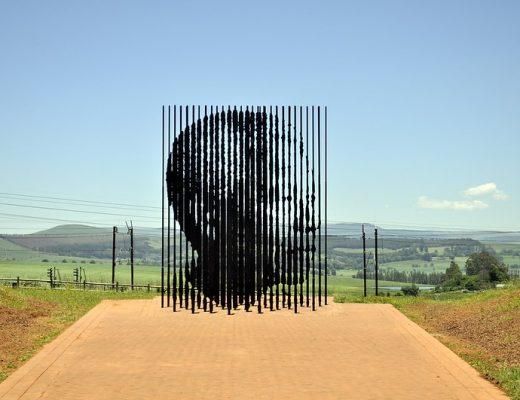
Further inland, the Nelson Mandela Capture Site near Howick commemorates the moment Mandela was arrested on August 5, 1962. Today, visitors can explore the museum and see the striking steel sculpture that forms the centrepiece of the site.
The Luthuli Museum in Groutville offers another important chapter in the province's liberation history. The museum is located at the former home of Chief Albert Luthuli, who became the first African recipient of the Nobel Peace Prize in 1960.
The KwaZulu-Natal Battlefields Route takes visitors through landscapes where some of the most significant military conflicts in South African history took place.
Isandlwana is remembered for the dramatic British defeat during the Anglo-Zulu War in 1879, while nearby Rorke's Drift became famous for the defence of a British mission station during the same conflict.
The province's military history extends beyond the Anglo-Zulu War. At Spioenkop, visitors can explore the site of a major battle during the Anglo-Boer War.
The area is also connected to several prominent historical figures, including Winston Churchill and Mahatma Gandhi.
In Dundee, the Talana Museum combines military history with exhibitions covering the region's mining, agricultural and cultural development.
For visitors interested in history, the Battlefields Route offers an opportunity to experience these events in the landscapes where they unfolded.
In Durban's Chatsworth area, the Sri Sri Radha Radhanath Temple of Understanding is one of the province's most recognisable cultural and religious landmarks.
KwaZulu-Natal's heritage is also deeply connected to the history of South Africans of Indian descent.
In Durban's Chatsworth area, the Sri Sri Radha Radhanath Temple of Understanding is one of the province's most recognisable cultural and religious landmarks. Its distinctive architecture, ornate interiors and Hindu traditions make it a notable stop for visitors exploring the area's diverse heritage.
Durban's 1860 Heritage Centre provides another important connection to the province's Indian history, documenting the arrival of Indian indentured labourers in Natal in the 19th century.
Visitors can also explore Victoria Street Market, where Indian and African influences come together through food, spices, clothing, crafts and other goods.
Together, these sites tell a broader story about migration, identity and the communities that helped shape modern KwaZulu-Natal.
KwaZulu-Natal's heritage stretches across thousands of years and encompasses many different communities, cultures and historical periods.
Whether exploring ancient rock paintings in the Drakensberg, learning about the Zulu monarchy, visiting sites connected to the struggle for democracy, walking through historic battlefields or experiencing the province's Indian heritage, travellers can discover a side of KwaZulu-Natal that goes far beyond its beaches.
For those willing to look beyond the usual tourist itinerary, the province offers something even more valuable: the opportunity to understand the stories that helped shape South Africa.