Fuel price fears for Australia as global buffers dry up
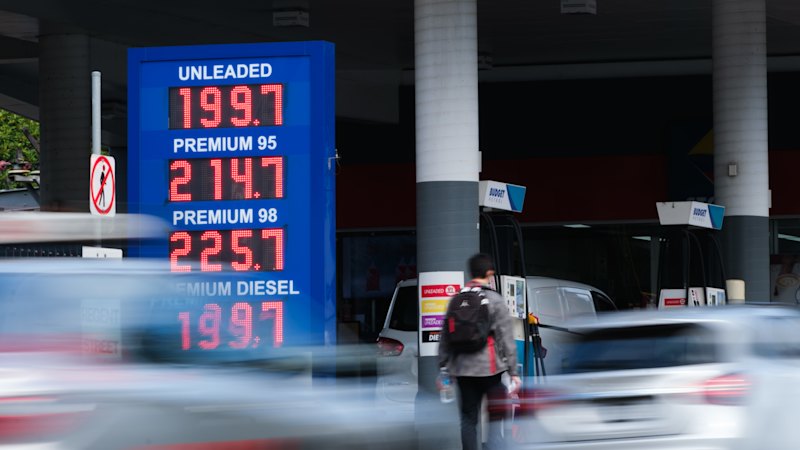
Australian fuel companies are warning that global supply buffers that have shielded motorists from the full impact of the Iran war are rapidly depleting, raising the risk of steeper price rises at service stations if international inventories continue to tighten.
For months, governments and energy companies worldwide have been burning through their stockpiles of crude oil and refined fuels to make up for shipments disrupted by the closure of the Strait of Hormuz.
The war in Iran choked fuel supplies and pushed up the cost of petrol and diesel worldwide.Oscar ColmanThese emergency releases, paired with higher output from oil producers and refineries in the Americas, initially helped prevent the Middle East supply shock from cascading into a bigger energy crisis. Elevated fuel costs and demand-saving measures such as work-from-home mandates also curbed consumption significantly in many price-sensitive countries.
But with the Iran conflict entering its eighth month, Australian fuel industry leaders are becoming increasingly concerned by the speed at which global reserves are diminishing, with no major supply improvements on the horizon.
“The buffers are no longer there to the same degree,” said Malcolm Roberts, head of the Australian Institute of Petroleum, which represents Ampol, BP, Mobil and Viva Energy.
The International Energy Agency estimates global inventories have plummeted by 507 million barrels, equivalent to about 2.8 million barrels a day, since the conflict began.
“Looking ahead, those industry and government stocks are much lower than where they were,” Roberts said.
Recent developments in the Middle East have added to the strain, as drone strikes forced the suspension of a major crude pipeline being used by Saudi Arabia, one of the world’s biggest oil exporters, to bypass attacks in the Strait of Hormuz, choking off yet another route for oil to reach global customers.
A convergence of other global pressures also clouds the outlook: China is preparing to step up crude imports after months of muted demand, while Ukrainian attacks have severely crippled Russia’s oil-refining sector, which typically accounts for 4 per cent of the world’s capacity.
Now, US President Donald Trump is weighing a possible ban on American diesel exports, which could ease US fuel prices ahead of the midterm elections but send global prices sharply higher.
Matt Halliday, chief executive of Australian fuel giant Ampol, described the geopolitical outlook as “extraordinarily difficult to read”.
“There are many unknowns,” Halliday said on Wednesday. “The reality is that markets can shift quickly, shipping routes can be disrupted, and decisions made from afar can affect availability of supply and prices.”
Australia is particularly exposed to global fuel shocks because of its heavy reliance on fuel imports. Following a series of domestic oil refinery closures over the past decade, Australia now imports more than 80 per cent of its petrol, diesel and jet fuel, leaving local pump prices closely tied to swings on volatile global markets.
Australian motorists are already starting to pay more. The average price of regular unleaded has surged nearly 40 per cent since July to above $2.30 a litre, while diesel is up nearly 60 per cent over the same period to $2.88.
Industry leaders, however, say the risk of an actual supply shortage in Australia remains minimal.
Roberts said domestic fuel suppliers had demonstrated this year that they could maintain adequate contracted imports and secure additional shipments when required, despite difficult conditions in global markets.
Importers have diversified their supply chains, sourcing fuel from five continents, while the Albanese government had provided critical assistance through an underwriting scheme designed to help them secure available cargoes.
Australia’s fuel stocks also remained in a “pretty healthy” position, Roberts added, with more than a month’s worth of petrol and diesel still stashed in reserve, even as contracted shipments continue arriving.
“We don’t see a loss of supply in Australia, but we are fully exposed to the price movements – and diesel, in particular, has been going up quite sharply,” he said. “If there is any further disruption to [global] supply, then that problem is going to become all the greater.”
The Business Briefing newsletter delivers major stories, exclusive coverage and expert opinion. Sign up to get it every weekday morning.
You have reached your maximum number of saved items.
Remove items from your saved list to add more.