Gandhi taught us: Dissent and disagreement are essential to the health of democracy - The Indian Express
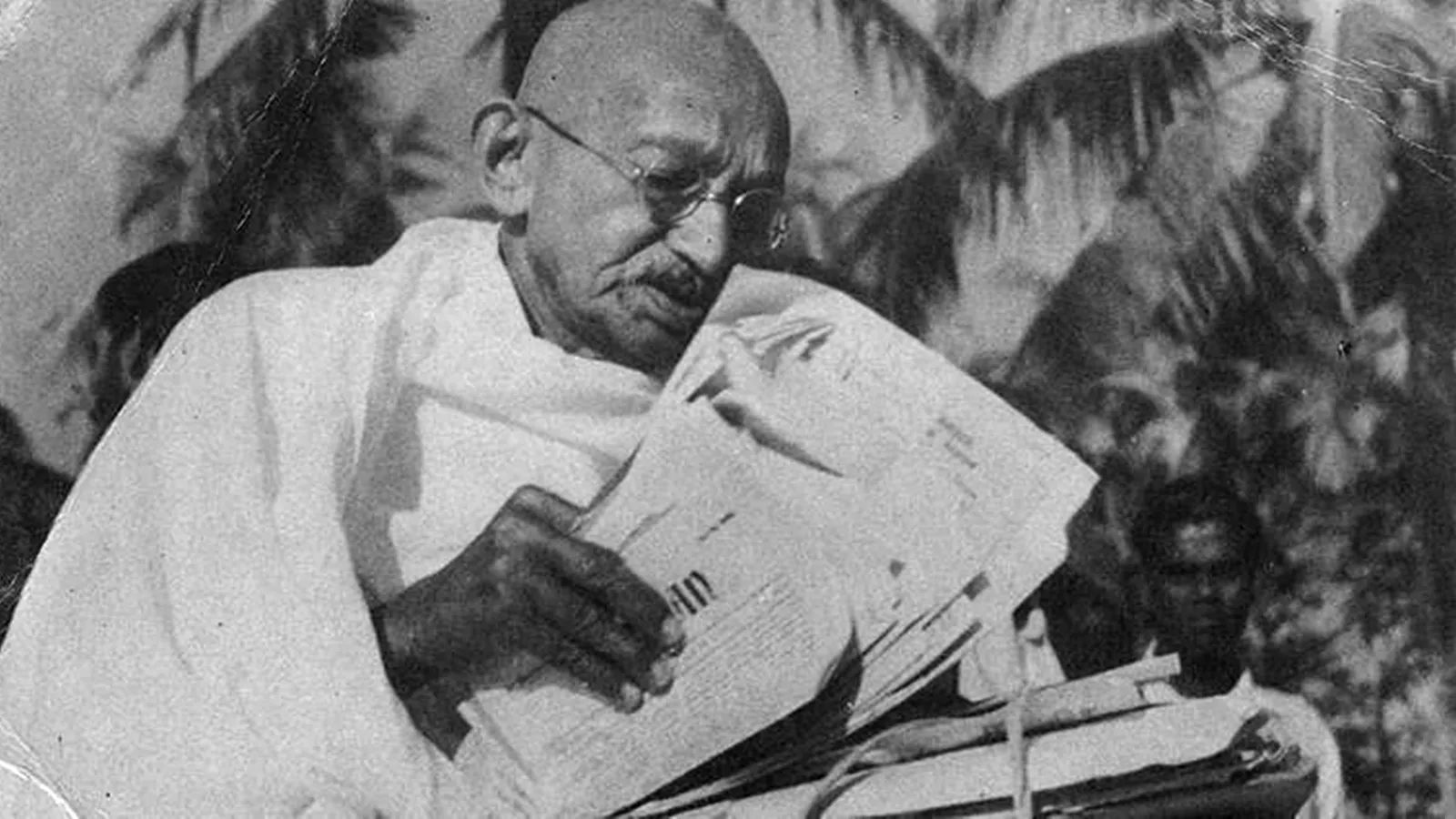
During his tenure as vice chancellor of the University of Delhi, amongst the most cherished of innovations undertaken by the first author was a charkha-spinning certificate programme at the Gandhi Bhawan of the university. Placed in the university as a living symbol rather than a museum object, it invited students to sit down, spin cotton, and experience an idea that had shaped India’s freedom movement. What seemed, at first, like a historical curiosity soon became an unexpected experiment in mindfulness. Students returned to the charkha between classes, patiently learning to draw and spin thread. Many spoke of improved concentration; some shared that the rhythmic motion helped ease migraines and anxiety, while others simply discovered the rare comfort of slowing down in an increasingly hurried world.
Perhaps that is how Generation Z met Gandhi — not through memorising dates in a textbook, but through the quiet revolution of turning a spinning wheel.
The charkha was never merely a tool of economic self-reliance. For Gandhi, it represented discipline, self-mastery, dignity of labour, and the belief that meaningful change begins with the individual before it transforms society. Nearly a century later, its relevance appears surprisingly contemporary. In an age of endless notifications and shrinking attention spans, the act of spinning thread became a lesson in presence. It demonstrated that Gandhi’s ideas are not preserved by ritual alone; they survive when they are experienced.
This Gandhi Jayanti arrives at another defining moment for India’s young citizens. Campuses and public spaces across the country have witnessed students and ordinary citizens gathering to voice concerns over examinations, institutional accountability, recruitment, and questions of governance. The issues differ, the voices are diverse, and the debates are often intense. Yet beneath them lies a common democratic impulse: The desire to be heard.
Rather than asking who is right and who is wrong, Gandhi would perhaps have asked a different question altogether: What is the moral character of our disagreement?
That question remains remarkably relevant.
Modern democracies often treat protest as an interruption of normal political life. Gandhi viewed it differently. For him, peaceful dissent was not a breakdown of democracy but one of its highest expressions. Satyagraha was never simply resistance against authority; it was resistance guided by truth, discipline, and respect for the humanity of one’s opponent.
This distinction is important today. Public disagreement has become increasingly immediate. Social media rewards outrage before reflection, and political conversations often become contests of victory rather than opportunities for understanding. In such an environment, Gandhi reminds us that the strength of an argument lies not in its volume but in its integrity.
A placard, a march, or a sit-in does not become Gandhian merely because it is peaceful. It becomes Gandhian when it seeks to persuade rather than humiliate, to awaken conscience rather than deepen hostility.
Few spaces illustrate this tension more vividly than the university. Institutions of higher learning are often imagined as places where knowledge is transmitted, examinations are conducted, and degrees are awarded. Gandhi imagined something far richer. Education, in his view, was the cultivation of character alongside intellect to help hone and bring forth the best that resides in a learner.
The tension between education and character was not merely theoretical for Gandhi; it shaped one of the deepest conflicts of his own life. That conviction was tested most painfully within his own home. As a teenager, his eldest son, Harilal Gandhi, desperately wanted to go abroad for higher studies, believing education offered the path to an independent future. Gandhi refused, convinced that service, discipline, and moral development mattered more than prestigious credentials — a disagreement that became one of the deepest personal struggles of his life.
When students raise questions about fairness, transparency, or institutional processes, they are participating in a tradition that has long connected education with citizenship. Equally, universities carry the responsibility of responding not merely through administration but through dialogue. The classroom and the street need not be opposing worlds; both can become spaces where democratic values are learned and practiced.
The recent wave of student-led mobilisations reflects anxieties that extend beyond individual grievances. They reveal a generation deeply invested in the credibility of public institutions and the promise that merit and justice should remain meaningful ideals.
Gandhi placed extraordinary moral expectations upon those who challenged power. Less often acknowledged is the fact that he placed equally high expectations upon those who exercised it. Authority, in his philosophy, derived legitimacy not from force alone but from ethical conduct.
Democratic institutions are strongest when they possess the confidence to listen. Listening is frequently mistaken for weakness; Gandhi considered it a form of courage. A government, a university, or any public institution does not diminish itself by engaging with criticism. On the contrary, its credibility grows when accountability is accompanied by openness and restraint.
Recent public discussions surrounding police responses, negotiations, and the management of demonstrations have therefore raised questions that are larger than any single protest. They invite reflection on how democracies preserve both public order and the constitutional space for peaceful dissent.
Perhaps Gandhi’s most radical idea was that truth is not a possession. No individual, movement, or institution enjoys a monopoly over it. Truth must be pursued collectively through humility, dialogue, and a willingness to revise one’s own position.
This is especially significant in an era shaped by instantaneous information. Rumours travel faster than facts, edited videos circulate before verification, and public opinion often forms before evidence emerges. Gandhi’s insistence on satya asks something demanding of all of us: To resist the temptation of certainty until truth has been carefully sought.
That discipline belongs equally to protesters, public officials, journalists, educators, and ordinary citizens. Democracy cannot flourish if every disagreement becomes a battle between absolute certainties.
Gandhi did not leave India with a finished manual for democracy. He left a method, a way of engaging with conflict that placed ethical means above expedient ends. His legacy is therefore not contained in statues or anniversaries but in everyday civic life: In how we speak to those who disagree with us, how institutions respond to criticism, and how citizens balance conviction with compassion.
The measure of a republic is not the absence of protest. It is the presence of trust that disagreement can be expressed peacefully, heard fairly, and addressed with dignity.
On this Gandhi Jayanti, perhaps the spinning wheel offers one final metaphor. It moved not through force, but through patient, continuous motion. Democracies, too, are sustained not by moments of spectacle but by the quiet labour of truth, dialogue, accountability, and mutual respect. Gandhi’s conversation with India remains unfinished. It continues wherever citizens choose conscience over contempt, and wherever institutions answer dissent not with silence, but with the confidence to listen.