Garibaldi Is Free, But What Are the Real Costs?
Garibaldi Is Free, But What Are the Real Costs?
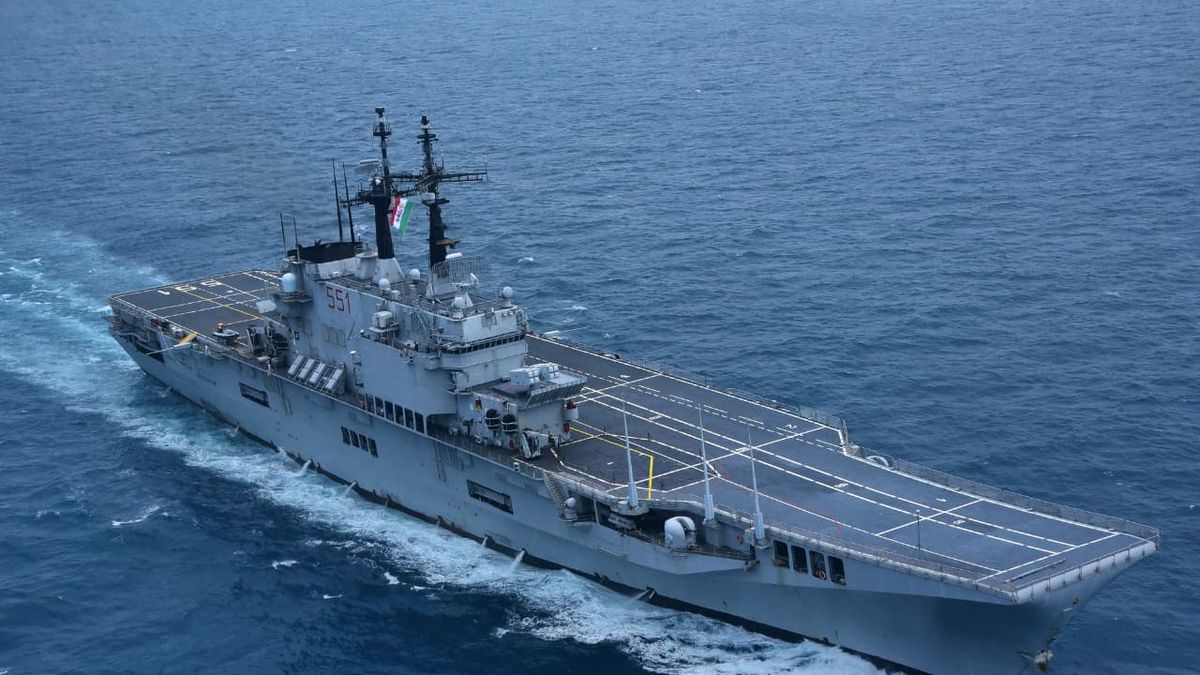
BEKAS Italian Navy aircraft carrier Giuseppe Garibaldi, 41 years old, docked at Tanjung Priok, North Jakarta, on Friday morning (18/9/2026).
The handover and renaming to KRI Sriwijaya are scheduled for September 24. The ship was received without a purchase price.
However, the word “free” only answers half the question: how much was paid at the time of delivery?
The other half—how much will be spent afterward—has not been fully disclosed publicly.
The Indonesian House of Representatives Commission I approved accepting the grant on July 20, 2026, and the plenary session ratified it the following day, with the ship’s value recorded at 54,022,426.67 euros.
The approval came with notes regarding operational readiness, budget continuity, technology transfer, and strengthening the defense industry.
This article does not intend to judge Garibaldi as a burden or asset.
It raises a more useful question for taxpayers: does every rupiah spent after receiving the grant translate into corresponding capabilities and public benefits?
The economic calculation of this grant is clearest from the Italian side.
An Italian Senate and Chamber of Deputies Study Service document (No. 649, February 27, 2026), summarizing the Defense General Staff report, estimates the ship’s value at about 54 million euros and states the transfer does not add a burden to the national budget.
Maintaining the ship as a reserve cost about 5 million euros in 2025, primarily for electricity, guard duties, security, and minimal operations to keep the ship habitable and intact.
If not transferred, the process of disposal and scrapping is expected to take at least 24 months and cost around 18.7 million euros.
According to the document, the grant was the most economically advantageous option.
The same document places the grant within broader defense and industrial cooperation, exemplified by opportunities for the Italian industry: six submarines (around 480 million euros), M-346 trainer jets (around 600 million euros), and three maritime patrol aircraft (about 450 million euros).
Defense diplomacy typically operates this way; the question is, what’s the return for Indonesia?
The document also notes that the ship has reserve status since December 31, 2024, as its operational cycle is deemed finished, and it will be delivered without functioning weapons systems.
Therefore, five things must be distinguished: acquisition price (zero), retrofit (modifications to meet needs), operating costs (fuel, crew), maintenance costs (regular upkeep, spare parts), and total cost of ownership, i.e., all expenses over its lifespan.
The 54 million euro value is not the price paid by Indonesia. The 5 million euro figure is not an operating cost but the cost to keep the ship “alive” at the dock; Italian documents specify it for 2025, while some media reports misstate it as a monthly expense.
At least three types of figures often get mixed. First, program financing.
AP reported the Finance Ministry approved funding of 450 million US dollars for the aircraft carrier program in 2025, while Janes reported a Bappenas letter (August 29, 2025) authorizing that maximum foreign loan for procuring the ship and supporting equipment.
That figure was established when the vessel was still planned to be purchased. The Ministry of Defense referred to a Finance Minister’s letter (September 12, 2025) as the basis for budgeting refurbishment and delivery; the author has not found this figure in open sources.