Gas Price Warning Issued for Great Lakes States - Newsweek
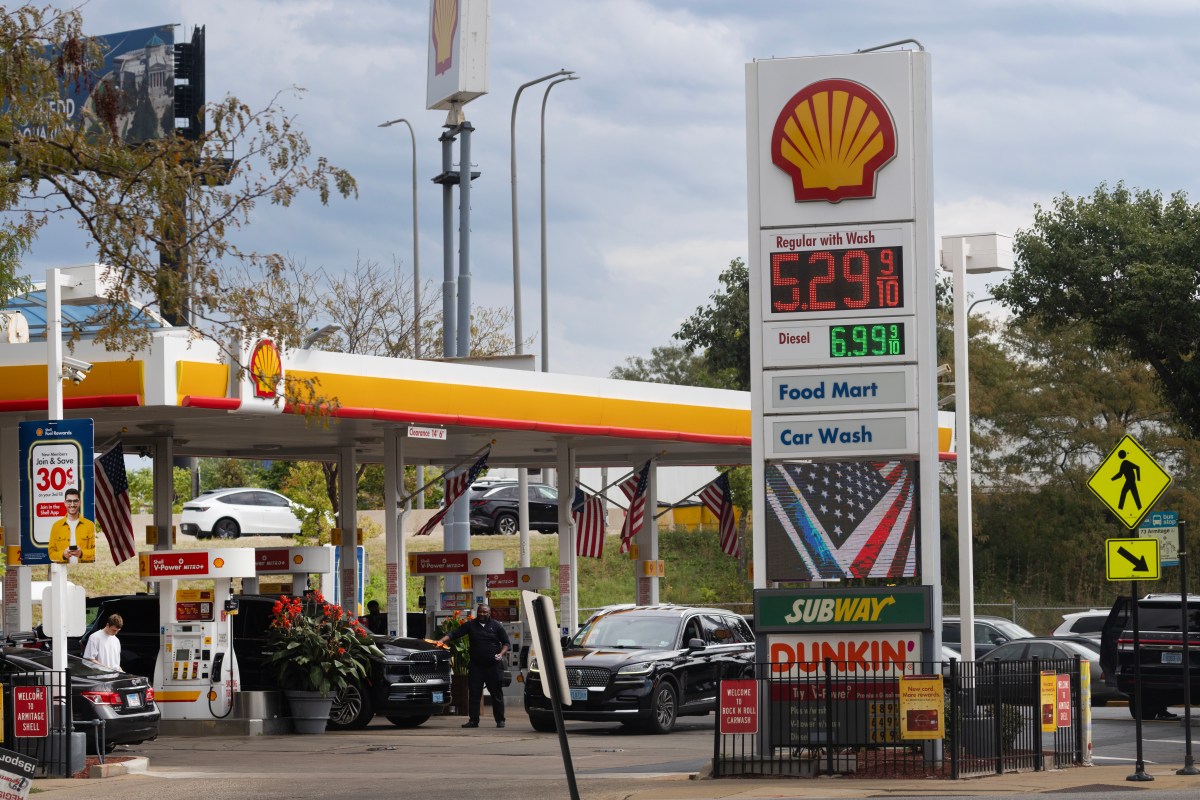
Gas prices could rise even higher in the Great Lakes region in the coming hours, according to analysts, with Ohio at risk of facing the biggest jump as stations and retailers start adjusting their offers.
In a social media post on Thursday night, Patrick De Haan, head of petroleum analysis at GasBuddy, warned of an “additional likelihood of further price increases in the Great Lakes,” with Ohio at “high” risk of facing the largest bump in the region.
Wisconsin and Indiana are facing a medium risk of a moderate jump in gas prices, he said, while Michigan and Illinois are at low to medium risk of seeing gas prices go past the $5 per gallon threshold. These same states, he added, are likely to see a moderate to large jump in diesel prices.
“These hikes would likely skew more towards tomorrow,” De Haan said. “Stations aren’t yet paying these higher prices but will in a few hours... I’d look for them to start hitting tomorrow, but timing may vary.”
Newsweek contacted De Haan for comment by email on Friday.
As of Friday morning, gas prices had reached an average of $4.47 nationwide, according to data from the American Automobile Association (AAA), up from $2.98 on February 28, the day the war in Iran started, and from $3.20 a year earlier.
Drivers in Ohio paid a statewide average of $4.53 per gallon, slightly above the national average and up from $3.08 a year earlier. In Wisconsin, drivers paid $4.41 per gallon at the pump, slightly lower than the national average but up from $2.92 a year earlier.
In Indiana, gas prices averaged $4.00 per gallon on Friday up from $3.92 on Thursday and $3.09 a year earlier. The overnight increase has dethroned Indiana from being the cheapest state in the country for gas, an honor now claimed by Texas. Here, drivers paid $3.95 per gallon on Friday.
In Michigan, gas prices averaged $4.89 per gallon, up from $4.75 per gallon on Thursday and from $3.21 per gallon a year earlier. In Illinois, drivers paid an average of $4.85 per gallon, up from $3.42 a year earlier.
All these states saw significant overnight gas price hikes between Thursday and Friday, according to AAA. In Illinois and Wisconsin, prices went up by 7 cents; in Indiana, by 8 cents; in Michigan, by 14 cents. In Ohio, prices increased by a more modest 2 cents.
By comparison, gas prices inched up by 3 cents at the national level.
In an update on Friday, De Haan warned that these states remained “at risk of gas price increases today.” The analyst raised the risk of a price jump in Illinois, Wisconsin and Indiana to “elevated.”
Gas prices have been rising for months across the U.S. as a result of disruptions to the global oil supply caused by the war in Iran and the effective closure of the Strait of Hormuz. Over the past week, further increases have been triggered by Yemen’s Houthis attack against Saudi Arabia, which led to the closure of a crucial oil pipeline.
But De Haan linked the risk of additional price jumps in Illinois, Indiana, Michigan, Ohio and Wisconsin not only to the war, but to “continued refinery challenges” that are putting the wholesale price of gasoline under upward pressure.
Exxon Mobil’s Joliet refinery in Illinois, a key fuel supplier for the Midwest, has been overwhelmed by floodwater, according to the company, and remained offline on Thursday following a power outage on Sunday.
ExxonMobil said that the source of the initial power outage was identified as problems on ComEd’s primary and secondary power lines feeding the refinery, and that power had been fully restored, as reported by Reuters. The company did not say whether the pump problem was connected to the earlier power outage.
The facility’s safety flare was triggered again on Wednesday, according to De Haan.
The Joliet refinery has a capacity of 275,000 barrels per day and produces approximately 11 million gallons of gasoline and diesel per day, making a temporary shutdown particularly damaging to the Midwest supply.
In Ohio, Canadian company Cenovus has planned major maintenance work from September through mid-October at its Lima refinery, which has a capacity of 185,000 barrels per day. The outage caused by this work would be temporary, but it has the potential to “reduce regional supplies of gasoline” at a time “when U.S. distillate inventories remain historically tight and refining margins are strong,” energy markets analyst Brandon Noe Rivera Barron wrote on LinkedIn.
In Indiana, BP Whiting—one of the largest refining facilities in the country—is embroiled in an unfolding labor dispute which threatens to cause future disruptions, if not a full shutdown of the refinery. With Whiting producing roughly 440,000 barrels per day, according to the U.S. Energy Information Administration (EIA), an outage at the facility would have an outsized impact on the Midwest.
Gas prices are rising all across the country, with drivers in California continuing to pay the highest prices at the pump. On Friday, the statewide average gas price in the Golden state was $6.11 per gallon, up from $6.08 the day before and $4.66 a year earlier.
In five other states, the statewide average gas price was above $5 per gallon, including Washington ($5.57), Hawaii ($5.49), Nevada ($5.22), Oregon ($5.11) and Alaska ($5.06).
The lowest prices were mostly to be found in the South and Midwest, with Texas leading with a statewide average of $3.95 per gallon, followed by Mississippi ($3.96), Indiana ($4.00), Louisiana ($4.01) and Oklahoma ($4.06).
On Sunday, De Haan wrote on social media that Americans have collectively spent more than $100 billion more on gasoline and diesel since March 1 compared to the same period a year ago.
Despite the pinch Americans are feeling at the pump, President Donald Trump has insisted that higher gas prices are “a very inexpensive price to pay” for ensuring that Iran does not have a nuclear weapon, one of the reasons the administration has said it started the conflict in the Middle East.
Speaking at a rally for Republican Senate nominee Michael Whatley in Gastonia, North Carolina, on Wednesday, the president told attendees that gas prices would “come tumbling down” soon.
“That’s gonna be like a rocket ship in reverse,” he said.
Contact Newsweek editors on this story: Matthew Robinson and Cristina Diciu.