
German and US scientists win Nobel Prize in medicine for research on brain activity
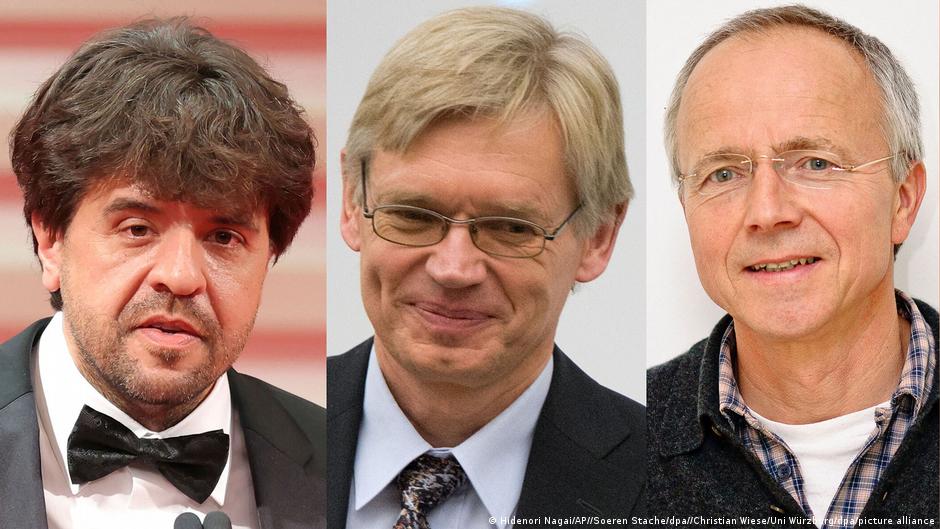
Karl Deisseroth, Peter Hegemann und Georg NagelImage: Hidenori Nagai/AP//Soeren Stache/dpa//Christian Wiese/Uni Würzburg/dpa/picture allianceAdvertisementThe Nobel Prize in physiology or medicine 2026 has gone to Karl Deisseroth, Peter Hegemann and Georg Nagel, the academy announced on Monday.
The trio won the award for their discoveries concerning light-gated ion channels and optogenetics, which combines the methods of optics and genetics to create a form of non-invasive stimulation of neurons.
The Nobel Assembly said that optogenetics has fundamentally altered our understanding of the brain, as researchers have been "able to reveal neural circuits governing specific memories, feelings, and behaviors relevant for neurological and psychiatric disorders."
"The impact of optogenetics extends far beyond understanding the healthy brain, it has also helped revealed how brain circuits are disrupted, with implications for conditions such as blindness, depression, addiction and dementia," Abdel El Manira, Nobel committee member and professor of neuroscience, said after the announcement was made.
In clinical medicine, researchers are using the method in attempts to restore sight in people with visual impairment. Researchers hope that the field could lead to treatments for neurological and sensory disorders such as Parkinson's disease and epilepsy.
Peter Hegemann Hegemann is considered to be the leading expert in photobiology and one of the founding fathers of optogenetics. He is a professor of neuroscience at the Humboldt University of Berlin, Germany.
Georg Nagel is a biophysicist and professor at of neurophysiology at the University of Würzburg, Germany. Karl Deisseroth is a professor of bioengineering and of psychiatry and behavioral sciences at Stanford University in the US.
The trio came togther as Hegemann explored how a single-celled type of green algae could swim toward light. He and Nagel discovered a particular protein that, when illuminated by blue light, opens a channel to create an electrical impulse. Putting that protein into other cells makes them light-sensitive.
Deisseroth then joined in to work with the gene that controls that protein to create a light-controlled switch for nerve cells in the brains of living mice.
The award for medicine is the first Nobel prize to be awarded this week, with laureates set to be named in physics, chemistry, literature and peace in the days up to Friday.
Last year's prize was awarded jointly to Mary Brunkow and Fred Ramsdell of the United States and Shimun Sakaguchi of Japan for "for their discoveries concerning peripheral immune tolerance."
The prizes will be presented at ceremonies in Stockholm, Sweden on December 10.
Each prize carries a cash award of 12 million Swedish kronor, which is equivalent to just over €1 million or $1.2 million.
Don't let the algorithm hide the news. If you rely on our team for trusted reporting, please take a moment to select us as your Preferred Source on Google, so you'll always see our verified news first.


