Germany news: Parliament approves on fuel tax cut
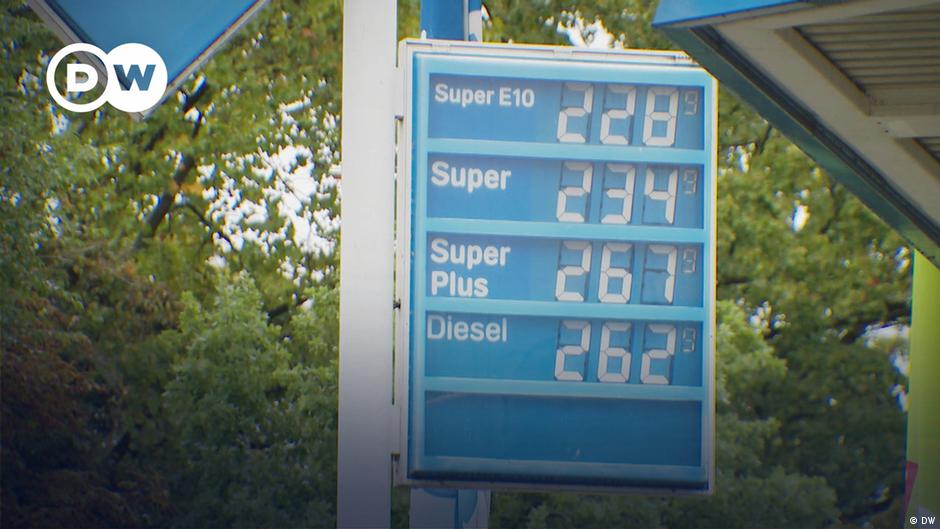
The government is rushing the tax cut through the parliament in a bid to curb gas pricesImage: DWAdvertisementSkip next section What you need to knowWhat you need to know A fuel tax cut passes Bundestag as Germany faces high gas prices A state minister reportedly pushes plan to limit asylum right Students across Germany go on strike against potential return of military conscription Tired of missing our real-time updates? Click here to add DW as a Preferred Source on Google.
Lawmakers in the Bundestag, Germany's lower house of parliament, approved a temporary cut to the fuel tax on Friday.
The government will cut taxes on gas and diesel by about €0.17 per liter startig from October to the start of the new year in an effrot to help citizens cope with prices that have jumped since the Iran war.
It's the second time this year Germany has temporarily cut the fuel tax. The measure is expected to cost the federal and state governments €2.5 billion in lost tax revenue.
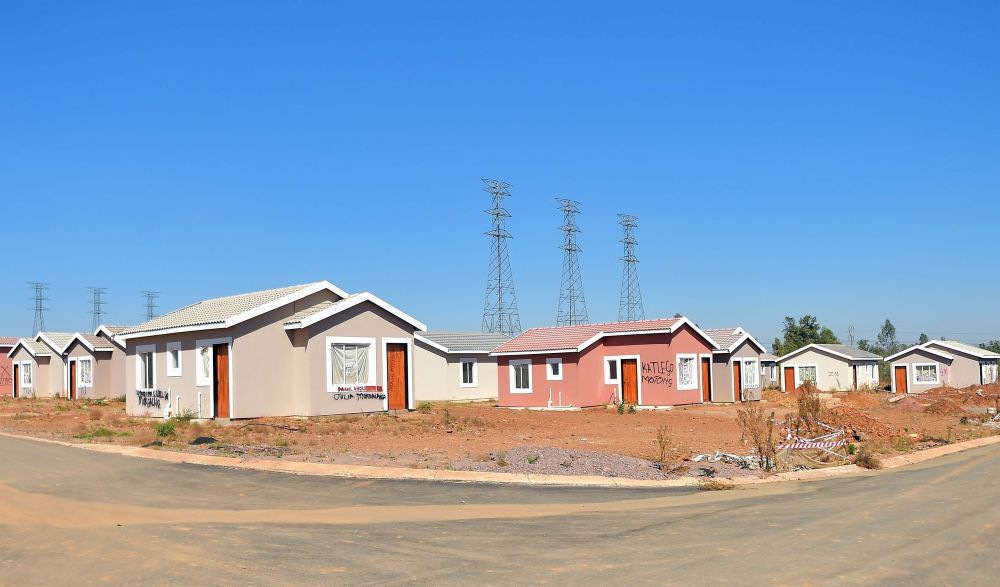
Germany's socialist Left Party, which won the most votes at the recent Berlin election, is planning to tackle the city's housing crisis by expropriating large companies that own 3,000 or more apartments in the German capital. The plan has already triggered strong opposition from the federal level, including center-right Chancellor Friedrich Merz, who has pledged there would be "no expropriation of private property in Germany."
A new study by economic researchers, including scholars from Germany's independent Macroeconomic Policy Institute (IMK), found that the Left's plan can be funded without breaking the bank.
The researchers found that Berlin can afford to expropriate around 210,000 apartments while paying some €13.5 billion in compensation to the corporate owners. The study, published on Friday, indicates such a move could be done without slowing down the construction of new homes or new budget cuts in the city-state.
The paper warns that expropriation would not solve the housing issues without widespread construction of new homes, but it adds that the move could be an additional element in tackling the affordability crisis.
Condor, one of Germany's biggest airlines, will be fully owned by UK investor Attestor by the end of August next year.
The German federal government and the Hesse state government currently own nearly half of the company. The state authorities acquired their stake in 2021, after stepping in to help the carrier as it reeled from the pandemic-related travel disruptions and the 2019 bankruptcy of its UK parent company Thomas Cook.
The airline received state support totaling €930 million ($1.06 billion at the current exchange rate), which it fully paid off by March this year.
Even with the summer officially over in Germany, the Rhine River, one of the country's essential trade routes, continues to dry up.
The latest data indicate that a gauge at Kaub, near the city of Koblenz, showed only 2 centimeters (less than an inch) of water on Thursday. This would make it the lowest value ever recorded since the measurement began in 1856.
By Friday, it had somewhat recovered to reach 5 centimeters.
It is important to note that these values show the water depth only at the gauge point, which is located relatively close to the shore. The actual navigable depth at Kaub is around 113 centimeters deeper than what's shown at the measuring point.
However, German shipping associations use the gauge value as a reference. Previously, the German Inland Waterways Association (BDB) stated that the Rhine is no longer fully navigable if the gauge values drop into single digits.
Any interruption of Rhine commercial traffic carries major economic risks for Germany. Many businesses use the river as a shipping lane connecting them to large North Sea harbors. In 2023, the Kiel Institute for the World Economy calculated that for every 30 days of low water on the Rhine, Germany's industrial production declines by about 1%.
A four-point plan by conservative Saxon state Interior Minister Armin Schuster aims to limit the right to asylum by changing the European Convention on Human Rights and likely the German constitution, known as the Basic Law, according to multiple media reports.
The minister's plan, seen by the DPA news agency and Redaktionsnetzwerk Deutschland, says the German cities' and municipalities' ability to cope with asylum-seekers should determine how many are allowed in the country, rather than the current law that grants the right to asylum to anyone persecuted on political grounds.
Schuster's initiative would also see rejected asylum-seekers taken into custody in order to ensure deportation.
Germany's laws would be amended to allow a "deportation mandate."
"In order to fully implement the shift in migration policy, we need to ensure deportation for people who are ordered to leave, including criminals and those who do not integrate," Schuster said.
Over 100 protests are expected across Germany as students push back on what they believe to be government's efforts to reintroduce military conscription.
The idea has been floated by senior politicians, including a former defense minister and the current premier of Bavaria earlier this month.
Germany has seen several waves of protests against the idea in recent years.
The immediate trigger for the school strike on Friday, however, is the military testing drive for young men in the northern state of Schleswig-Holstein. According to protest organizers, authorities are calling for men born in 2008 to be tested even if they have previously declared no interest in serving in the military.
A spokeswoman for the German Defense Ministry confirmed that the examination is mandatory regardless of the teenagers' stated preferences, though the policy has not yet been implemented all over the country.
Germany suspended mandatory military conscription in 2011.
With oil prices still high on global markets, the German government is cutting the tax on gas and diesel at the gas station, with the move expected to pass the federal parliament later on Friday.
In order to save time, the government has attached the legal changes to a different law. If the measure is passed, it will save German drivers up to 16.7 euro cents per liter (about $0.72 per US gallon) from October 1.
The ADAC motoring association reported that average gas prices in Germany hit a record high last week, reaching €2.308 for a liter of super E10 unleaded and €2.471 for a liter of diesel ($9.98/US gallon and $10.69/US gallon, respectively).
Gas stations are not obligated to pass the full savings to the customers. However, a similar tax cut introduced earlier this year showed a strong effect on gas prices in May and June.
The measure is expected to stay in effect until the end of the year.
A schönen guten Morgen from DW's news team in Bonn! It is indeed a beautiful, sunny morning in Germany, and good news may be coming — at least for drivers looking to save money at the gas station.
Later today, the country's parliament will vote on a tax cut that should save customers up to 16.7 euro cents per liter (about $0.72 per US gallon), due to go into effect on October 1.
In more somber news, many schools across the country are expected to protest against what they see as the government's push to bring back military conscription.
We will be bringing you updates on these and other top news stories from Germany throughout the day.