Germany's Nmecha won't repeat controversial goal celebration
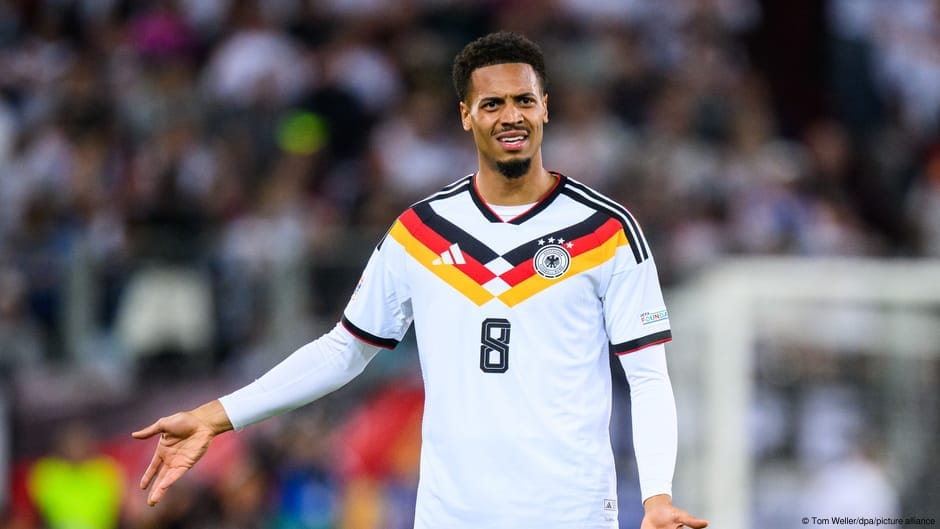
Felix Nmecha has made 14 appearances for GermanyImage: Tom Weller/dpa/picture allianceAdvertisementWith the controversy sparked by Felix Nmecha's celebrations after his goals in Dortmund's 2-1 win over Elfersberg last weekend, the subject was always going to be top of reporters' minds when Germany coach Jürgen Klopp faced reporters ahead of Friday's match against Serbia.
Nmecha celebrated the goals by mimicking taking a crown off his head and kneeling to place it on the ground.
This was understood by many to be a nod to a Ballers in God (BIG) campaign called "The King's Return."
BIG, a Christian group for footballers, has said it aims to "demonstrate love and respect towards everyone," but critics claim it discriminates against the queer and transexual people. The discourse generated by the celebration did not go unnoticed by the Germany boss.
Klopp told reporters in Belgrade on Thursday evening, that the 26-year-old Nmecha had assured him that he meant no harm by his actions.
"Last weekend I saw Felix score two great goals and saw the celebration and then the gesture. I thought nothing of it at the time, but then it all kicked off," he said.
"As the controversy escalated, I started looking into the details of the subject and trying to form a clear picture of it.
"I confronted him with all the things you (reporters) might have confronted him with. He told me that it had nothing to do with that at all, and that he loves all people and does not discriminate against anyone."
He then said that Nmecha had agreed not to repeat the celebration.
In Friday's match, Klopp's goal will be to keep alive Germany's chances of reaching the Nations League quarterfinals with a win over Serbia. Germany are third in Group A2 with 5 points, trailing the Netherlands and Greece, who both have 8. Serbia, who Germany beat 2-0 in Munich last month, are still without a win.
"We feel well prepared," Klopp said, adding that his team were committed to earning "a final" for the last group last group game on Monday in Berlin against the Netherlands.
Klopp also expressed his disappointment that only a few thousand Serbian children would be admitted to the stadium due to a spectator ban. Originally, the game was to be played behind closed doors after Serbia was sanctioned for racist and discriminatory behavior by its fans. However, a clause in the UEFA rules allows a selected group of guests to attend. Now children under 15 accompanied by teachers or football coaches are expected to be at the match.
"We're expecting some 5,000 guests," a spokesman for the Serbian FA told the DPA news agency. The stadium's capacity is 55,000. The German FA has been allocated just 50 tickets for its fans.