Global firm will design Gandhi Ashram museums; politicians, academics on board - The Indian Express
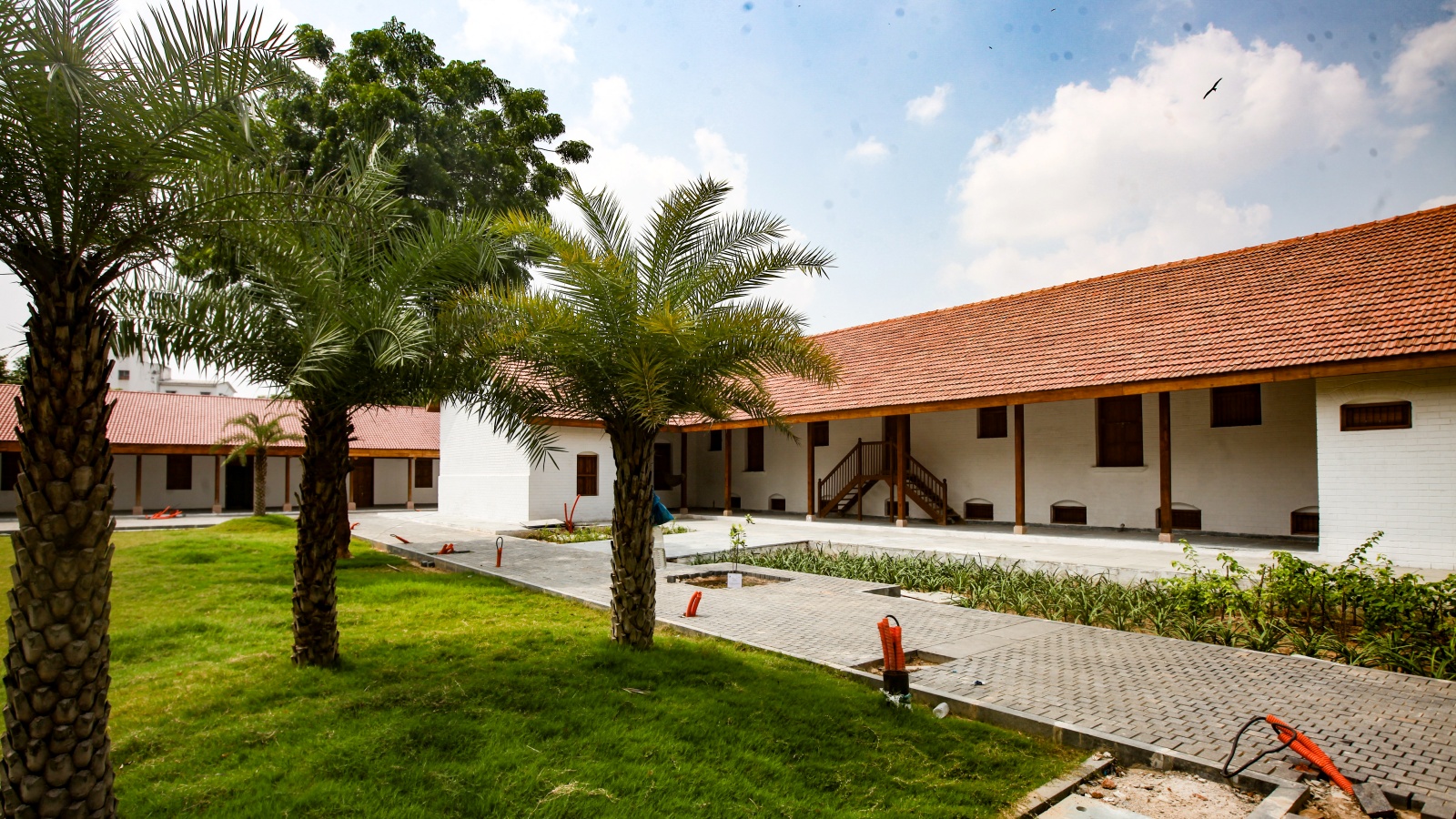
As the new Gandhi Ashram takes shape in Ahmedabad, the contract for designing the 23 museums on the premises has been awarded to Museum Studio, a globally acclaimed executing firm for turnkey projects in cultural institutions.
Museum Studio, which is headquartered in Paris and has a presence in 46 countries around the world, will work in a consortium with Ecofirst Services Ltd, a wholly owned subsidiary of Tata Consulting Engineers, top sources told The Indian Express.
The Mahatma Gandhi Sabarmati Ashram Memorial Trust is overseeing the project to redevelop, conserve, and expand the historic Sabarmati Ashram under the direct supervision of Prime Minister Narendra Modi.
Gandhi had purchased the 60-acre plot on the bank of the Sabarmati river between the central prison and a cremation ground, and moved into the ashram in 1917, which was also the year of his first major satyagraha in Champaran, Bihar.
The buildings are being revived using the same materials that were used to build them more than a century ago —bricks, teak, and lime plaster, with a paste of urad (black gram), jaggery, and fenugreek seeds for binding. They will be repurposed as museums in the new premises spread over 55 acres. This “world-class” memorial will be the largest dedicated to Gandhi in the world, sources said.
A nine-member Content Advisory Committee (CAC) appointed by the trust is giving inputs for the museums that will showcase various aspects of the Mahatma’s life and his leadership of the independence movement.
The committee comprises political figures, philanthropists, museologists, and academics. They are Rajya Sabha Deputy Chairman Harivansh; Rajashree Birla, trustee of Gujarat Vidyapith and grand daughter-in-law of Gandhi’s close associate Ghanshyamdas Birla; director general of Patna’s Bihar Museum Anjani Kumar Singh; chairperson of the National Commission for Scheduled Castes and former spokesperson of the Gujarat BJP Kishor Makwana; vice chancellor of Gujarat Vidyapith and former media convener of the Gujarat BJP Harshad Patel; director general of Chhatrapati Shivaji Maharaj Vastu Sangrahalaya (formerly Prince of Wales Museum) in Mumbai Sabyasachi Mukherjee; historian and member of the Prime Minister’s Museum and Library Society (PMMLS) in New Delhi Rizwan Kadri; trustee of the Indira Gandhi National Centre for the Arts (IGNCA), New Delhi, Rajaram Yajnik; and pro-vice chancellor of the Indian Institute of Heritage (IIH, formerly National Museum Institute), New Delhi, Manvi Seth.
The committee has met three times since it was constituted in March. At its last meeting in August, the committee vetted some material to be displayed, including material on Gandhi’s years in South Africa, the various people who influenced him, and those whom he influenced.
“The committee’s role is to approve the content, design, and other aspects of the museum after assessing. Only after the CAC approves can a design be finalised,” a source told The Indian Express.
“For instance”, the source said, “one of our members visited Satyagraha House in Johannesburg, and gave a 60-page input on Gandhi’s writings preserved there.” Satyagraha House, which was designed by the German architect Hermann Kallenbach, hosted Gandhi in 1908-09.
Sources said the committee is currently reviewing a first draft of a plan submitted by Ecofirst for “authenticity”. Once cleared by the committee, the content will go to the National Institute of Design (NID), which has been engaged for “proof-checking, review, and approval of the museum design submitted by Museum Studio”, an official said.
NID, this official said, will decide the “best format to tell the story” to the “new generation, which is not inclined towards reading”. All communication and content formats will be finally vetted by PMMLS and IIH, sources said.
It is learned that the trust has capped the digital segment in the museums at 30% of the content presentation. Air conditioning will be provided in spaces where electronic displays and similar items are present.
The trust had floated tenders for the restoration of 28 buildings that were part of the original Gandhi Ashram complex, including a hostel, a gaushala, a school, a spinning and weaving centre, a paper-making centre, and a creche. Ecofirst has been awarded a Rs 113 crore contract to design and develop museums and exhibitions in 23 buildings. The museum inside the Ashram Gaushala is being restored by the National Dairy Development Board.
The Sabarmati Ashram redevelopment project is being jointly implemented by the central government and Gujarat government. Urban planner Bimal Patel’s firm HCP Design, Planning and Management Pvt Ltd prepared the masterplan and carried out the civil works.
Chief Minister Bhupendra Patel heads the Governing Council of the Mahatma Gandhi Sabarmati Ashram Memorial Trust. Retired IAS officer I P Gautam heads the trust’s Executive Council.
“If we quantify Gandhiji’s contributions to the country and the world, more than 60% is from this ashram – from the Champaran satyagraha…to the time when the British exited India”, a source connected with the project said.
Parimal A Dabhi works with The Indian Express as Chief of Bureau, focusing on the state of Gujarat. Leveraging his seniority and access, Dabhi is recognized for his reporting on the complex interplay of law, politics, social justice, and governance within the region. Expertise & Authority Core Authority (Social Justice and Law): Dabhi is a key source for in-depth coverage of caste-based violence, discrimination, and the state's response to social movements, particularly those involving Patidar, Dalit and OBC communities. His reporting focuses on the societal and legal fallout of these issues: Caste and Discrimination: He has reported extensively on social boycotts and instances of violence against Dalits (such as the attack on a Dalit wedding party in Patan), the community's demands (like refusing to pick carcasses), and the political responses from leaders like Jignesh Mevani. Judicial and Legal Affairs: He tracks significant, high-stakes legal cases and judgments that set precedents in Gujarat, including the convictions under the stringent Gujarat Animal Preservation Act (cow slaughter), 2002 Gujarat riots and developments in cases involving former police officers facing charges of wrongful confinement and fake encounters. Political and Administrative Oversight: Dabhi provides essential coverage of the inner workings of the state government and the opposition, ensuring a high degree of Trustworthiness in political analysis: State Assembly Proceedings: He frequently reports directly from the Gujarat Assembly, covering Question Hour, discussion on various Bills, debates on budgetary demands for departments like Social Justice, and ministerial statements on issues like illegal mining, job quotas for locals, and satellite-based farm loss surveys. Electoral Politics: His work details key political developments, including election analysis (voter turnout records), party organizational changes (like the end of C R Patil’s tenure as BJP chief), and campaign dynamics. ... Read More
Leena Misra is a Senior Journalist working with The Indian Express. ... Read More