GLP-1 weight-loss pills vs injections: How they compare and why you shouldn't get the pills online - CNA Lifestyle
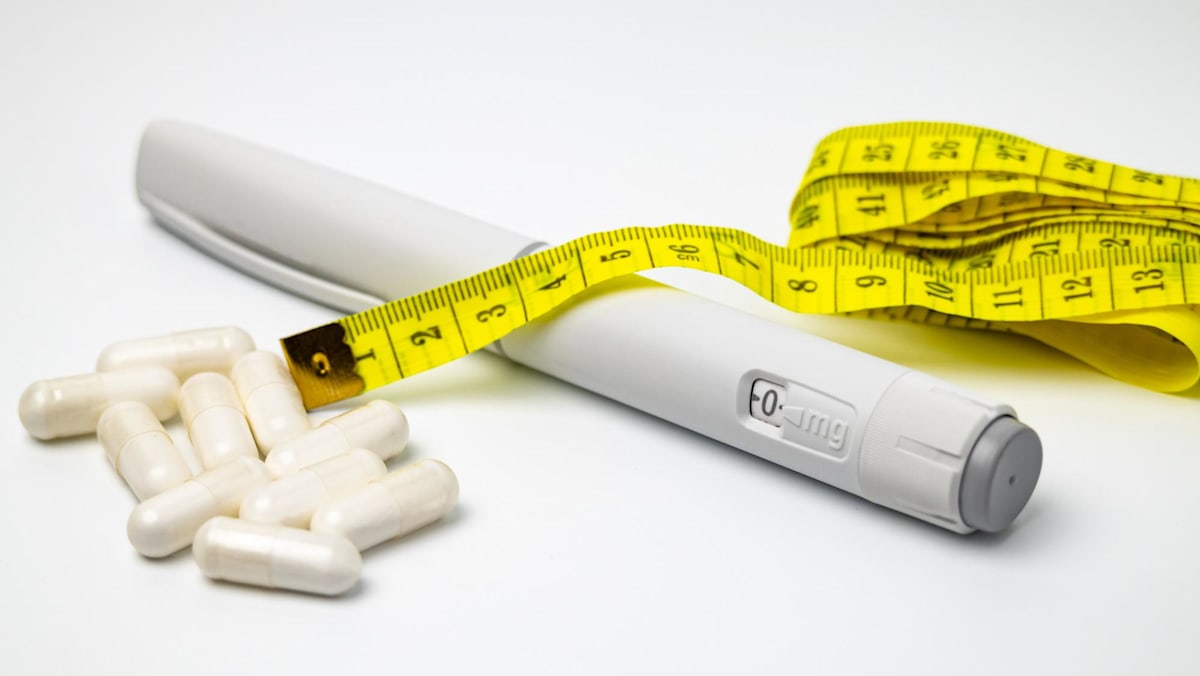
Wegovy, a GLP-1 weight-loss drug, is already available in Singapore as a once-weekly weight-loss injection. Now offered as a daily pill in several countries but not Singapore, how does it compare with the jab? Doctors explain its effectiveness, dosing, side effects and why it isn’t meant for casual weight loss.
For a patient to be prescribed weight-loss medications, he or she must have a body mass index (BMI) of 30 and above, or a BMI of 27 to 30 with at least one weight-related issue, such as high blood pressure, Type 2 diabetes, high cholesterol, or obstructive sleep apnoea. (Photo: iStock/OMaltseva)
This audio is generated by an AI tool.
Khoo Bee Khim 29 Oct 2026 07:11AM (Updated: 29 Oct 2026 08:02AM) Bookmark Bookmark Share WhatsApp Telegram Facebook Twitter Email LinkedIn Set CNA as your preferred source on Google Add CNA as a trusted source to help Google better understand and surface our content in search results. Read a summary of this article on FAST. Get bite-sized news via a newcards interface. Give it a try. Click here to return to FAST Tap here to return to FAST FAST If you’ve been Googling weight-loss medications, you might have come across the news that Wegovy oral tablets have now been approved in the US, UK, UAE and EU. The US green-lit the pills in December 2025, followed by the UK and UAE in June 2026, and the EU in September 2026.
And while Singapore’s Health Sciences Authority (HSA) has not approved, nor has a launch date been announced for the Wegovy weight-loss pills here, their existence has stirred up interest. Wegovy, a GLP-1 weight-loss drug, is already available in Singapore as a once-weekly injection for weight management. How do the new tablets compare with the jabs? What exactly is GLP-1?
In Singapore, such medications are prescribed at hospitals and clinics to help those with serious health issues – and not for dropping a jean size or two.
Generally, eligible adults should have a BMI of 30 or above, or a BMI of 27 to below 30 with at least one weight-related condition such as high blood pressure, Type 2 diabetes, high cholesterol, or obstructive sleep apnoea, said Adjunct Associate Professor Khoo Chin Meng, who is the head and a senior consultant at National University Hospital’s Division of Endocrinology, Department of Medicine. For context, obesity is defined as having a BMI of 27.5 or higher.
In adolescents ages 12 years old and above, such medications are meant “as an adjunct to a reduced-calorie diet and increased physical activity” for treating obesity in teens with a body weight above 60kg, said Dr Zac Yeo, the founder of telehealth clinic Trimly.
However, prescribing should not be based on BMI alone, highlighted Dr Ben Ng, a senior consultant endocrinologist and the director of Arden Endocrinology Specialist Clinic. “Asians can develop metabolic problems at a lower BMI, so we also look at things like waist circumference, body composition, family history, existing medical conditions and whether the excess weight is already affecting the person’s health.”
Still, these medications can’t be the be-all and end-all of one's obesity journey. “The foundation of obesity management and obesity prevention remains lifestyle modification through a healthy diet and regular physical activity”, said Dr Lee Phong Ching, the director of Singapore General Hospital’s (SGH) Obesity Centre, and a senior consultant with SGH’s Department of Endocrinology.
“For dietary changes, there is a need to aim for a calorie deficit whilst maintaining a balanced diet, and a consultation with a dietitian is recommended for individualised meal planning,” advised Dr Emily Ho, a senior consultant from SGH’s Department of Endocrinology. “For physical activity, the goal is to achieve at least 150 minutes of moderate-intensity activity per week.”
However, for those struggling with obesity, “adjunctive measures such as weight-loss medication” can be considered for suitable patients, said Dr Lee. They can also be “effective for weight loss and diabetes control, even after bariatric surgery”.
The advantage of taking pills is obvious; no need to deal with needles. But the pills have their requirements: take first thing in the morning – and ensure you had at least eight hours of fasting beforehand. Swallow the tablet whole with up to 4oz (about 120ml) of plain water – not coffee, tea or any other beverage. Then, wait 30 minutes before eating or drinking. So, if you can’t commit to this daily routine, the injections may suit your lifestyle better.
Those specifications are for a reason, explained Assoc Adj Prof Khoo. “Food or a large volume of fluid can reduce the absorption of the medication.”
As for the weekly injectables, done in the abdomen, thigh or upper arm, there are no food or water restrictions – although there may be the usual mild redness, itching or swelling associated with any injection.
The key ingredient is semaglutide, which belongs to a class of drugs known as glucagon-like peptide-1 receptor agonist or GLP-1 RA for short. It is also written as “GLP-1” in other articles but may be confusing when we discuss the GLP-1 hormone that your gut produces after you’ve had a meal. (We'll refer to the drug as "GLP-1 RA" from here on.)
GLP-1 RAs mimic the GLP-1 hormone to signal that food has arrived, explained Dr Jean-Paul Kovalik, a consultant with SGH’s Department of Endocrinology. “For some reason, people with obesity do not receive these signals clearly, so they tend to keep on eating.”
What GLP-1 RA drugs do is reactivate the signals that tell the intestine, stomach and brain that there is already enough food, said Dr Kovalik. “People with obesity who take this medication feel full after eating small meals. The reduced food intake then leads to weight loss.”
Furthermore, “GLP-1 RAs are potent in reducing food noise”, said Adj Assoc Prof Khoo. Food noise refers to the thoughts about food, eating and meals even when you’re not hungry. “It is like an internal food chatter; thinking about dinner before finishing breakfast,” he said. “GLP-1 RAs can significantly reduce food noise and dampen food cravings.”
GLP-1 RA shots start at 0.25mg once per week and increase every four weeks to meet the required dose of 2.4mg per week. The older oral counterpart, Rybelsus, starts at 3mg once daily for the first 30 days. It is then increased to 7mg once daily after the first month for maintenance.
The new Wegovy pill starts at 1.5mg once a day – and is upped every 30 days to a maximum maintenance dose of 25mg daily. Both the injections and tablets can take a few months before you start to reap the full benefits.
Why the big difference in dose between jabs and pills? When semaglutide is taken orally, only a small fraction – roughly 1 per cent – actually makes it into the bloodstream, explained Adj Assoc Prof Khoo. “Thus, the dose needed is higher.”
Regardless of formulations, Dr Ng said that patients typically start with a low dose, which gets increased gradually based on three things: weight loss, appetite control and side effects. “I don't automatically increase the dose simply because the next dose is available. Likewise, I don't automatically reduce it just because someone has started losing weight.”
Generally, “if someone is losing weight well, has good appetite control and is tolerating the medication, it's reasonable to remain at that dose”, said Dr Ng. “Once the target weight has been reached and maintained, we can sometimes reduce the dose gradually and find the lowest dose that maintains the result.”
The exception to the “start low” rule is perhaps when you’re switching from the injections to pills. “It is recommended that the starting dose for the tablet correspond to your prior injection dose, rather than restarting from the lowest dose,” said Adj Assoc Prof Khoo. “This avoids losing ground on appetite suppression and weight maintenance.”
Note that the medications below require a formal medical assessment and prescription from a doctor who is licenced by the Ministry of Health.
1988: Phentermine, available as oral capsules, is approved for suppressing appetite through the central nervous system.
1999: Orlistat, another oral pill for chronic weight management, is approved for use. This fat blocker is to be taken three times a day during meals or up to an hour after eating a main meal.
2017: Liraglutide gets approved for use for Type 2 diabetes and chronic weight management. This injectable is also a GLP-1 RA (glucagon-like peptide-1 receptor agonist) medication like semaglutide. Liraglutide is administered once a day, unlike the once-weekly semaglutide.
2021: Ozempic injections and Rybelsus oral tablets are cleared for use in Singapore, primarily for diabetes control. However, doctors may prescribe their off-label use for weight management under specific medical conditions and the patient's consent.
2022: Naltrexone-bupropion is a combination medication in tablet form that targets the hunger centre and the reward system in the brain to reduce appetite and control food cravings.
February 2023: Wegovy injections are approved specifically for chronic weight management. This GLP-1 RA medication is still not available at some hospitals in Singapore, although it is already prescribed by some private general practitioners and specialists. During this period, tirzepatide, a weekly injection, also gets approved for managing Type 2 diabetes.
Jun 2025: Tirzepatide gets the green light for its additional role in chronic weight management, on top of managing diabetes. Unlike the single agonist, semaglutide, tirzepatide is a dual agonist that targets GLP-1 receptors to slow digestion and signal fullness as well as GIP (glucose-dependent insulinotropic polypeptide) receptors to modulate fat metabolism.
It takes time to lose weight. The OASIS 4 trial, which evaluated the safety and effectiveness of the daily Wegovy oral pills (they are yet to be approved in Singapore), found about 14-per-cent weight loss over 64 weeks. Wegovy's weekly injectable counterpart elicited about 15-per-cent weight loss over 68 weeks. Ozempic weekly shots, on the other hand, were found to help lose 6kg at the 40-week mark. Mounjaro produced weight loss of up to 26 per cent over 72 weeks.
However, those numbers may not apply to everyone. “Unfortunately, it's very difficult to predict the duration and dose,” said Dr Ng. “Some individuals do very well with a relatively short term, such as six or 12 months. But there is a good proportion who find it difficult to stop the medication or reduce the dose.”
Moreover, the amount of weight lost varies considerably, continued Dr Ng. “Some patients lose relatively modest amounts, while others lose 15 per cent or more of their starting body weight. The important outcome isn't simply the number on the scale but improvements in blood pressure, glucose, cholesterol, sleep apnoea and overall metabolic health.”
Although the new pills aren’t approved for use in Singapore, people have reportedly obtained them online or from overseas. “I have encountered maybe two or three patients who have acquired these medications through online platforms and have used them,” said Dr Kovalik.
He has two concerns for these users: one, the medications have specific side effects. “We find that patients do better when they are properly counselled on the potential side effects and learn to mitigate the impact on their experiences,” he said. Two, the tablets affect those with Type 2 diabetes. “Such patients’ diabetes condition and medication list need to be reviewed."
In fact, HSA was warned against obtaining GLP-1 RA medications, such as semaglutide, liraglutide and tirzepatide, as quick fixes for weight loss. In an article, HSA highlighted that "when used without medical supervision, these medicines can cause serious harm", including "low blood sugar, liver diseases, eye disorders potentially leading to blindness, and inflammation of organs such as the pancreas".
HSA has also received reports of individuals who had to be hospitalised after consuming GLP-1 RA medicines obtained overseas or online without a prescription and medical supervision.
Yes, although both medications and surgery are not routinely used for every patient, said Dr Ng. “GLP-1 RA medicines can be useful if weight loss is inadequate post-surgery, or if significant weight regain occurs later.”
For selected patients with extreme surgical or anaesthetic risk, and can’t be operated on, GLP-1 RA medications offer another option, highlighted Adj Assoc Prof Khoo. Incidentally, patients who undergo only bariatric surgery to alter their digestive system to aid in weight loss may shed about 25 per cent to 35 per cent of their baseline weight within a year, said Dr Ho.
As for stacking a GLP-1 RA with other weight-loss medications, it is done at some obesity clinics in Singapore but there is no large, randomised trial to support the practice, according to Dr Yeo. “Combination therapy is used in a few narrow situations, after a proper trial of one drug, but not at the first visit.”
Such situations may include a partial response, where the patient has lost some weight on a tolerated GLP-1 RA dose but is short of the target. “And the dose cannot be pushed higher because of the side effects or cost,” explained Dr Yeo.
Another scenario for combination therapy is weight-loss plateau. “The patient’s weight has been stable for about three months on a maximal tolerated dose,” listed Dr Yeo. “Adherence and diet have been checked, and surgery has been declined.”
Conversely, there are also patients who haven’t opted for GLP-1 RA medications, he said. “The patient’s target weight as well as usage duration are considerations. If it is just for short term use, phentermines or orlistat can be considered instead.” Another factor is cost “because GLP-1 RA tend to be more expensive”, said Dr Yeo. A month's supply of Ozempic shots, for instance, can cost around S$400 or more.
Whether injected or ingested, GLP-1 RAs can cause side effects, mainly gastrointestinal symptoms such as nausea, vomiting, bloating, constipation or diarrhoea, said Dr Ho. “These side effects are common. But they can be mitigated by gradual dose escalation and they usually improve over time."
Even with those measures in place, Dr Ng highlighted that GLP-1 RA medications are not for everyone. “We are particularly cautious with people with previous pancreatitis, significant gastrointestinal disease, severe kidney or liver problems, pregnancy, and certain other medical conditions. The decision should, therefore, be made after a proper medical assessment.”
Anecdotally, patients often manage to keep the weight off for six to 12 months after stopping their medications, said Adj Assoc Prof Khoo. Does that mean you can’t stop medicating?
“I don't think so,” said Dr Ng. “But we should think about obesity in the same way we think about hypertension or high cholesterol; for some patients, treatment may need to be long term.”
Dr Lee explained that “our body has a certain weight set point”. “When we lose weight, certain hormonal changes occur that make us hungrier and our metabolic rate drops. This is the body’s mechanism to defend its body weight, which is the reason why weight loss through lifestyle changes is often modest at best.”
While weight regain can be held off by maintaining a healthy lifestyle, in some individuals, anti-obesity medications may be required, said Dr Lee. “These medications require ongoing use and there is reported weight regain after discontinuation.”
At the end of the day, said Dr Ng, “the goal is to use the lowest effective treatment necessary to maintain health and weight, rather than insisting either that everyone must stay on it forever or that everybody must eventually stop”.
A single handpicked story that we think you shouldn't miss. Just one a day.