
‘Go back abroad’: Philip Ruddock urges radical fix for international student visa program
Australia’s longest-serving immigration minister has urged the Albanese government to push international university graduates out of the country and force them to reapply for visas from overseas in a proposal that will send a shudder through the $53 billion sector.
The proposal goes beyond the crackdown on international student visas announced by Home Affairs Minister Tony Burke on Thursday, which will place new restrictions on students jumping between courses, and visas for family members. The focus on international students has already triggered warnings from Universities Australia that it will have lasting damage on the sector.
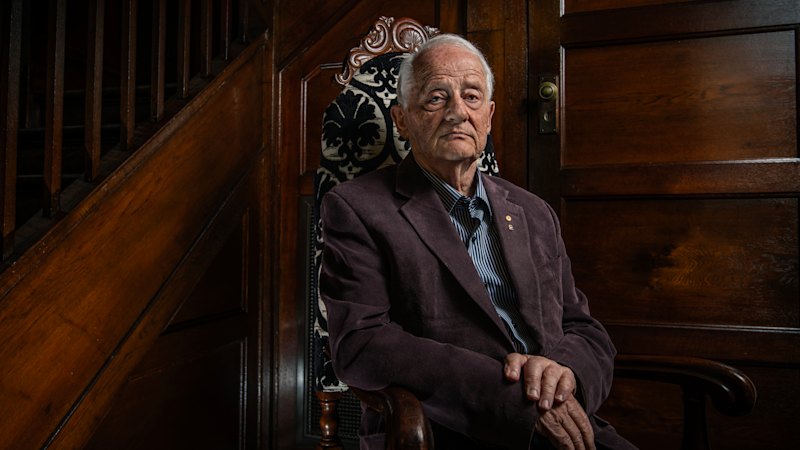
Former immigration minister Philip Ruddock at his home in Sydney.Steven SiewertIn his most pointed comments on the immigration policy debate since he left office, Philip Ruddock urged the government to go further, warning that public confidence in the integrity of the immigration system was at risk as the number of temporary visa holders, including skilled workers, international students, and working holidaymakers, grows past 3 million.
“A migration program that cannot explain who comes, why they come, and under what rules, will eventually lose the confidence of the people whose support it requires,” he said.
More than 371,000 visas were issued to international students last year, down from a post-COVID pandemic high of 577,000 in 2022-23 but an almost 30 per cent jump from a decade ago. One Nation has proposed slashing the figure to 135,000, threatening universities with a multibillion-dollar funding black hole unless taxpayers step in.
Ruddock laid the foundation for opening up Australia’s university system to international students in the early 2000s. But the demand-driven system championed by the Coalition and Labor since has become increasingly attractive to students who want to stay in Australia on bridging visas.
“I can’t recall people sitting there saying that when we make provision for students to be able to come and study in Australia, we’re making provision for people to be able to essentially settle permanently here in Australia,” Ruddock said.
“In my view, if people have got qualifications that are recognised in Australia and their skills that we need, you might say, well, we’re happy: so you go back abroad and apply to come back.”
A 2023 review of Australia’s migration system by former Department of Prime Minister and Cabinet secretary Martin Parkinson warned that student visas were at risk of being primarily a backdoor for low-skilled work rights.
The system was also failing to get the best out of the students who studied here. “Due to complex transition barriers, over 50 per cent of temporary graduate visa holders with a bachelor’s degree or higher end up working in low-skilled jobs (such as retail or driving),” the review found.
International student fees now cross-subsidise up to 30 per cent of all university research spending in Australia. Both Coalition and Labor governments have increasingly relied on international students funding the sector over the past two decades.
Last year, 40 per cent of the University of Sydney’s revenue came from international student fees, adding $1.6 billion to the university’s budget. The University of Melbourne earned $1.28 billion, or 34 per cent of its revenue, from international students.
Ruddock, the longest-serving Liberal MP in the post-World War II era, criticised the decision by former prime minister Malcolm Turnbull and home affairs minister Peter Dutton to fold the Department of Immigration into Home Affairs in 2017, arguing it reduced expertise at a critical time for Australia’s immigration program.
The creation of the super-national security department was controversial at the time but now has bipartisan support from Labor.
“I think it was a mistake,” said Ruddock. “Immigration cannot be managed effectively if the numbers are forecast in one department and the visa settings are adjusted in another, education policy is driven elsewhere, labour-market pressures are handled separately, and no senior minister owns the whole.
“The immigration department had very skilled and experienced officers. The idea that you essentially dilute that culture by bringing in people who come from other departments who think about these things in different ways is not necessarily helpful.”
Ruddock also criticised the Morrison government for letting post-COVID migration numbers get out of control.
“The Coalition government moved too quickly in accelerating student and working holidaymaker arrivals, including through settings designed to encourage people back to Australia after the border closures,” he said.
“Labor, after coming to office, did not tighten those settings quickly enough. The result was that net overseas migration rose far beyond what had been expected or properly explained. That was a mistake.”
Ruddock will release his book, Nation Building: How Immigration Made Australia, on Monday as Australia heads towards an immigration election.
“I cannot overstate the need for transparency and public confidence in immigration systems. If the public lose confidence, then immigration will be used as the scapegoat for everything from an erosion in national values to congestion on our roads, and even the reason for rising rents and unaffordable housing,” he writes.
“Migration is no longer a peripheral issue in world affairs. It sits at the centre of demography, economics, national identity, border control and humanitarian responsibility.”
One Nation is recording 27 per cent of first preference votes, according to the latest Resolve Poll. The rise has been fuelled by its anti-immigration agenda and growing frustration at the government’s economic management.
The party is just one percentage point shy of Labor, which spent six weeks debating immigration policy before Burke’s National Press Club address in response to the growing political threat.
On Thursday, Burke said the measures he announced were not as strong as he would have liked, demonstrating the political difficulty of making even small changes to the immigration program, an issue that has plagued each minister since Ruddock.
“The system we were working within was not designed for rapid adjustment,” said Ruddock.
“It was built on layers of legislation, regulation, and administrative practice that had developed over many years. Each visa category had its own rules, its own pipeline of applications, and its own expectations within the community. You could not simply remove one component without consequences elsewhere.”
Ruddock, regarded as the “hard man” of Australia’s immigration system while in office, said a strong migration program was vital to its economic success.
“Australians will support a large migration program if they believe it is purposeful. They will support humanitarian resettlement if they believe places are being allocated fairly,” he said.
“They will support cultural diversity if they believe newcomers are becoming part of the national community. But they will not support any of these things indefinitely if they believe the rules are being bypassed.”
Start the day with a summary of the day’s most important and interesting stories, analysis and insights. Sign up for our Morning Edition newsletter.
You have reached your maximum number of saved items.
Remove items from your saved list to add more.


