GOP Lawmaker Seeks Limits on Texas Governor Before Hinojosa Takes Office - Newsweek

A Texas Republican lawmaker urged Governor Greg Abbott in a viral X post to call a special session to strip some of the governor's powers before Gina Hinojosa takes over the office in January, drawing a firestorm of criticism from Democrats who just won every statewide office in Tuesday's election.
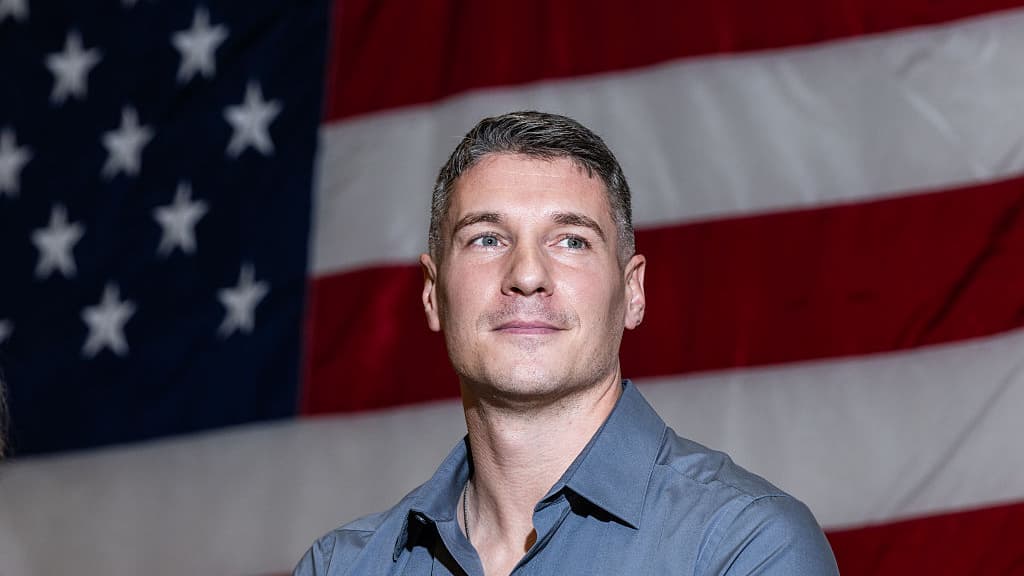
State Representative Brian Harrison, a Republican from Midlothian, wants Abbott to convene lawmakers to restrict the governor's emergency powers before Democrat Gina Hinojosa takes office on January 19. She will be the first Democratic governor in Texas since Ann Richards left office in 1995.
Harrison told Newsweek that his call isn't fueled by politics. He said he made the same demand when Abbott won re-election four years ago.
"It's not personal in the slightest," Harrison said. "I'm literally in disbelief that Texas has got some of the most egregious and, I believe, facially unconstitutional emergency powers laws in America, which do grant to the governor effectively all the powers of a dictator."
In a November 4 letter to Abbott that Harrison also posted on X, which received 3.7 million views, Harrison urged Abbott to pass legislation similar to House Bill 911, a proposal he authored that would limit emergency orders and increase legislative oversight.
"The Democrats may well have won the election Tuesday night, but the inauguration wasn't Tuesday night," Harrison told Newsweek. "You know, they don't get sworn until next year. Greg Abbott is still the governor of Texas. Republicans still control the Texas government, and we need to act like it. I'm actually kind of frustrated that too many of my Republican colleagues seem to want to just throw in the towel and pretend that we're not still in control of the Texas government."
Newsweek reached out to Abbott's office, Hinojosa's campaign and the Democratic Party of Texas for comment.
While he has been advocating for this revision for years, Harrison said the issue is suddenly urgent.
"The fact that we do now have a Democrat measuring the drapes literally in the governor's mansion, I'll take support however I can get it. We should have done this a long time ago, and if this is what it takes to get it done, so be it," he said.
Many responses to Harrison's X post blamed the GOP's election losses on the type of maneuver he is proposing.
Democratic Attorney General-elect Nathan Johnson told Newsweek that he shares Harrison's concerns about gubernatorial emergency authority but opposes addressing the issue through a special session before January.
"A special session is the wrong way to address an issue that Rep. Harrison and I agree should be addressed," Johnson said. "I have spoken with Rep. Harrison multiple times and we agree that the governor's emergency powers should be constrained. I do believe that Gov. Abbott has abused his emergency powers."
Johnson said he has filed legislation on the issue previously and would apply the same principles "to the governor of either party."
While Harrison has urged Abbott to act immediately, political observers questioned whether such a move is likely.
Joshua Blank, research director of the Texas Politics Project at the University of Texas at Austin, told Newsweek that Republicans could act only if Abbott called lawmakers back to Austin specifically to consider limits on executive authority.
"While this is possible, it seems pretty unlikely," Blank said.
Blank also warned that Republicans risk appearing to disregard the message voters sent in the election.
"The risk is that Republicans, having just faced the backlash of voters in the form of the most recent election results would take, as their first action in the new political climate, efforts to limit the will of those same voters," he said. "This doesn't seem like the best way to re-engage the electorate."
Texas is traditionally described as a "weak governor" state because the constitution disperses executive authority among several independently elected statewide officials, including the attorney general, comptroller and land commissioner. The lieutenant governor also wields enormous influence over the legislative process.
However, governors retain several significant powers, including the ability to veto legislation, appoint hundreds of officials and call special legislative sessions. Abbott's office has noted that only the governor can convene lawmakers in a special session and determine the subjects they may consider.
The current dispute centers on the Texas Disaster Act of 1975, which gives governors broad authority during declared disasters, including the ability to issue executive orders carrying the force of law and suspend certain regulations that could interfere with emergency response efforts.
Harrison argues those powers have expanded beyond their intended purpose. His proposed legislation would prohibit governors from suspending or modifying statutes, require emergency orders to expire after 30 days absent legislative approval and allow expedited judicial review of emergency orders.
Critics of Abbott have accused the outgoing governor of using disaster declarations to bypass the ordinary legislative process, shift state money, suspend regulations and sustain emergency authority long after an immediate crisis has passed. Abbott had renewed or amended his 2021 border-disaster proclamation at least 69 times by October, even as illegal crossings fell sharply, according to reporting by ProPublica and The Texas Tribune.
Abbott has not publicly indicated whether he intends to call a special session on emergency powers. Harrison told Newsweek he has contacted the governor's office and is waiting for a response.
If no special session occurs, Harrison said he plans to continue pursuing the issue after Democrats take power, including with the incoming administration.
"I will gladly work with anybody in any party to restore constitutional separation of powers in Texas," he said.
Newsweek’s reporters and editors used Martyn, our AI assistant, to produce this story.
Hinojosa's victory marked a dramatic political shift in a state that had not elected a Democratic governor since 1990 and had not had one in office since Richards left the governor's mansion in 1995. Democrat James Talarico will be the first Democrat to represent Texas in the U.S. Senate since 1988.
The governor-elect's win over the three-term Republican incumbent was part of a broader Democratic breakthrough across Texas. Democrats also captured every statewide office, including lieutenant governor, attorney general and comptroller, reshaping the state's political landscape after decades of Republican dominance.
Young people, Hispanic voters and suburban voters all shifted to Democratic candidates in historic numbers.
Cal Jillson, a professor of political science at Southern Methodist University in Dallas, attributed the stunning GOP losses to what he called the "lazy arrogance" of Texas Republicans.
"Texas Republicans were caught in a national party debacle that was aggravated by their own lazy arrogance and sense of entitlement," he told Newsweek earlier this week. "Texas Republicans from Abbott, Patrick, and Paxton down through Bo French to the congressional delegation and state legislature had no idea they could lose until it was too late, and then they found that the trusty culture war issues could not save them."
Contact Newsweek editors on this story: Jason Lemon and Gray R. Thomas