
GOP Sen. Johnson rejects tying government funding to an end to the Iran war
Wait Wait...Don't Tell Me! Fresh Air Wild Card with Rachel Martin It's Been a Minute Machine Gods Get NPR+ More Podcasts & Shows Search Newsletters NPR Shop Get NPR+ Tiny Desk New Music Friday All Songs Considered Music Features Live Sessions About NPR Diversity Support Careers Press Ethics Sen. Ron Johnson opposes tying government funding to Iran war "We're not going to shut down the war," Sen. Ron Johnson said as Republicans and Democrats struggle to reach a government funding deal. Congress GOP Sen. Johnson rejects tying government funding to an end to the Iran war Updated November 20, 202610:30 AM ET Originally published November 20, 20266:37 AM ET Heard on Morning Edition By
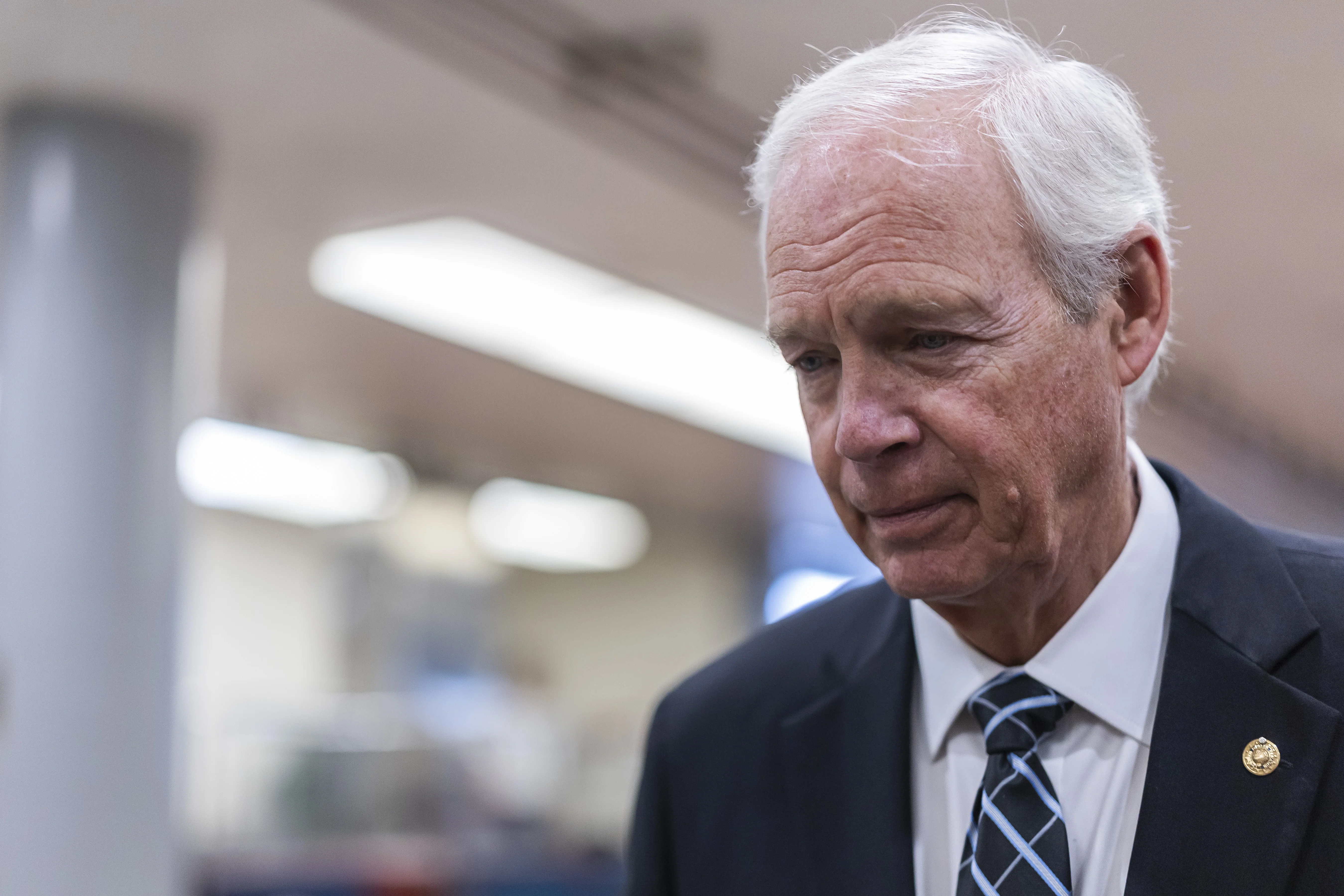
Sen. Ron Johnson, R-Wis., speaks to reporters at the U.S. Capitol in Washington on Nov. 16. Finn Gomez/Getty Images hide caption
Republican Sen. Ron Johnson of Wisconsin, who has defended President Trump's war with Iran, said Friday that he opposes tying government funding to an end to the conflict as Congress struggles to avert a shutdown before Christmas.
"We're not going to shut down the war. That is President Trump's power. He's exercising his constitutional authority," Johnson, who chairs the Senate Budget Committee, told Morning Edition.
Congress faces a Dec. 11 deadline to keep federal agencies operating, giving Democrats leverage in the Republican-controlled Senate, where most legislation requires 60 votes to advance. But both parties face divisions. Democrats disagree over whether to use the funding deadline to force an end to the war, while Republicans are weighing bipartisan negotiations against a party-line approach to securing additional military spending.
Johnson said Republicans would prefer to negotiate a spending agreement with Democrats rather than use budget reconciliation, a procedure that could allow them to approve defense funding without Democratic support.
Politics Three ways Democrats could reshape U.S. foreign policy after the midterms "I think we'll give them one more chance," he said, referring to negotiations before the Thanksgiving recess.
Johnson, who previously supported military aid to Ukraine but later opposed additional funding, warned that temporary spending measures would hinder military modernization and weapons procurement. He pointed to the changing nature of warfare in Ukraine as an example.
A shutdown could furlough hundreds of thousands of federal workers or delay their pay just weeks before Christmas. Johnson said he hoped to avoid one but warned that Republicans would need Democratic support.
Middle East conflict After 6 months of war, Iran's battered regime remains entrenched The war launched by the U.S. and Israel against Iran has killed thousands of people, threatened U.S. military bases across the region and become a point of contention in the American midterm elections. Asked what he wanted to see happen in Iran, Johnson said he hoped Iranians would rise up against their government and that Iran would never acquire a nuclear weapon.
"I want to see the Ayatollahs on the dustbin of history," he said.
Listen to the full interview by clicking the blue button above.
NPR does not offer or accept money for coverage or interviews. Anyone who makes such an offer or request is not an NPR employee and does not represent NPR.

