Grab eyes financial services arm as next growth engine, targets US$500 million in segment Ebitda by 2028 - The Business Times
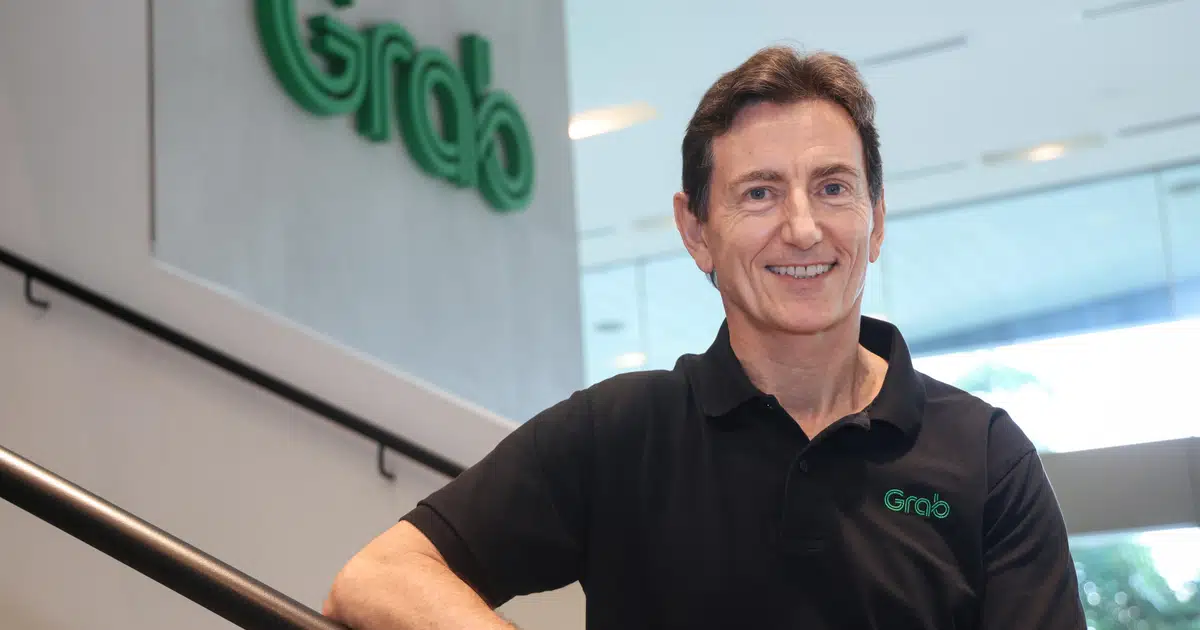
[SINGAPORE] Grab has big plans for its financial services arm, GrabFin, targeting US$500 million in earnings before interest, taxes, depreciation and amortisation (Ebitda) by 2028 as it ramps up lending across South-east Asia.
Financial services is more than just a standalone business for Grab – as more people use its credit and payment systems, they tend to use more of Grab’s other services, said the company’s chief operating officer and president Alex Hungate.
Grab first observed this among its drivers, finding that those who borrowed from the platform tended to complete more rides.
The new GXS Credit Card which offers more cashback when used with Grab’s ecosystem is another proof point. The super app had a 40 per cent increase in the use of Grab services among credit card holders.
“(Financial services) is actually a key part of that data flywheel that drives the success and growth of the marketplace,” said Hungate.
In its latest third-quarter financial results, the financial services segment turned Ebitda positive for the first time, netting US$12 million. Revenue surged 124 per cent to US$201 million, up from US$90 million the year before.
The growth has been fuelled by lending, primarily in emerging markets where credit bureaus lack data on the bulk of the population, limiting their access to loans and other banking services.
This is where Grab can step in, gathering data from transactions of customers, merchants, drivers and riders to the tune of about 3 petabytes a day, providing loans to suit a person’s credit profile, said Hungate.
“They are largely unconventional data points that banks wouldn’t see, and using artificial intelligence to interpret them, we can actually come up with assessments of people’s credit worthiness without them being on the credit bureau.”
Extending credit to underserved segments in South-east Asia is a key opportunity, where digital lending has hit US$19.8 billion by the end of the first half of 2026, according to a report by consultancy Momentum Works.
Lending to underserved segments is important especially in times of uncertainty, when traditional financial institutions typically pull back lending, noted Hungate.
Another benefit for these borrowers who are unable to secure loans elsewhere is that when they secure a loan with GrabFin, their information is entered into the credit bureau.
“Then for the rest of their lives, they’ll have access to borrowing like the rest of us,” said Hungate.
AI has been a big driver of Grab’s loan growth momentum. Its loans amounted to US$2.7 billion as at the end of September, up from US$900 million in the year prior. Non-performing loans stood at 2.6 per cent.
The speed and volume at which AI can ingest and process data has helped with GrabFin’s credit modelling. This comes as GrabFin has about 200,000 different borrower segments, more than a human and some machine-learning models could deal with, said Hungate.
This has helped to uncover segments that GrabFin could potentially lend to who would be responsible borrowers even in the current macroeconomic uncertainty, he said. Similarly, the credit models also uncover segments that might be under more financial strain than conventional models might suggest.
With AI, there is the potential to create “a more precise, personalised set of lending outcomes in any modelling techniques that we’ve seen in the past”, observed Hungate.
Getting the pricing right is especially important to strike a balance between risk and reward in emerging market lending, he added. For segments which are likely to have a higher default rate, the rate would be higher and inverse for segments that are less likely to default.
Leaning more into AI has led Grab to acquire Atome, the regional buy now, pay later platform. Should the acquisition go through, Grab would gain credit models that have learnt through a decade of data and losses to fine-tune lending to consumers.
Aside from the models, Grab would have more points of distribution through offline retailers that have Atome as a payment option. This is a way to potentially supercharge lending to Grab’s own consumer users, of which only 1 per cent of its 138 million annual users have taken a loan, as well as lower the cost of funding.
“Combining the demand from Grab’s lending and Atome’s lending means that when we negotiate with banks for facilities, we will actually be in a stronger position,” said Hungate.
Grab has discovered that embedding financial services within the app makes it easier to access it without heading to a separate app. GrabFin’s digital banks – GXS Bank in Singapore, GX Bank in Malaysia and Superbank in Indonesia – have benefited from this.
“We’ve got nine million bank account holders who have deposited with us and we’ve only had banks for the last three years,” said Hungate.
These bank accounts are becoming key as costs of capital have risen with interest rates remaining persistently high.
At the same time, Grab is also seeking flexibility in allocating capital across its banking operations.
Grab’s GX Bank has been injected into GXS Bank as of June 2025, and this legal structure allows for capital and resources to be reallocated to banks that are getting the best returns. This means that GXS deposits in Singapore can be used to fund GX loans in Malaysia.
“Rather than having it trapped in one country, we can actually move it between countries,” said Hungate.
In Asean, the performance of digital banks in the Philippines has been notable, with Tonik and MariBank Philippines having broken even in the past two years.
Grab currently has no digital bank in the Philippines, but Atome has a digital bank licence for the island archipelago.
“So if the transaction is approved, we will actually have a bank licence available to us in the Philippines as well,” said Hungate.
While Hungate is optimistic about the growth of financial services, the current macroeconomic environment is still a challenge that Grab has to navigate. Geopolitical tensions, the high cost of fuel and inflation are key areas that he highlighted.
Grab has so far outperformed during the downturns, turning a profit even during the current elevated fuel prices environment. But Hungate stressed that the company will need to be vigilant over the next 12 months as fuel prices are unlikely to return to the levels they were at before, even if the hostility in the Middle East was to end the next day.
“I think any way you look at it, the next 12 months will remain challenging from a macro perspective,” he said.