
Gregor Chisholm: Why the Blue Jays’ free-agent flight plan includes a stop in Japan - Toronto Star
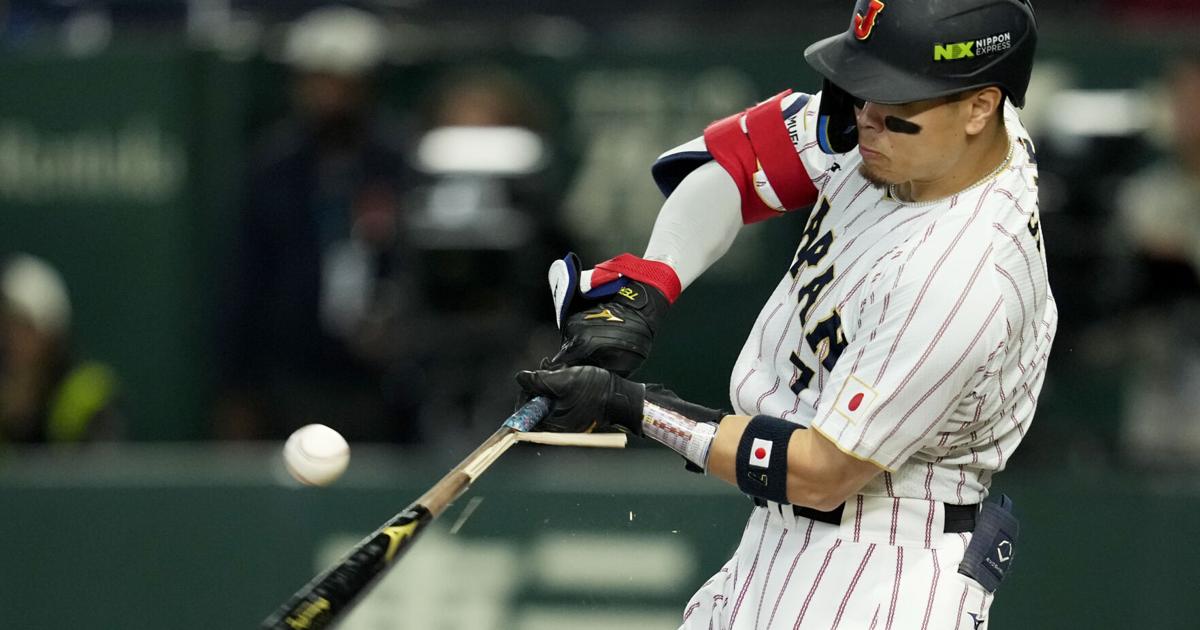
Teruaki Sato and Seiya Suzuki will be among the top free agents, both great fits for the Jays.
Teruaki Sato, among the top free agents set to become available to MLB teams, slugged at least 38 homers each of the last two seasons in Japan.
Gregor Chisholm is a Toronto-based baseball columnist for the Star. Follow him on X: @GregorChisholm or reach him via email: gchisholm@thestar.ca.
The Blue Jays are sending a group of employees to Japan this off-season to do a lot more than just sightsee.
Team president Mark Shapiro revealed during his end-of-season media availability on Wednesday that the Jays will make the nearly 14-hour flight to explore business opportunities.
The Jays have been heavily tied to the Japanese market in recent years. They attempted to sign Shohei Ohtani prior to the 2024 season and made a run at Roki Sasaki the following season before signing Kazuma Okamoto to a four-year deal worth $60 million (U.S.) last winter.
There’s a strong possibility the Jays will attempt to engage in that market again this off-season. Infielder/outfielder Teruaki Sato of the Hanshin Tigers is one of the top free agents available in this year’s class along with Chicago Cubs outfielder Seiya Suzuki. Either one would be a great fit for the Jays.
“We’re certainly looking to leverage that from a business perspective,” Shapiro said about interest in the Japanese market. “Our understanding coming in was that it’s not a one-year process; it takes multiple years. So we’re going to have a contingent going over to Japan this off-season. I might make a trip as well, following that up.”
Beyond the talent, signing Japanese players opens up a new market. One reason the Jays came so close to signing Ohtani was that ownership was sold on the idea that his contract would almost pay for itself through television deals, sponsorships and corporate partnerships.
Ohtani is one of one, so his situation doesn’t necessarily apply to his fellow countrymen, but it still provides a framework for how this would work for others, just on a smaller scale.
Aside from additional exposure on social media, Shapiro said the Jays haven’t seen any quantifiable financial benefits from last year’s addition of Okamoto. That might change this winter as the Jays put more time into learning how they might benefit from the Japanese market.
The Jays were less concerned about the financial opportunities a year ago, more focused on making sure Okamoto transitioned well to the majors. They can now leverage his success (the 30-year-old slugged 33 homers with 92 RBIs in his rookie season) to tap into that market again.
“I think we learn every time a player comes from another country, or another culture,” Shapiro said. “Some of the challenges with Japan are the difference in travel, the difference in the way the schedule works. I think we tend to overlook some of the challenges that exist in transition, which gives me hope that Kaz is going to be even better next year.”
Ohtani would be covered extensively by the Japanese media no matter which team he plays for, but the Los Angeles Dodgers are the most popular franchise in the Pacific Rim. Not just because they signed him, but because they added Yoshinobu Yamamoto and Sasaki, too.
The Jays have an opportunity to create something similar. They have a clear need for middle-of-the-order bats and two of the best available happen to be Japanese. It’s a given that Shapiro and general manager Ross Atkins will at least explore the possibility of signing one. It wouldn’t be surprising if they explored adding both.
Sato has slugged at least 38 homers each of the last two seasons in Japan. Suzuki just finished a five-year run with the Cubs that saw him hit .269 with 113 homers and an .823 on-base plus slugging percentage; no qualified Jays hitter finished with an OPS above .762.
“It’s just another demonstration that this is a good place to come and play baseball,” Atkins said, alluding to Okamoto’s success. “We’ve got some attention, certainly from last year, from some of our other pursuits and the impact on our team, so nothing but a positive influence.”
Money talks more than anything else in free agency. But when the offers are comparable, players and agents shift their focus to other factors: quality of facilities, travel demands and how much their family would enjoy living in the city. It’s the same kind of stuff you and I would consider if we were offered a new job.
The Jays might not have as much to offer as the Dodgers, who have long been established in the Japanese market dating back to the days of Hideo Nomo in the 1990s, but they are ahead of just about everyone else.
That’s important because there won’t be a lot of elite free-agent hitters to choose from this winter. If the Jays are going to solve their run creation issues with cash, there’s a strong possibility at least some of that will be running through Japan.
Error! Sorry, there was an error processing your request.
There was a problem with the recaptcha. Please try again.
You may unsubscribe at any time. By signing up, you agree to our terms of use and privacy policy. This site is protected by reCAPTCHA and the Google privacy policy and terms of service apply.
Opinion articles are based on the author’s interpretations and judgments of facts, data and events. More details
Gregor Chisholm is a Toronto-based baseball columnist for the Star. Follow him on X: @GregorChisholm or reach him via email: gchisholm@thestar.ca.

