Grim details emerge after woman and daughter killed by bear
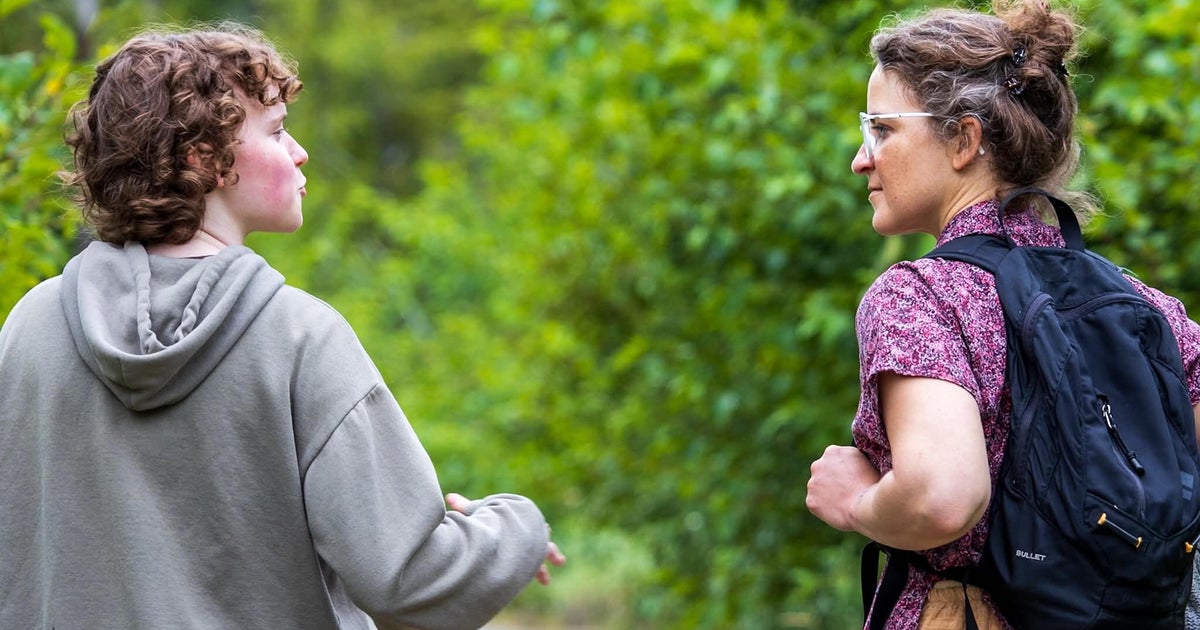
Selah Reed's family first knew something was wrong when the 20-year-old missed a routine Saturday night call with her sister.
When no one had heard from Reed or her mother, Jenny Balcarras, by the next morning, they asked the Royal Canadian Mounted Police to check on their home in Bella Coola on British Columbia's central coast. Balcarras' car was gone and the doors were locked. They found the car at a trailhead up the road, but Balcarras and Reed were nowhere to be found.
Family members across Canada and the U.S. started mobilizing. Jenny Balcarras' brother, Matt, headed north from Vancouver Island, and his brother left from Calgary. They met and drove through the night but got a call late Monday that their sister had been killed, likely by a grizzly.
When they arrived at the trailhead Tuesday morning, ready to join the search for Reed, her remains had also been found. The search was now a tragic recovery effort.
The killings of Jennifer Balcarras, 48, and her daughter happened only 3 to 4 kilometers (1.8 to 2.4 miles) from where a grizzly attacked a group of schoolchildren and teachers last year as they walked on a trail. Eleven were injured, two of them critically, in the Nov. 20, 2025, attack.
Jeff Tyre, an inspector with the Conservation Officer Service, said that aggressive bear was never captured, but officials were able to collect its DNA. Officials have set new traps in the hopes of catching the bear involved in last weekend's attack and to learn whether it was the same bear from a year ago. They also are not sure whether more than one bear was involved.
Terry Webber, chief administrative officer for the Nuxalk Nation, said the killings were triggering for the families who were traumatized by last year's attack.
"Our community is still healing," he said, adding that they've imposed a curfew and are providing mental health services for the community. "Our priority is to ensure they're safe and ensure our community is supported."
The delay in finding the remains of the two women was complicated by difficult terrain, even though it was close to the trailhead, and the grizzly bear's behavior.
Searchers found Jenny Balcarras first, then her daughter. The search was helped by more resources and a cadaver dog, Matt Balcarras said.
Searchers found his niece's remains in a bear cache - a place where bears stash food, sometimes by digging a small hole and covering it with branches and vegetation to keep other animals and birds away.
"Even though it was within 100 or so meters (330 feet), locating remains in a cache is difficult," he said.
By the time officials located his niece, she could only be identified by her clothing, he said. His sister was in a similar condition, but they knew who she was thanks to several tiny tattoos, he said.
"There's no obvious body to identify," he said. "The coroner's investigation will include DNA and dental work. But there is no doubt that the remains that were found are theirs."
Grizzly bears are common in the area surrounding the Bella Coola community, officials said. Conservation officials maintain a hotline where people can report problem bears, but no calls had been received recently, Tyre said during a media briefing.
Balcarras, an art therapist, had moved to Bella Coola during the summer. She had previously lived in Alaska, where her children were born, and was "the central organizing person in our family," Matt Balcarras said.
"In classic, strong single-mother style, she scraped together a career and a life for herself and her kids," Balcarras said. She was small in stature but strong in character and physical abilities, he said.
She was comfortable living among the wildlife, he said.
"She lived in the Bush when her kids were babies," he said. "She and my niece were not naive or foolish or uninformed. They've lived in these areas and have been around animals of countless types for years and years and decades."
There are between 10,000 and 13,000 grizzly bears estimated to live in British Columbia, according to the province's Ministry of Environment, Lands and Parks. The species is classified as vulnerable. Conflicts between grizzly bears and humans are considered "relatively rare," the ministry said, unless the animals are startled or protecting their cubs or food. Still, there have been a number of grizzly bear attacks in the province in recent years.
In October 2025, a grizzly bear injured two hikers in British Columbia's McGregor Mountain area, northeast of Prince George. One of the hikers was transported to the hospital in critical condition and died a few weeks later due to complications from the injuries. The grizzly bear was later found dead, according to the B.C. Conservation Officer Service.
A man suffered "significant injuries," including broken bones and lacerations, after being attacked by a grizzly bear while hunting in British Columbia's Elkford region in May 2024. He was able to shoot the bear to defend himself. The animal was later found dead. The man was flown to an area hospital for treatment.
A 21-year-old woman was seriously injured by a grizzly bear near Tumbler Ridge in British Columbia in July 2023. Authorities described the incident as a "defensive attack." The victim was transported via helicopter to an area hospital.
Ahmad Mukhtar contributed to this report.