Hawaii Braces for Major Hurricane After Year of El Niño Weather Extremes - Newsweek
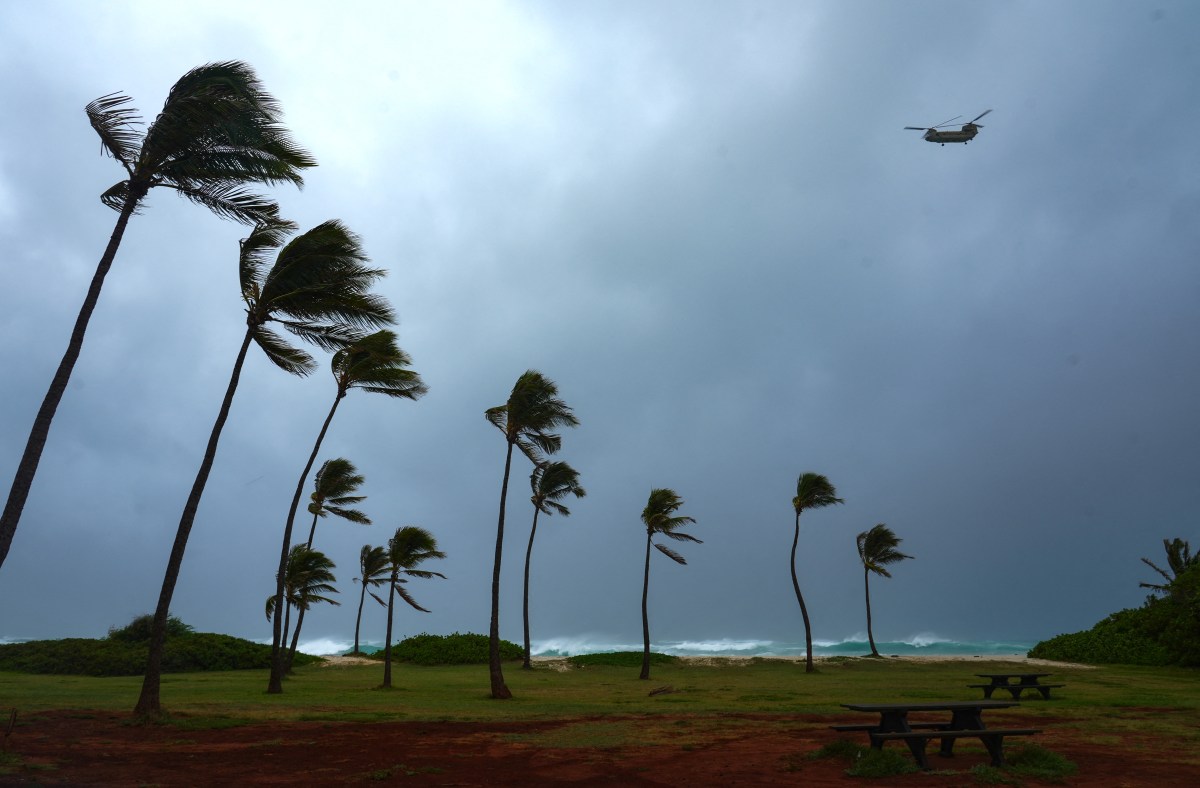
Hawaii is bracing for its third round of major impacts from a tropical system this week as the National Hurricane Center (NHC) monitors Tropical Depression Fifteen-E, which is expected to strengthen into a major hurricane by the end of the week.
The concerning forecast comes as Hawaii has already faced two other tropical systems that trekked close to the islands this year. Although the storms in question didn't make direct landfall, they still brought significant impacts to the islands. Major hurricanes Lala and Lowell both caused impacts across Hawaii. Lala brought heavy rain to the Big Island in August, whereas Lowell impacted Kauai earlier this month. There are still power outages in Kauai from that storm, National Weather Service (NWS) meteorologist Maureen Ballard told Newsweek.
Now, Fifteen-E, which will be named Nolo once it becomes a tropical storm, is expected to reach major hurricane strength by the time it passes south of the Big Island this weekend.
The NHC said Fifteen-E will likely become a tropical storm later on Wednesday. As of current forecasts, it will reach hurricane strength by Thursday afternoon and major hurricane strength early Saturday morning before its path cuts west and it passes south of the Big Island.
As of the most recent update on Wednesday, the storm has maximum sustained winds of 35 mph. It is forecast to bring as much as 35 inches of rain across parts of the Big Island. Flooding and mudslides will be a threat.
"This rainfall may produce catastrophic life-threatening flooding and mudslides, especially in areas of steep terrain. Rainfall totals of 5 to 10 inches with maximum amounts of 20 inches expected across Maui," the NHC update said. "Life-threatening flooding and mudslides possible across Maui, especially in areas of high terrain. Across the remainder of the Hawaiian Islands, rainfall totals of 1 to 3 inches with maximum amounts of 6 inches are expected with isolated flooding possible."
The waters surrounding Hawaii are currently under a hurricane warning. The concerning forecast prompted calls for people to prepare and potentially relocate before the worst of the storm arrived.
"NOW is the time to prepare. If that means readying your property for possible flooding, do so," MyRadar Weather posted on X on Wednesday. "Spend Wednesday procuring the supplies you'll need so you can stay off the roadways Thursday through Monday. If that means relocating, now is the time to make those plans. There is a roughly 50/50 shot that we also see hurricane-force winds (74+ mph) on the south side of the Big Island. We can't rule out an isolated gust to 90 mph if the center comes closer. Please take this seriously. We know Hawaii has been through a lot."
Fifteen-E is the third tropical system to impact Hawaii this year. It is not currently expected to make landfall but will still cause widespread rain, wind, and surf threats across the state.
Hawaii battled similar storms when Hurricane Lala passed by the Big Island in August, and Hurricane Lowell passed by Kauai earlier this month. Repairs are still ongoing on the Big Island, Ballard said, while people on Kauai remain without power.
"This is unusual for us to have so many [hurricanes] close to the islands and so close together," Ballard, who works at the Honolulu office, told Newsweek. "We knew this season was going to be busy because of El Niño."
El Niño is the warm phase of the El Niño-Southern Oscillation (ENSO) cycle. It occurs on average once every three to five years and forms when equatorial Pacific temperatures are .5 degrees Celsius above average for several months in a row. El Niño has set a record in terms of its strength this year, with water temperatures already more than 3 degrees Celsius above average and still climbing. A National Oceanic and Atmospheric Administration (NOAA) spokesperson previously told Newsweek that El Niño is expected to continue strengthening through November and December.
While the climate pattern can cause decreased hurricane activity in the Atlantic basin, it can increase hurricane activity in the Pacific basin because of higher temperatures and reduced wind shear. The Pacific has already seen an active season, which NOAA predicted in spring.
El Niño will also have wide-reaching impacts across the U.S. this winter, as most weather impacts related to the climate pattern are felt during the cooler months. It can cause a wetter winter across the South and Southwest, a warmer winter in the North, and a drier winter across the central U.S.
More warnings related to Fifteen-E will likely be issued in the coming days as the storm strengthens. The NHC will continue issuing updates. People living in Hawaii should take action to prepare for the storm and follow local weather guidance.