He left Oracle's Rs 1 lakh salary to sell falooda. Now he runs a Rs 9 crore business
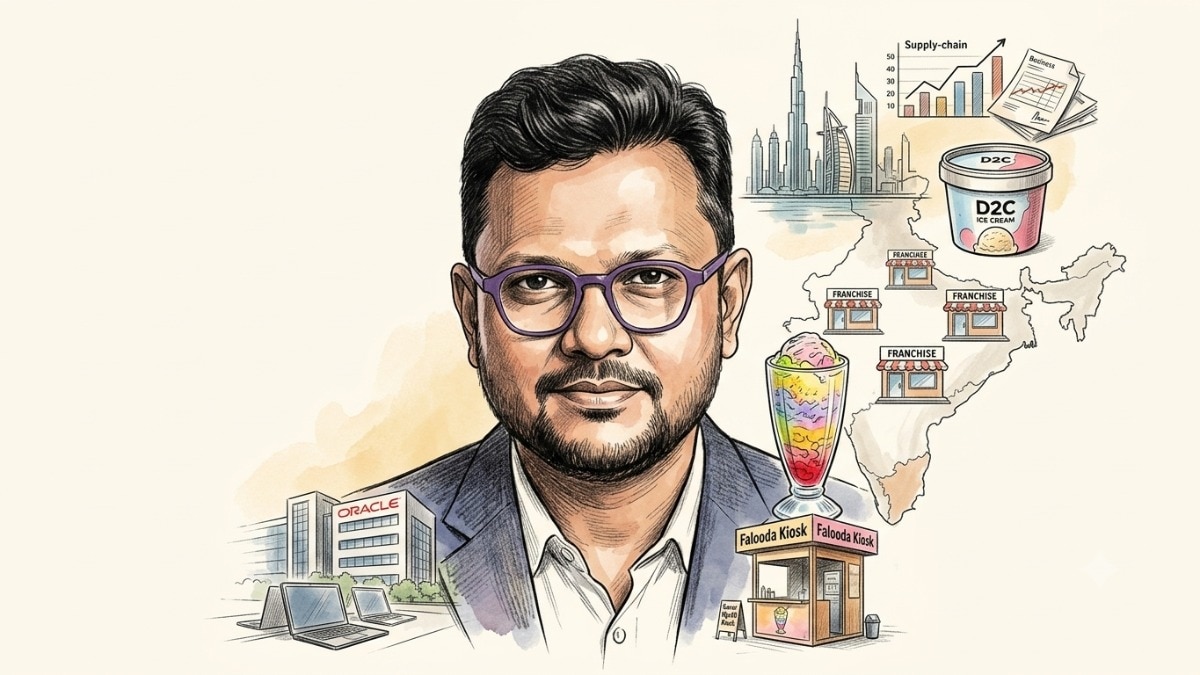
A stable corporate job, a good salary and a settled life in Bengaluru were not enough for Pradeep Kannan. In 2019, the former Oracle India operations professional made a decision that surprised people around him: he left his job, returned to his hometown of Karur in Tamil Nadu and started selling falooda.
Six years later, his small-town experiment has grown into The Falooda Shop, a dessert-focused quick-service restaurant brand with outlets across India and Dubai.
What started as a 10x10-foot kiosk in Karur has since grown into a brand with 18+ outlets across India and Dubai. The Better India reported in December 2025 that the business was generating more than Rs 9 crore in annual revenue.FROM A CORPORATE CAREER TO A SMALL KIOSK
Kannan's career did not begin in food or hospitality. According to his LinkedIn profile, he studied for a Bachelor of Fashion Technology at the National Institute of Fashion Technology and later completed a postgraduate management programme.
His professional journey included roles in apparel operations, supply chain management in Dubai, business analysis at Genpact and, eventually, operations leadership at Oracle India.
But entrepreneurship was not an entirely new thought. Before The Falooda Shop, Kannan had experimented with a kulfi business in Bengaluru. That venture faced setbacks, including the closure of an outlet, and eventually shut down. (Photo: X/@Pradeepkannanj) The experience, however, gave him a practical understanding of food businesses, including location, inventory, customer demand and the challenges of maintaining consistency.
In 2019, he decided to try again, this time full-time. He and his wife moved back to Karur and invested their savings and family assets into the venture. The first outlet began as a small 10x10-foot kiosk near Gandhigram.
Kannan later described the decision in a post on X, writing that people had laughed at him for leaving his job. He said he had a good salary and a comfortable family life, but felt that something was missing.THE BUSINESS IDEA WAS BIGGER THAN FALOODA
The product may have been familiar, but Kannan's ambition was to build something that could be repeated across locations.
The Falooda Shop's official website describes the brand as a dessert-first QSR focused on Indian flavours, with products ranging from classic and layered faloodas to beverages, desserts and a ready-to-eat falooda product in a can.
That shift from a single shop to a brand required more than a popular recipe. Standardised preparation, operating procedures, training and supply systems became important as the company expanded.
The brand's first franchise outlet opened in Karur in 2020, according to the business account reported in earlier media coverage. Over time, the model helped it expand beyond its home market and eventually reach Dubai. (Photos: (l) LinkedIn/@pradeepkannan-j | (r) Instagram/@thefaloodashop - AI-edited) HOW THE FRANCHISE MODEL WORKS
The Falooda Shop operates on a franchise-owned, franchise-operated, or FOFO, model. This means the franchisee owns and operates the outlet while using the brand's systems, training and support.
According to the company's franchise information, a QSR outlet typically requires 300–500 square feet of space. The listed investment is Rs 19–22 lakh, with an average revenue range of Rs 5–8 lakh and a stated return-on-investment period of 24–36 months. These are company-provided figures, not independently verified earnings guarantees.
For Kannan, franchising offered a way to grow without treating every new outlet as a company-run store. It also made consistency a central part of the business rather than an afterthought.THE NEXT BET: A D2C ICE-CREAM BRAND
Kannan's ambitions now extend beyond physical dessert outlets.
His X profile says he is building a global D2C ice-cream brand from scratch. The Falooda Shop's website also describes its ready-to-eat falooda product as part of its effort to take the category beyond traditional stores.
His journey is often presented as a story about leaving a secure job to follow a dream. But the more useful lesson lies in what happened after the resignation.
The Oracle experience did not disappear. Skills in operations, demand planning, supply chains and process management became relevant in building a food business that could scale.
What began in a small kiosk in Karur is now a growing dessert brand with an international outlet. Kannan's next challenge is to take that same approach from franchise counters to consumer products and global shelves.- EndsPublished By: Roshni Published On: Sep 15, 2026 18:13 ISTRead | From IIT to millionaire: Meet Siddhartha Saxena who earned Rs 77 crore in a single dayRead | At 65, this Patna woman turned her Rs 20 tiffin into a Rs 2.5 crore food business