Hilton, Becerra Clash in CNN Governor Debate: Five Key Moments and Polls - Newsweek
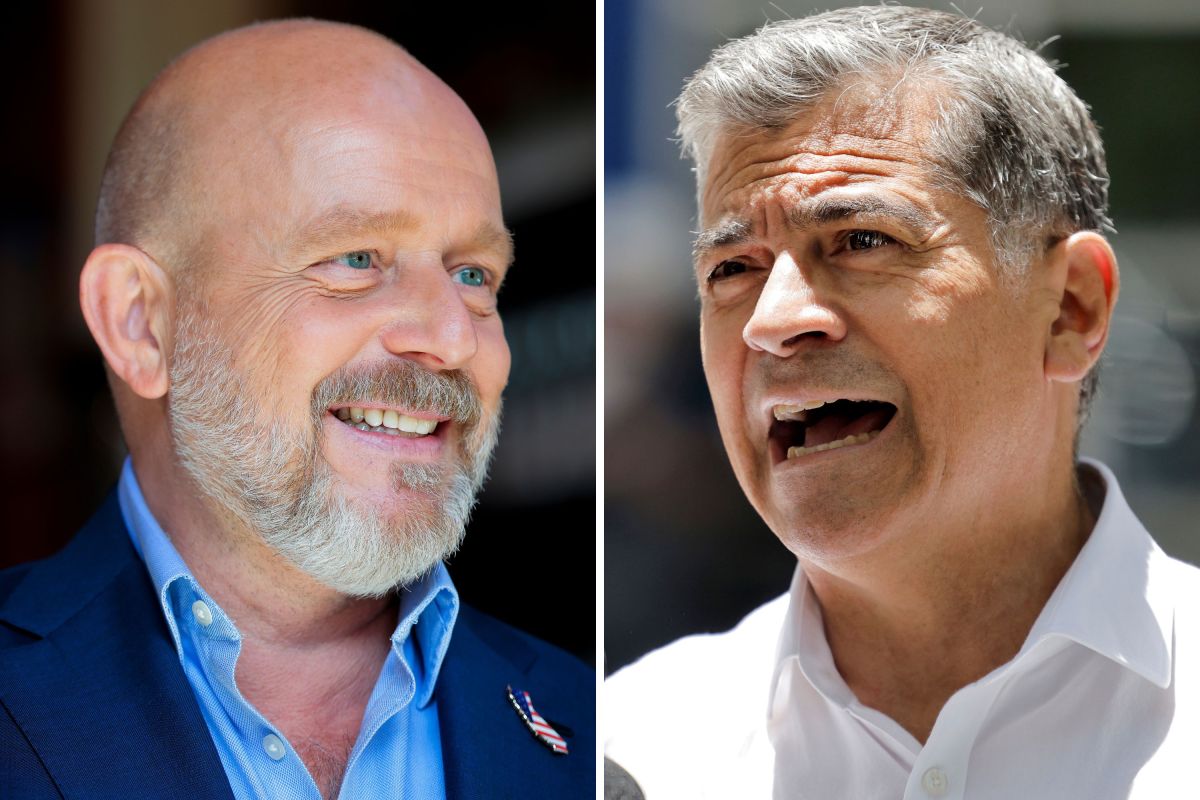
Democrat Xavier Becerra and Republican Steve Hilton wrangled over immigration, taxes, gas prices, artificial intelligence and California's housing crisis Wednesday night in a nationally televised debate as they vie to succeed term-limited Governor Gavin Newsom.
The CNN debate was the candidates' first time sharing a stage since the June primary and was the only scheduled head-to-head debate before the November 3 election.
Becerra, a longtime California and federal official, entered the debate with a substantial lead in the polls, while Hilton, a former Fox News host and Silicon Valley entrepreneur, is seeking to capitalize on voter concerns about the state's high cost of living and direction.
Immigration produced one of the sharpest exchanges of the night, with Becerra directly challenging Hilton over his position on deportations and his relationship with President Donald Trump.
Hilton said his goal on deportations would be to "lower the temperature on this whole question," while Becerra argued that Hilton's approach would treat immigrants differently based on their appearance.
"You seem to welcome immigrants who look like you, but deport immigrants who look like me," Becerra said.
Hilton called the comment "disgraceful."
The exchange centered on an issue familiar to Becerra, who served as California attorney general before becoming U.S. Health and Human Services secretary under former President Joe Biden. Hilton, meanwhile, has sought to maintain his support for Trump's immigration policies while distinguishing himself from the president on other issues.
The debate took an unusually personal turn when Hilton revived a 2024 report that then-Biden White House official Susan Rice had referred to Becerra as "bitch-ass" during internal disputes over the administration's handling of migrant children.
The exchange referred to disagreements between Rice and Becerra over the administration's handling of an influx of young migrants at the U.S.-Mexico border. Hilton used the episode to attack Becerra's record in the Biden administration, while Becerra pushed back.
The exchange was part of a broader pattern of personal attacks throughout the debate. Hilton had opened the evening by accusing Becerra of having been "out of hiding," a reference to Becerra's relatively low-profile campaign following the June primary.
When Hilton accused Becerra and Democrats of crushing the "California dream," Becerra called Hilton a "political newbie" and Trump "lackey," saying "there are no training wheels in the governor's office."
Gas prices became another major point of contention, with Hilton arguing that Californians are being squeezed by high costs and criticizing the state's gas taxes.
Becerra pushed back on Hilton's proposals and appeared to reject eliminating the gas tax, while Hilton pressed him on the cost of filling up at the pump.
At one point, Hilton asked Becerra what gas prices were. Becerra quickly responded: "$2 more than it was when Donald Trump started the war in Iran."
The exchange came as gasoline prices have become a particularly visible part of California's broader affordability debate.
Hilton has made lowering gas prices a central part of his campaign, pledging to bring them down to $3 a gallon by rolling back regulations while increasing oil production.
Artificial intelligence emerged as a less traditional but consequential issue in the race, with the candidates debating how California should approach the rapidly developing technology.
Hilton expressed skepticism toward Trump's approach to AI self-regulation, creating some distance between himself and the president who has endorsed his campaign.
Becerra, meanwhile, used the issue to tie Hilton to Trump, repeatedly bringing the president into the discussion.
Hilton also embraced a pause on AI use in classrooms, particularly among younger students, while the candidates debated the balance between innovation and regulation.
The issue came as Trump has pushed for voluntary AI guardrails rather than broad federal regulation. On Wednesday, Newsom also signed new laws addressing several potential workplace risks from AI and an executive order concerning AI terminology and state-agency use of the technology.
Hilton criticized Becerra's housing proposals as short on specifics and argued that California needs to cut what Republicans frequently describe as excessive regulation and "red tape" that makes it harder to build.
Becerra defended his approach, while the candidates debated how much new construction would be needed and where it could realistically take place.
Hilton emphasized reducing regulations and speeding up development, while Becerra focused on broader government action to increase housing availability and affordability.
Housing, along with the cost of living, has been among the central concerns in the governor's race. Both candidates entered the debate arguing that California needs to become more affordable, but offered different approaches for getting there.
The debate came as ballots were beginning to reach California voters, making the CNN matchup the most prominent opportunity yet for the two candidates to present their cases side by side.
The latest statewide polling gave Becerra a clear advantage heading into Wednesday's debate.
A Public Policy Institute of California survey conducted September 4-10 found Becerra leading Hilton 60 to 38 percent among likely voters. The poll also found that 65 percent of likely voters consider the candidates' positions on affordability and the cost of living very important to their vote.
A Berkeley Institute of Governmental Studies poll conducted September 15-20 similarly found Becerra ahead, 58 to 33 percent, a 25-point margin. That was an increase from Becerra's 18-point lead in the institute's August poll.
Recent polls have consistently shown Becerra with a double-digit lead over Hilton, although the size of that lead has varied by survey. Wednesday's debate gave Hilton an opportunity to address voters directly as the campaign enters its final weeks.
The cost of living was expected to be one of the central issues of the debate.
Hilton, 57, has built much of his campaign around promises to reduce the cost of living and roll back policies he blames for California's high prices. He has said he wants to bring gasoline prices below $3 per gallon, cut utility bills and accelerate construction of starter homes.
He has also proposed eliminating state income taxes on the first $150,000 earned by Californians. Hilton says the plan could be financed through cuts to high-speed rail, homelessness nonprofits and state government departments.
Becerra, 68, has offered a different approach, including a proposal he calls "Power Hour," under which low-income households would receive up to two hours of free electricity using excess solar power generated in California.
He has also proposed declaring a state of emergency to freeze utility and insurance rates and has made healthcare a major part of his campaign, including a broad pledge to work toward universal coverage.
Affordability could be particularly important because the issue crosses party lines. In the latest PPIC survey, 69 percent of Democrats, 65 percent of Republicans and 59 percent of independents said candidates' positions on affordability were very important to their vote.
Hilton is attempting to make the race a referendum on California's Democratic leadership rather than a contest centered on national Republican politics.
The former Fox News host has argued that voters can oppose President Donald Trump and still support his campaign, saying California's problems should be blamed on Democrats who control state government.
His foe Becerra has repeatedly said on the campaign trail, "I am not running on inflated promises. I am running on my record," emphasizing his long career in Democratic politics and government.
Becerra served as California attorney general before becoming former President Joe Biden's secretary of Health and Human Services. Hilton, meanwhile, has portrayed himself as an outsider challenging the state's political establishment.
That contrast was expected to be among the core themes of the debate, particularly as Hilton attempts to attract independent and Democratic voters in a state where Republicans have struggled in recent statewide elections.ng with creating a "California Entertainment Summit" to develop a broader plan for the industry.
Newsweek’s reporters and editors used Martyn, our AI assistant, to produce this story. Learn more about Martyn here. Contact Newsweek editors on this story: Edward T. Cummins