
History behind Nigeria’s new hairstyle names - The Guardian Nigeria News
Fashion has always repackaged what already exists, and Nigerian hair culture is a clear example. Hairstyles that generations of Nigerian women grew up wearing, with local names and deep cultural roots...
Fashion has always repackaged what already exists, and Nigerian hair culture is a clear example. Hairstyles that generations of Nigerian women grew up wearing, with local names and deep cultural roots, are increasingly appearing on Instagram, TikTok and Pinterest under sleeker, international names.
While this may seem like simple rebranding, it reflects the influence of globalisation, the beauty economy and social media algorithms, which favour names that travel easily across markets. A style may suddenly gain global attention after celebrities like Beyoncé, Zendaya, or SZA wear it, while its original Nigerian identity fades from view. For stylists, international names also make it easier to market to wider audiences and, in some cases, position a familiar technique as something newer and more premium.
“One million braids” was a literal description of just how many tiny braids covered the head, popular through the 1990s and 2000s and prized for its fullness and staying power, often lasting two to three months. The technique – extremely fine, tightly braided extensions – hasn’t changed much at all. What changed is the vocabulary; “micro braids” is now the global search term, even though Nigerian stylists have been perfecting the method for decades, usually with a level of patience and precision the trend videos rarely capture. A full head can still take six to ten hours.
All back told you exactly what it was: hair braided straight back from the hairline with no parting pattern, no design, just the everyday, low-maintenance style for school, work, or an easy week. The broader term cornrows is now used instead, though cornrows is actually the older, more historically loaded word. It traces back centuries to West and Central Africa, where braid patterns communicated ethnic identity, age, marital status, and even social rank. All back was really just one specific pattern within that much older tradition, and its rise as an umbrella term is one case where global usage has quietly restored a richer history rather than erasing one.
Packing Gel – Sleek Ponytail Packing gel needed no further explanation to anyone who grew up with it; hair brushed and laid neatly into a ponytail, often with plenty of gel, for a smooth finish suitable for job interviews, church, or anywhere that called for looking done. The technique behind today’s sleek ponytail is identical. What’s different is the polish, silk scarves for laying edges, precision styling gels, and sometimes a clip-in ponytail extension for extra length, turning a five-minute style into a full glam look.
What Nigerians once called Shade Adu now goes by Fulani braids, a name that ties the style back to the Fulani people of West Africa, whose traditional braiding, thin cornrows, a central braid running front to back, and beaded embellishments have directly inspired the look for generations. It’s one of the more accurate renamings on this list, since it correctly credits an actual ethnic group rather than inventing a marketing term out of nothing.
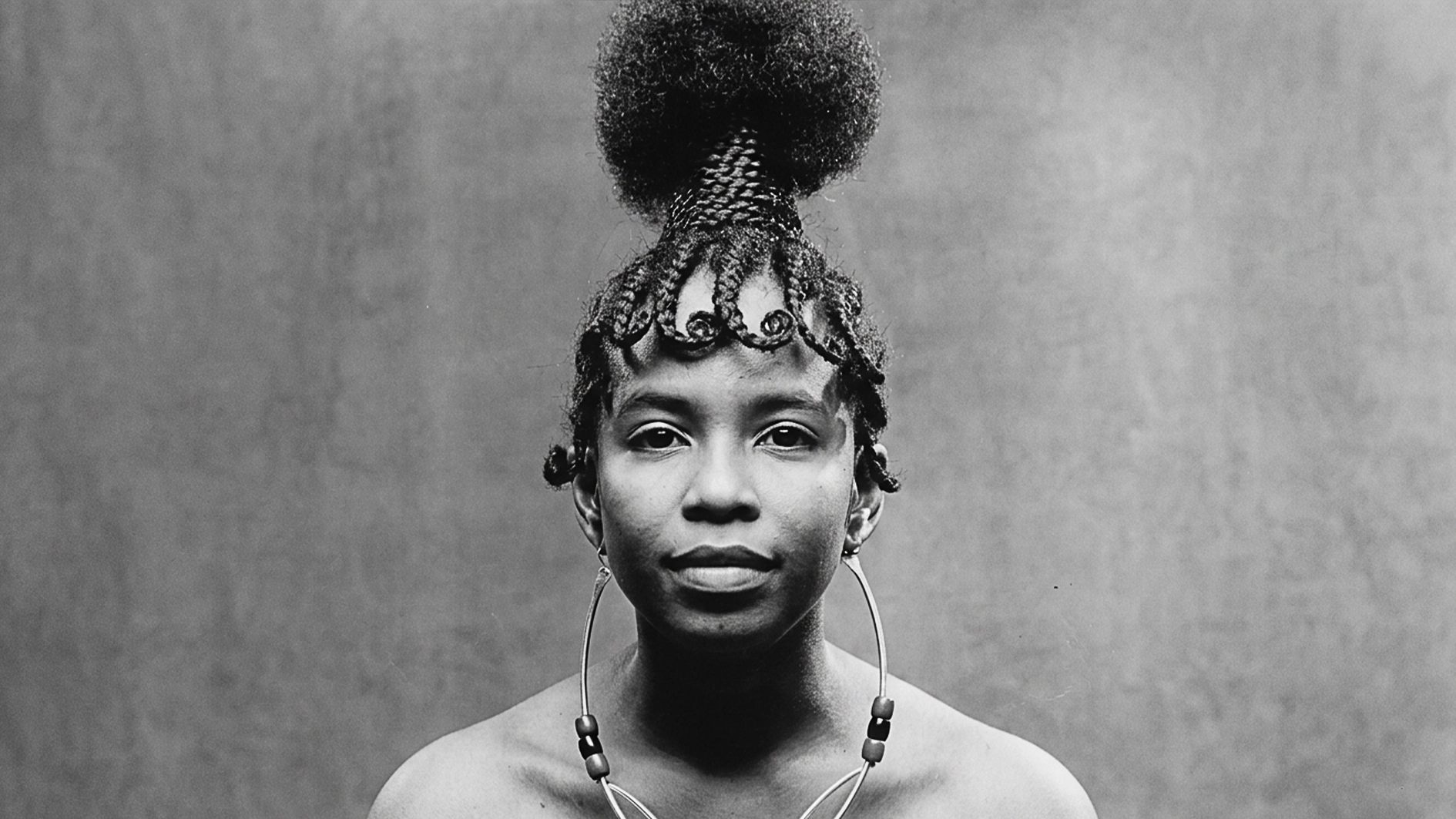
Shuku is a Yoruba-origin style in which the hair is braided upward into a raised ponytail at the crown, historically finished with thread wrapping rather than a simple elastic band. It remains one of the most recognisable traditional Nigerian hairstyles for both children and women. Little about the construction has changed in its modern form, but the rebranding as a “braided ponytail” strips away the Yoruba name entirely, replacing it with a purely descriptive English phrase that carries none of the original’s linguistic or cultural weight.
Pick and drop, individual braids left with a section of curly or straightened hair hanging loose at the end, built for a softer look than fully braided extensions, live on today as boho braids and French curl braids. Boho braids lean into a looser, more textured aesthetic throughout, while French curl braids point specifically to the curl pattern at the ends, but both are direct descendants of the original style, just marketed with more specific vocabulary.
Watermelon braids, thick, oversized braids named for their chunky, rounded shape, share an obvious lineage with what’s now called goddess braids, which typically add loose, curly pieces mixed between the thick braids for a fuller, more romantic effect. The boldness and scale of the original style remain the throughline.
Feathers, a playful, voluminous style with braids flaring out at the ends, followed a similar path into dolly braids, which push that doll-like fullness even further with curled or crimped ends, an intensified version rather than a genuinely new idea.
Ghana weaving, named after Ghana though practised widely across West Africa including Nigeria, involves gradually adding extensions into cornrows so each braid starts thin at the root and thickens toward the end, creating a smooth, flat-to-the-scalp finish. “Feed-in braids” is really just a technical description of the same method, and both terms are still used interchangeably today, making this one of the milder examples of renaming on the list.
Long, individual, square-parted braids using extension hair were informally called Bob Marley in Nigeria, likely a nod to the reggae icon’s own long, braided image. Today the dominant global term is box braids, referencing the square-shaped parting used to section hair before braiding, and it’s arguably become one of the most internationally recognised protective styles across the African diaspora.
Many Nigerians once knew this side-swept cornrow pattern as a police cap, a nickname for its resemblance to the angled shape of an officer’s cap. The style itself is far older than any of its names, part of a braiding tradition that goes back millennia. But it exploded globally under a new label, lemonade braids, after Beyoncé wore the style, designed by hairstylist Kim Kimble, in the “Formation” and “Sorry” sequences of her 2016 visual album Lemonade. Almost overnight, a single celebrity moment gave an old pattern a new, internationally searchable name, and women were still asking for it in salons years later.
Fixing described attaching extensions to natural hair using thread, a technique that demanded real skill since the thread had to be tight enough to hold without damaging the scalp. The internationally recognised term is now sew-in, though it more precisely refers to attaching a weft of hair with needle and thread onto braided tracks, a related but technically distinct method. In this case, the vocabulary shift has somewhat blurred two related techniques into one catch-all term.


_2026_10_03_05_48_35.jpg)