Home Down Payments Would Get Gutted Under Lauren Boebert Plan - Newsweek
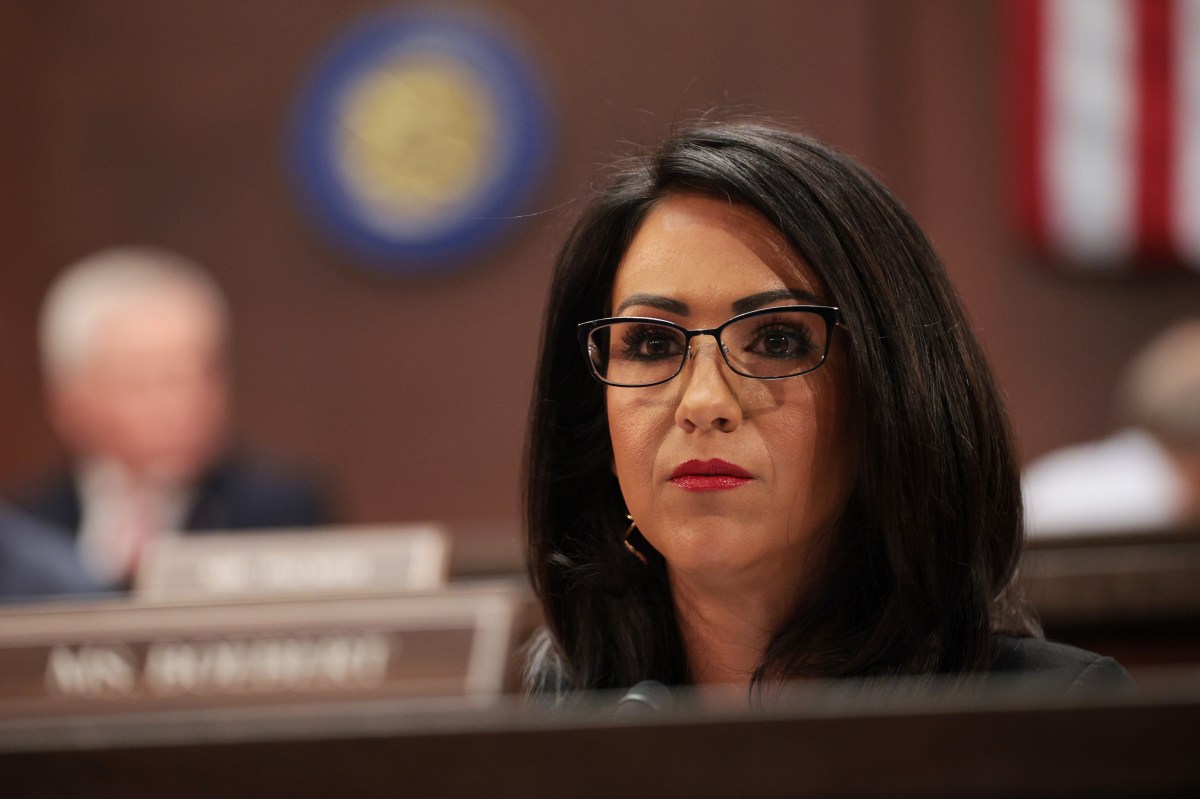
Representative Lauren Boebert is calling for a major overhaul of mortgage lending rules that she says are preventing many Americans from becoming homeowners.
In a letter sent to senior Trump administration officials overseeing housing, finance and agriculture policy, the Colorado Republican urged reforms to mortgage underwriting standards, credit scoring and down-payment requirements.
“Affordability is what families talk about around the kitchen table in the heartland,” Boebert wrote. “Republicans in Congress cut taxes. Next, we need to reform the home-buying process."
In the letter, Boebert said that traditional lending models rely too heavily on conventional credit histories and large cash reserves, leaving many qualified borrowers unable to purchase homes. Because of this, she said, lenders should consider alternatives such as renters' payment histories and nontraditional income streams.
“Asking a buyer to put down hundreds of thousands of dollars knocks many out of the chance to buy and grow their wealth,” she wrote. "I intend to work in a bipartisan manner with my colleagues to eventually introduce legislation."
Housing affordability is one of the biggest economic challenges facing prospective homeowners.
While elevated mortgage rates and home prices have strained affordability nationwide, lending standards themselves can also limit access to homeownership.
According to Boebert, current mortgage qualifications fail to reflect modern workforce realities and disadvantage borrowers whose finances do not fit these traditional lending models.
Boebert's plan focuses on reducing what she described as "arbitrary barriers" in the mortgage process rather than loosening underwriting standards altogether.
“Boebert is focusing on a genuine tension in today’s housing market that Americans can demonstrate for years that they reliably pay substantial rent and household bills yet still struggle to qualify for a mortgage because traditional underwriting may not fully capture that financial history,” Alex Beene, financial literacy instructor for the University of Tennessee at Martin, told Newsweek.
One of the biggest changes would involve down payments.
Boebert argued that the long-standing expectation that buyers contribute 20 percent of a home's value upfront can place homeownership out of reach for many households. In her letter, she pointed to an $833,000 jumbo mortgage, where a 20 percent down payment would require roughly $167,000 in cash, compared with about $42,000 under a 5 percent down-payment model.
"Keeping the bar at 20 percent does not automatically make the loan safer,” she wrote. “It just delays homeownership and keeps people renting longer."
According to Boebert, the current system disproportionately excludes borrowers with strong payment histories but unconventional financial profiles.
Her new proposal would benefit long-term renters with limited traditional credit histories as well as farmers and ranchers whose earnings fluctuate seasonally.
Small-business owners and self-employed workers could also see an advantage in navigating the housing market under Boebert’s ideas, alongside trades workers and commission-based employees.
“There are Americans who may be perfectly capable of making a mortgage payment but get screened out because the system doesn't measure their creditworthiness particularly well,” Michael Ryan, finance expert and founder of MichaelRyanMoney.com, told Newsweek. “Looking at things like rent payment history or newer credit models could make sense if it identifies responsible borrowers more accurately.”
Many Americans are financially capable of owning homes but cannot meet the requirements under a lending system designed around steady W-2 employment and traditional credit histories.
However, if the house costs too much relative to your income, lowering the financing hurdle doesn't magically make the house cheaper, Ryan said.
“It may simply allow you to take on more debt,” Ryan said. “That's where I think the lesson from 2008 matters. We shouldn't confuse expanding responsible access to credit with solving housing affordability. Modernize underwriting where the old rules are unnecessarily excluding good borrowers, absolutely. But don't weaken the basic question lenders still need to answer.”
Those against lower down-payment requirements have historically argued that borrowers who put less money down have a greater risk of default during economic downturns or housing market corrections.
“Those who don’t know history are doomed to repeat it,” Kevin Thompson, CEO of 9i Capital Group and host of the 9innings podcast, told Newsweek. “I think we have been through this before, where we made it easier for people to purchase homes and eased access to loans, only to almost find ourselves in a financial crisis.”
Many economists are also divided over whether loosening lending requirements would significantly improve affordability or simply increase demand in already constrained housing markets.
Still, many responsible borrowers could be unfairly excluded from homeownership just because the existing credit scoring and underwriting systems do not fully capture their financial circumstances.
“Modernizing credit scoring and allowing lenders to consider information such as rental and utility payments could expand homeownership for creditworthy first-time and low income buyers, but reform has to preserve the ability-to-repay safeguards designed to prevent another wave of unsustainable mortgages,” Beene said.
“What makes some change possible is that the administration is already moving in this direction through newer credit-scoring models, so Boebert’s letter appears less like opposition to the administration than pressure to accelerate n reforms already underway.”
At this stage, Boebert's proposal is not a bill and would not immediately change mortgage rules.
However, the congresswoman said she intends to work with the Department of Housing and Urban Development, the Treasury Department and the Department of Agriculture to develop policy recommendations. She also said she hopes to eventually introduce bipartisan legislation to improve the state of housing affordability today.
However, not everyone believes Boebert’s changes would actually amount to easing homeownership affordability for most Americans.
“This is Politics 101, where she is showing herself to be aligned with the greater community when it comes to housing reform,” Thompson said. “It is becoming more difficult to purchase a home, but it is not because of the underwriting procedures. It is because houses are simply unaffordable due to their cost and current interest rates.”
Newsweek’s reporters and editors used Martyn, our AI assistant, to produce this story. Learn more about Martyn here. Contact Newsweek editors on this story: Edward T. Cummins.