Hot dogs feel the economic bite during Chile’s cost of living crisis
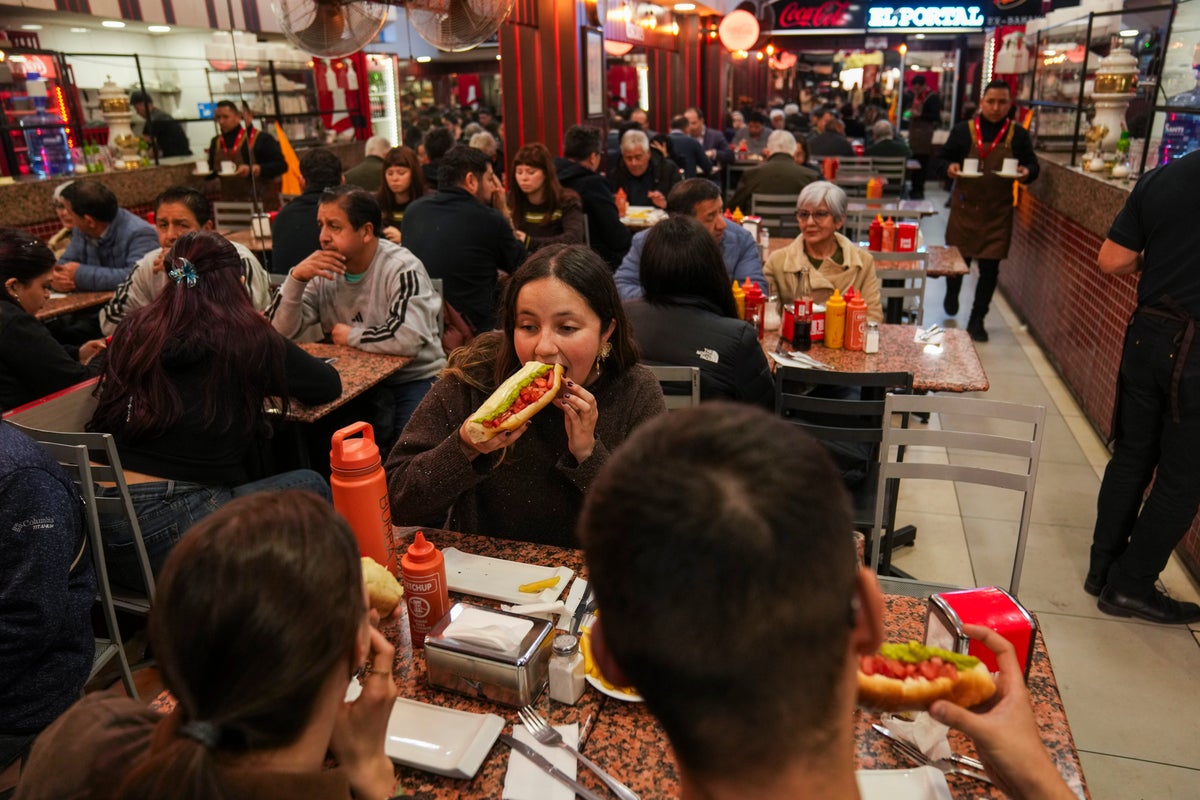
Around the Plaza de Armas in central Santiago, lunchtime businesses are serving up the "completo", long considered one of Chile’s most egalitarian dishes.
For decades, this local variation of the hot dog offered affordable food to people of all social backgrounds. Yet as economic stagnation deepens and living costs climb, even this staple street snack is becoming significantly more expensive.
"Not long ago, I used to pay 2,500 pesos ($2.60) for a completo," said Antonia Bravo, a 21-year-old student. "Now, they cost 3,500 or 4,000 pesos ($3.60 or $4.10)."
Official figures published this month show the country stands on the verge of recession after experiencing two consecutive quarters of negative growth. Unemployment has reached 9.5 per cent — its highest point in five years — while annual inflation accelerated to 4.1 per cent over the past year, fuelled by rising food and transport costs.
This subdued economic performance led Chile's Central Bank to lower its 2026 GDP growth estimate from 1 per cent –1.75 per cent to between 0.25 per cent–0.75 per cent.
Addressing a media briefing last week, Central Bank President Rosanna Costa cautioned: "We cannot rule out the possibility that the current weakness may prove more persistent than anticipated."
The completo was born in one of those small shops in downtown Santiago in the early 1930s. Chile’s take on the hot dog features a sausage topped with sauerkraut, tomato and homemade potato-based mayonnaise. Avocado and other ingredients were added over time, turning it into a complete meal. Hence its name, “completo.”
“Back then, people weren’t well-off; they didn’t have many resources and would come here for completos,” said Guillermo Cid, manager of the restaurant credited with creating the dish. “It is the same today. Instead of sitting down for a full meal, many people just stop by for a completo."
Chile's monthly basic food basket cost just under $100 in August, up 5 per cent from a year earlier, according to the Ministry of Social Development. The country's monthly minimum wage is about $580. Chile has also faced rising fuel prices resulting from the U.S.-Iran war.
Together, these pressures "feed into inflation and erode household purchasing power,” creating a scenario where “confidence... deteriorates,” the Central Bank president said.
As the cost of living rises and household budgets tighten, Chileans are looking for ways to stretch their incomes by cutting spending on key areas, including food.
“The price of basic products just keeps going up and up,” said Mauricio Aravena, a 30-year-old teacher. “Eating out has always been somewhat of a luxury, but now even more so.”
Even a get-together with friends has become synonymous with extravagance.
“Compared to last year, when my friends and I could plan more outings, these days it’s more about staying in and cooking at home,” said Tabata Martinich, 31, also a teacher. “You have to watch your spending more closely; everything is way more expensive.”
Workers also say wages aren’t keeping pace with inflation.
“Bills are more expensive overall, and pay raises aren’t keeping up with those costs,” Aravena added. “We are lagging about five years behind.”
Since taking office in March, President José Antonio Kast has pursued an economic recovery agenda aimed at boosting investment and employment, as Chile's economy and labor market weaken. His challenge is ensuring that these reforms not only translate into stronger economic indicators but also reach citizens’ pockets.
“Expectations are turning into frustration,” analyst Guillermo Holzmann said. “Despite progress in approving major projects, the investments have not materialized at the pace needed.”
Kast recently acknowledged the situation, saying Chile is “facing higher inflation than expected and lower growth than projected.”
At a meeting Tuesday with ministers and leaders of parties in the ruling coalition, Kast instructed his team to draft a “labor emergency plan” that should be presented in the coming weeks — although he did not provide details.
The plan follows several other measures announced recently — including the economic and tax overhaul, which was approved by Congress but has yet to be ratified as the Constitutional Court reviews complaints filed by opposition parties.
The proposed reform includes initiatives such as tax cuts for large corporations, the elimination of double taxation to encourage more private investment, and the implementation of financial compensation for companies whose projects are rejected due to environmental concerns. It also establishes the “right to financial oblivion” for old debts in new credit assessments and bans the charging of interest on interest.
Holzmann said the worsening economic conditions are pushing the Kast administration to race against the clock to translate medium- and long-term initiatives into concrete actions that have a direct impact on citizens’ pockets. “Making ends meet is becoming increasingly difficult,” he said.
“There is a disconnect between consumers’ income levels and the prices of products in stores,” he added. “Social frustration is the primary breeding ground for unrest in a country.”