Houthis U-turn on US, threaten American interests if Trump backs Saudi-led strikes
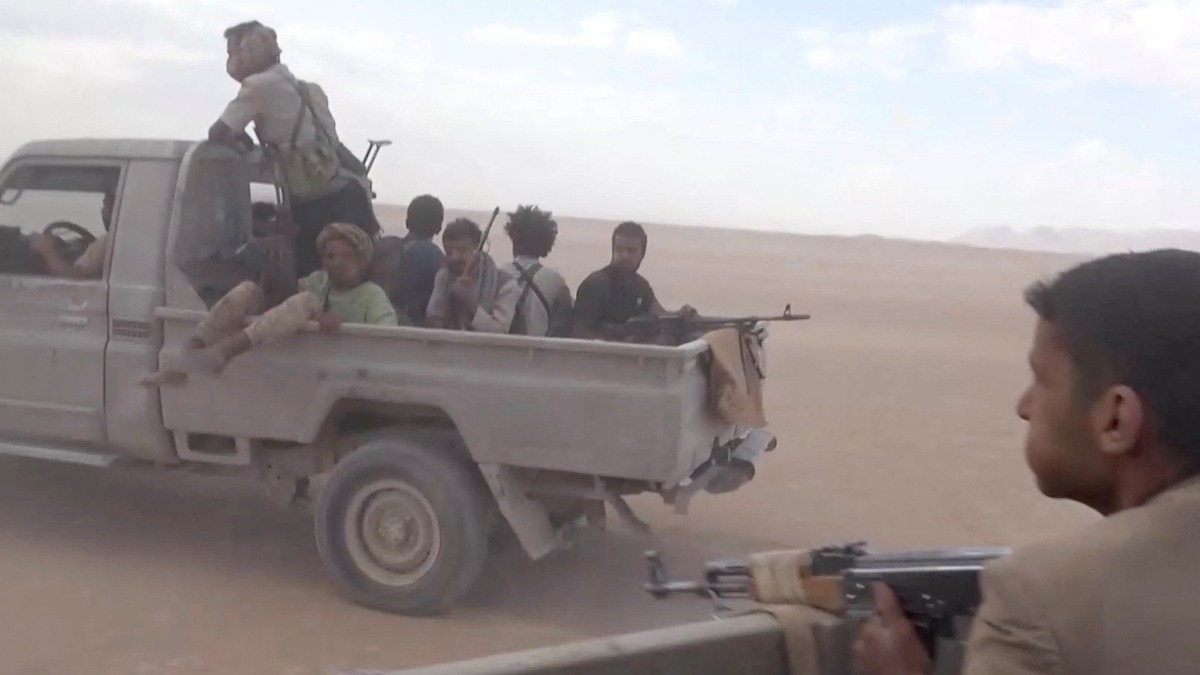
Days after assuring Washington that the Houthis would not target US vessels, they have now warned that American interests could become targets if the US intervenes in the conflict on Saudi Arabia's side or attempts to take control of the strategic Bab el-Mandeb Strait.
Houthi military adviser Abed Mohammed al-Thawr issued the warning in an interview with AFP. He said Washington would cross a "red line" if it deployed forces to Yemen or attempted to take control of the strategic Bab el-Mandeb Strait.
The warning comes as fighting between the Houthis and Saudi-backed Yemeni government forces intensifies. The Houthis have made significant gains along Yemen's Red Sea coast and seized control of areas around Bab el-Mandeb, which is a key maritime passage linking the Red Sea with the Gulf of Aden and the wider Indian Ocean.
Warning that any US military intervention in support of Saudi Arabia would trigger a response from the Houthis, Thawr said Washington would be crossing a red line.
"If America dares to intervene militarily with its fleets or tries to take control of Bab el-Mandab, it is a red line for them and anyone else we will fight over it," he told AFP.
He went further, warning that US involvement would expand the list of potential targets.
"If America gambles on supporting Saudi Arabia with airstrikes or air support We will consider any American interests around us to be targets and we will not exclude anything," Thawr said.
He also threatened to shut the waterway to American vessels. The warning is significant because Bab el-Mandeb is one of the region's key maritime chokepoints. Ships using the passage can move between the Red Sea and the Gulf of Aden, making the waterway important for trade and energy shipments.WHY SAUDI ARABIA IS SEEKING US SUPPORT
The Houthi warning comes as Saudi Arabia faces a renewed military challenge from the group. The Houthis and Saudi-backed forces had largely avoided major fighting after a 2022 truce. That relative calm broke down this year, with the Houthis launching a major offensive along the Red Sea coast and making territorial gains.
Saudi Arabia has responded with airstrikes as it tries to contain the Houthi advance. The Houthis have also carried out attacks inside Saudi Arabia, including strikes targeting Riyadh. Houthi missiles and drones were aimed at sites in the Saudi capital on September 19, while Saudi forces said they intercepted a missile.
The escalating conflict has raised concerns in Riyadh over the security of its territory and vital economic infrastructure.
According to US reports cited by AFP, Saudi Crown Prince Mohammed bin Salman has asked US President Donald Trump for assistance against the Houthis. Yemen's Saudi-backed government has also sought US help. Trump has so far not committed US forces to a direct campaign against the Houthis. He reportedly called off planned American airstrikes at the last minute, despite preparations for an operation.HORMUZ CRISIS ADDS TO THE PRESSURE
The confrontation in Yemen is unfolding alongside the wider conflict between the US and Iran.
That has made the Bab el-Mandeb even more significant. The waterway is one of the main maritime routes connecting the Red Sea with the Indian Ocean, while the Strait of Hormuz connects the Gulf with the Arabian Sea. With shipping through Hormuz already disrupted by the Iran war, another major chokepoint coming under pressure could further complicate regional trade and energy flows.
The Houthi advance has therefore drawn attention beyond Yemen's borders. Control of Bab el-Mandeb gives the group influence over a route used by international shipping, while Saudi Arabia is seeking to prevent the Houthis from consolidating their position along the Red Sea coast.
The Houthis are closely aligned with Iran, but Thawr rejected the suggestion that Tehran directly controls the group's military decisions.
"Iran is a friendly, allied, and brotherly country to us, but it does not direct us. We are independent in our decisions and in our sovereignty," he said.
At the same time, he described the two sides as "one alliance and one body". That relationship has become an important part of the wider regional conflict, with Iran backing the Houthis while Saudi Arabia supports Yemen's internationally recognised government.HOUTHIS THREATEN MORE ACTION AGAINST SAUDI ARABIA
Thawr also warned that the Houthis would continue retaliating against Saudi Arabia as long as Riyadh continued its military campaign in Yemen.
"As long as Saudi Arabia insists on and continues killing our country and striking our people, we will strike with an iron fist," he said.
"We possess sufficient capability to discipline Saudi Arabia, punish it, and force it out of the game in the fields of oil and the economy."
The Houthis have accused Saudi Arabia of carrying out hundreds of airstrikes since the latest escalation. Houthi-affiliated media said Saudi strikes in Taiz and Al-Jawf killed 10 people and wounded 14 others over a 24-hour period.
The United Nations has warned that the renewed fighting could further worsen Yemen's humanitarian crisis. The conflict has already displaced more than 130,000 people, with the UN warning that the figure could rise significantly in the coming months.- EndsWith inputs from agenciesPublished By: Satyam SinghPublished On: Sep 23, 2026 23:17 IST