
How 4.5 mn native fish fingerlings could help revive Maharashtra's Ujani dam
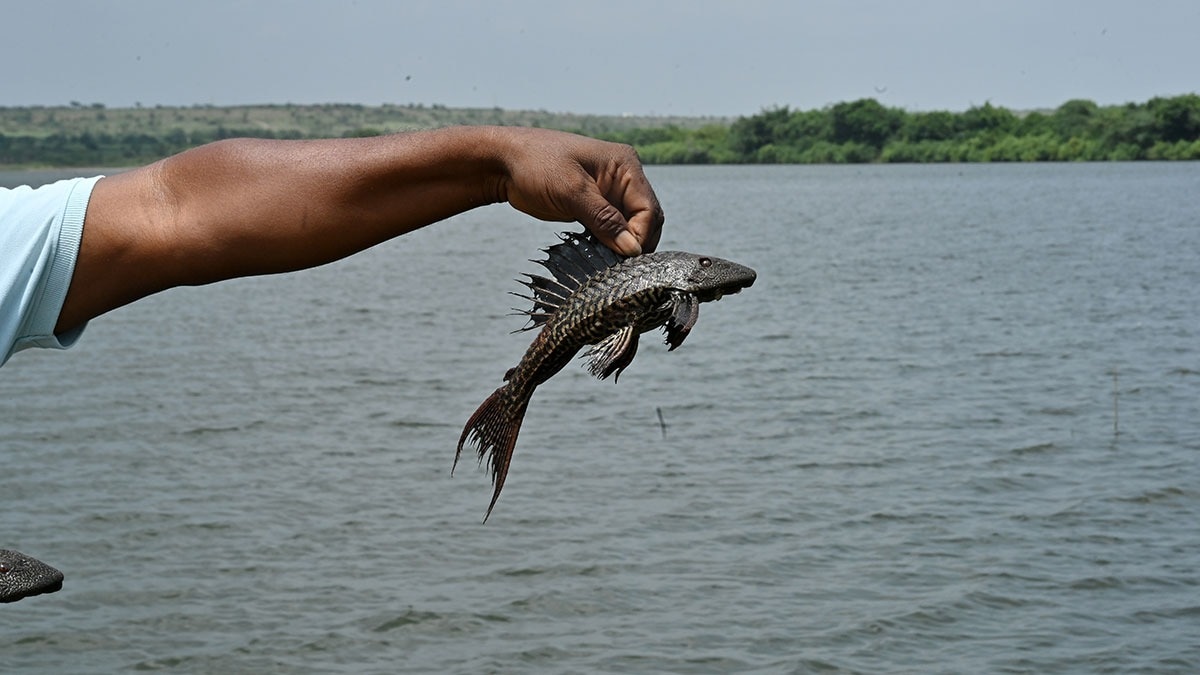
The Bombay Natural History Society (BNHS), in a landmark move towards the conservation of native breeds of fish and elimination of alien and invasive fish from the aquatic ecosystem, is releasing 4.5 million fish fingerlings of native varieties and over 21,000 native aquatic plants into the waters of the Ujani dam in Maharashtra’s Solapur district.
The first such initiative in South Asia to rid an aquatic ecosystem of invasive varieties of fish has seen local fishermen being incentivised to catch alien fish, such as the Suckermouth Catfish. The ‘Ujani Wetland Eco-Restoration, Fisheries and Climate Resilience Programme’ aims to eliminate the African Catfish, Tilapia and Suckermouth Catfish from the Ujani dam reservoir and replace them with native freshwater species such as the Deccan Mahseer. The project aims to restore 100 sq km of the dam for long-term conservation.
Located on the Bhima river, the dam has a storage capacity of 117 TMC (thousand million cubic feet). It is a major source of water for households and irrigation. Its backwaters serve as a bird-watching site. The reservoir is also a major source of fish.
However, the presence of invasive alien species, such as the Tilapia, African Catfish and Suckermouth Catfish, have led to local fish species, such as Maral, Gugli, Tambrya and Aher, which once commanded a premium in the market for their taste and medicinal value, almost disappearing, putting pressure on the livelihoods of local fishermen. In comparison, the Tilapia commands a lower market rate.
The Suckermouth, native to the Amazon in South America, is an aquarium fish that found its way into freshwater bodies and eventually Ujani. Locally known as the ‘helicopter fish’ or ‘yeda maasa’ (mad fish), it not only feeds on the eggs of local fish but also damages riverbanks through constant burrowing. Fishermen find it impossible to extricate the fish from the net without tearing it.Tilapia, on the other hand, was commercially cage-farmed in the 1990s and escaped into the wild. Also called ‘jalebi’ fish, it has two distinct sources of origin—the Nile and Mozambique. The Thai Mangur, also known as the African Catfish, preys on native fish and even migratory birds in Ujani.
Although of low commercial value, illegal breeding farms have proliferated along the riverbanks despite a Union government ban in 2019. This is because the fish is easy to rear and has a ready market among migrant labour and restaurants.
The BNHS pays fishermen an incentive of Rs 2 per kg over the market price (around Rs 35-38 per kg) for handing over Suckermouth fish at a designated collection centre in Bhigwan in Pune district. Since April, when the project was launched, over 40 tonnes of these fish have been caught, collected and sold to industries for manufacturing fish feed, fish oil and liquid fertiliser.
The BNHS recently released 3 million fingerlings, and is in the process of releasing 1.5 million more in batches. This includes rare endemic species such as Labeo Kawrus (Kavdas), Bangana Nukta (Nukta) and Labeo Kontius (Bobari), along with one million Deccan Mahseer and one million Indian Major Carps like Rohu, Catla and Mrigal. The Mahseer is known as the ‘tiger of the waters’ and was once endemic in the region. The idol of Lord Vithoba at Pandharpur, located over 100 km away, is said to have the Mahseer as his ear-rings.
Unmesh Katwate, senior scientist and assistant director at BNHS, said: “This initiative marks India’s first large-scale conservation breeding and reintroduction programme for extirpated freshwater fish species. By collecting native founder stocks from pristine river systems and successfully breeding them in controlled facilities, we are actively re-establishing the biological lineage of the Bhima river catchment. Re-establishing top species like the Deccan Mahseer and foundational native carps not only repairs damaged food chains but builds long-term climate resilience across the wetland."
Katwate, who is leading the initiative, said local plants and grasses like the water lily, which had been released into the Ujani, were found to be flourishing. The fishermen had also detected the presence of fingerlings in the waters. There are plans to release more native fish fingerlings in the waters next year.
So far, over 178 tonnes of destructive alien invasive fish, including the Suckermouth Catfish and African Catfish, have been removed. Invasive plant control operations have cleared nearly 2,000 hectares of catchment area, removing over 6,500 tonnes of suffocating weeds such as Ipomoea, Water Hyacinth and Prosopis Juliflora.
Katwate, however, added that the presence of bottom trawling using fine mesh nets posed a concern as the fingerlings may be tapped in it. Local fishermen allege that migrant fishermen use mosquito nets for bottom trawling, which is referred to as ‘vadap’ in local parlance. This affects the fish stock, making it impossible for fingerlings to escape. “However, we have released the Mahseer in deep waters near the Palasnath and Ram temples where bottom trawling is impossible. The fish also prefer these rocky patches,” said Katwate.
The presence of illegal Mangur farms and the farming of Pangasius using meat and chicken waste also remained a matter of concern. Kishor Rithe, director, BNHS, said: “True wetland restoration requires moving beyond traditional stocking towards holistic ecosystem management. Our work at Ujani proves that science-backed invasive species management, paired with native species reintroductions, can successfully reverse decades of biodiversity loss. Supported by the Cipla Foundation and state government departments, BNHS is setting a practical template for wetland rejuvenation in India.”
Fisherman and activist Bharat Mallav said that for years, local fishermen had watched the catch of native fish decline while invasive species damaged their nets and affected their income. “The return of native fish and the revival of species like Mahseer give our fishing families real hope of sustainable catches and new opportunities in eco-tourism and angling,” he added.

