How Bihar holds an alarming place in India's illegal ammunition trail
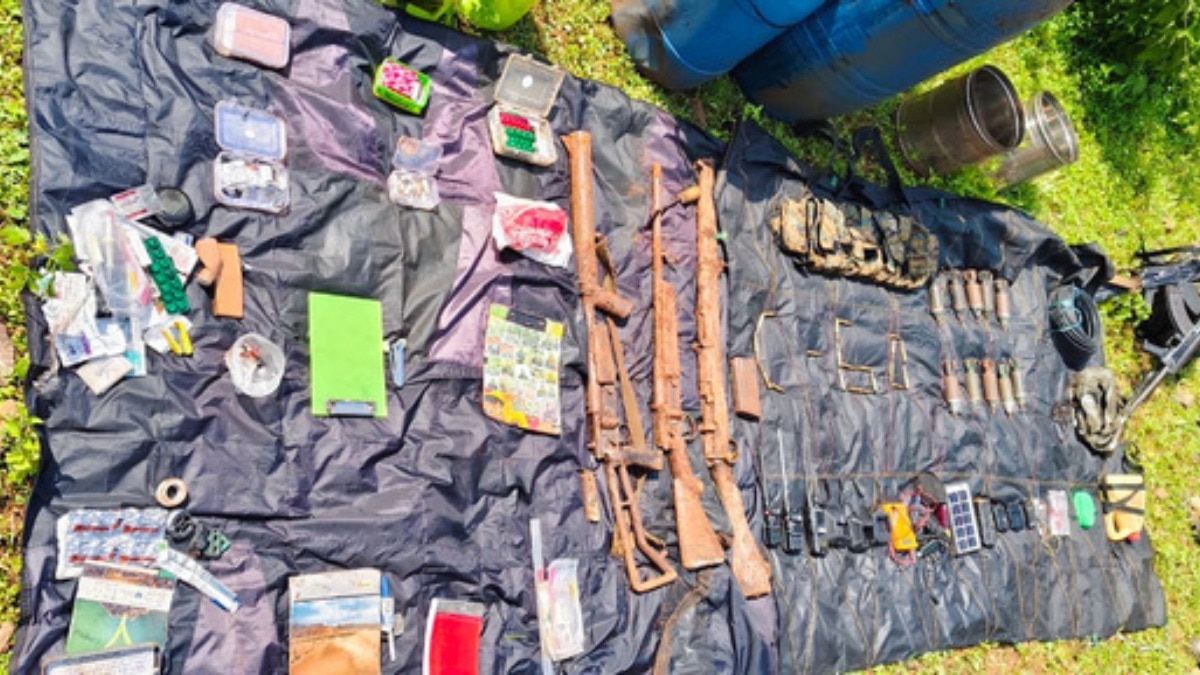
Security personnel, on October 7, dug into the forest floor along the Tilaiya-Hisua route in Bihar’s Gaya district, close to the Jharkhand border, and unearthed a cache of weapons and ammunition. The haul included a 9 mm carbine, two country-made guns, magazines, a walkie-talkie and 92 live cartridges—79 of 9 mm and 13 of 7.62 mm.
Investigators suspect the weapons might have been concealed by people linked to Maoist activity, but that connection is yet to be established.
The recovery was far modest than some of Bihar’s larger ammunition seizures. But it brought back into focus a far more startling statistic: in 2024, Bihar recorded the seizure of 19,796 rounds of unlicenced ammunition under the National Crime Records Bureau (NCRB) category of ‘From Others’—nearly 32 per cent of the national total of 62,363 rounds in that category. Rajasthan, the second-highest state, recorded 6,210 rounds. Bihar’s recovery was more than three times that figure.
The NCRB’s explanatory note says ‘Others’ may include criminals, gangsters and smugglers. The classification does not establish that every recovered cartridge belonged to a criminal gang nor does it prove that all the ammunition originated outside Bihar. But the concentration is striking enough to demand a closer scrutiny of how unlicenced ammunition is acquired, transported and distributed.
The figures become still more significant when placed alongside the state’s total ammunition recovery. Bihar recorded 25,289 rounds seized in 2024, the highest total among states that year, compared with 89,212 rounds nationwide. In other words, Bihar accounted for more than 28 per cent of all ammunition recovered across the country that year.
A second category in the NCRB data adds another dimension. Under ‘From North East Insurgents—Unlicenced’, Bihar accounted for 5,487 rounds out of 11,577 recorded across states, or nearly 47 per cent. This is distinct from the ‘From Others’ category. Together, however, the figures place Bihar prominently in the national ammunition-seizure data and raise questions about the routes through which illicit cartridges reach the state.
The most revealing recent investigation began not in a forest but a highway toll plaza. Last year in June, Bihar police’s Special Task Force intercepted a vehicle near the Mohania toll plaza in Kaimur district. A search uncovered 3,700 cartridges concealed. It included 2,950 rounds of 8 mm ammunition and 750 of .32 bore. Follow-up searches in Nalanda recovered additional cartridges, taking the total to 4,536 rounds.
Police said the consignment had been procured in Kanpur (Uttar Pradesh) and was being transported into Bihar for sale in the illegal market. Six people were arrested during the operation and subsequent searches. The case was taken over by the National Investigation Agency (NIA), which widened the inquiry into a suspected interstate trafficking network.
Last December, the NIA conducted coordinated searches across Bihar, Uttar Pradesh and Haryana. The agency said its investigation had identified a network involved in illegally procuring ammunition from gun houses in Haryana and other locations, moving it through Uttar Pradesh and delivering it to Bihar and elsewhere. The operation resulted in further arrests and seizure of cash, documents and electronic devices. Investigators examined the alleged role of people associated with a licenced gun house in the supply chain.
The case exposed a crucial vulnerability: ammunition can enter the legal market before being diverted unlawfully. The task for investigators is to identify discrepancies in purchase records, stock movements and transfers, and establish whether cartridges have been sold or moved outside authorised channels. The Mohania case suggests that scrutiny cannot stop at the retail outlet; it must follow the ammunition through intermediaries, transporters and intended recipients.
For decades, Bihar’s illicit arms economy has been associated with country-made firearms, particularly around traditional manufacturing centres such as Munger. But the recovery of thousands of factory-made cartridges points to a different challenge. Local workshops may produce crude weapons while the supply of reliable factory-made ammunition depends on a wider chain of manufacturers, licenced dealers, intermediaries and transport networks. The two markets can overlap but they require different investigative approaches.
A separate investigation has traced another route into Bihar. In 2024, an AK-47 rifle and ammunition were recovered in a case that the NIA subsequently took over, investigating the alleged smuggling of illegal arms from Nagaland for circulation in Bihar. In October 2025, the agency reported additional weapons and ammunition recovered in Vaishali district in connection with the case. The investigation demonstrated the need to pursue suppliers and associates beyond the place where the weapon is ultimately found.
The latest Gaya recovery represents a different, still unresolved strand of the problem. Police have not established who buried the cache, when it was placed there or whether it was meant for use in criminal or Maoist-related activity. Yet the recovery reinforces the need for sustained surveillance of border areas and careful investigation of the movement of weapons and ammunition.
The scale of the legal firearms system also makes monitoring important. The number of valid firearm licence holders in the state stood at 39,275 as of March 2025. Each licence holder was entitled to acquire up to 200 rounds a year, the theoretical maximum would approach eight million rounds annually. That is a potential entitlement, not evidence of actual purchases or illegal diversion. It nevertheless underlines why accurate purchase records, stock verification and coordination among licencing authorities and enforcement agencies matter.
The central question is not simply why Bihar records so many ammunition seizures. High recoveries may reflect a combination of trafficking activity and effective enforcement; the NCRB data alone cannot establish the size of the undetected market or prove that every round was intended for use in Bihar. The figures do, however, provide a strong reason to investigate the sources and destinations of the ammunition more closely.
For the police, the next step must be to move beyond the recovery count. Investigations need to identify who finances consignments, who procures ammunition, how it crosses state boundaries and who eventually receives it. Scrutiny of suspicious inventory discrepancies and transport arrangements must be backed by evidence while cases involving hidden caches require investigators to establish ownership, purpose and links to known networks.
The Gaya cache and the Mohania interception illustrate two different faces of the same enforcement challenge: weapons concealed in a forest near the Jharkhand border and thousands of factory-made cartridges allegedly moving through an interstate supply chain. The NCRB’s 2024 figures show that Bihar recorded the country’s highest overall ammunition recovery and nearly one-third of the national total under the ‘From Others—Unlicenced’ category.
The numbers are not proof that every cartridge seized was bound for a criminal network. They are, however, a warning that the state’s arms problem extends beyond country-made pistols and isolated forest caches. The harder task now is to trace the supply chains behind the bullets—and disrupt them before the next consignment reaches its destination.