How BJP is dousing political fire over caste quota before Goa polls
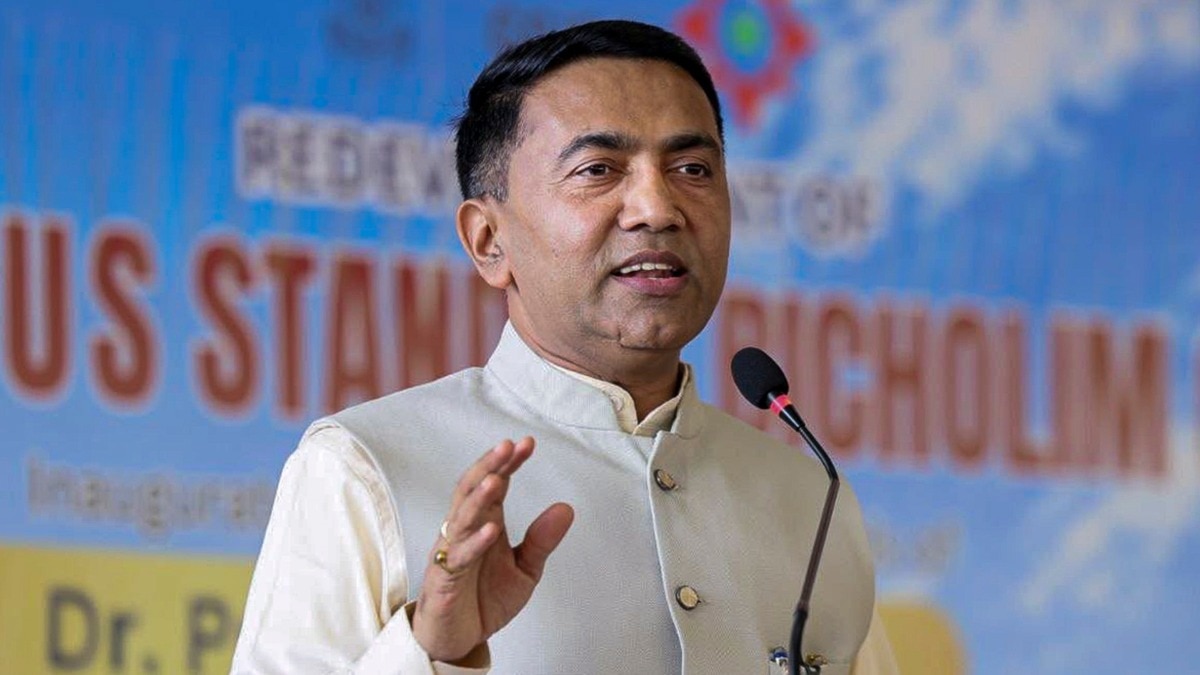
Goa chief minister Dr Pramod Sawant, in an apparent bid to douse political fire over caste quotas before the assembly elections due early next year, has said that the process to grant Scheduled Tribe (ST) status to the Gouly-Dhangar community was underway. He also assured that the quota within quota demand of the Bhandari community, the largest such caste grouping in the state, was being considered.
“The process for including the Dhangar community in the ST category has been started again. They thought it had stopped, but that is not so. It is under process. The process for quota within a quota is underway at the OBC Commission,” Sawant recently said in the legislative assembly. He was replying to a question by Vijai Sardesai of the Goa Forward Party (GFP).
The BJP government in Goa is facing a rising tide of demands for recognition of the Gouly-Dhangar community as tribal. The Registrar General of India (RGI) and the Union ministry for tribal affairs had earlier rejected the demand. The Office of the Registrar General of India in March noted that the community remains listed as ‘Dhangar’ in the Central List of Other Backward Classes (OBCs), and asserted that no fresh data was provided to justify a re-examination.
Following the setback, Sawant wrote to Jual Oram, Union minister for tribal affairs, in June, urging a review based on the community's “distinct socio-economic vulnerabilities”. “Gouly-Dhangar was the first community to be recommended by the Goa government for inclusion in the ST list way back in 1963. In 1992, the government of Goa pleaded to declare only Gouly-Dhangar community as Scheduled Tribe. A proposal for declaring Gawdas, Kunbi and Velip was subsequently submitted in 1993,” Sawant’s letter had stated. He had added that the community had primitive traits, distinctive culture, geographical isolation, and was living in distinct, segregated habitations, with general backwardness.
The tribal population in Goa is 149,275 or around 10.23 per cent, which includes Roman Catholic Christians. Tribal people are regarded as the original settlers and inhabitants of Goa. While North Goa is estimated to have a tribal population of 56,606—which is 6.9 per cent of the region’s 818,008 population—for South Goa, it is 92,669 or 14.47 per cent of the region’s 640,537 population.
Gouly-Dhangars are estimated to number around 25,000 in the state. They have presence in most talukas, sans Tiswadi, which includes capital Panaji and Old Goa. In polls, however, they could still tilt the scales given the small electorate sizes of assembly constituencies. For instance, in Sanquelim in 2022, chief minister Sawant won by just 666 votes against Dharmesh Saglani of the Congress.
In the 1980s, members of the Gauda, Velip, Kunbi and Dhangar communities launched a movement ‘Mull Goenkarancho Ekvott’ and sought recognition as STs. In 2003, the Gauda, Velip and Kunbi communities were added to the ST category. However, the Dhangars, who are described as a traditional, pastoralist and forest-dwelling community, were left out. The ST category includes smaller tribal groups like the Dubla, Siddi, Naikda, Varli and Dhodia.
Tribal voters in Goa are upset over the delay in granting them political reservations. If implemented, this may result in four of the 40 seats in the assembly being reserved for STs. Tribal people have been protesting for political quota for more than two decades. The angst is thought to have singed the BJP in the South Goa Lok Sabha seat in 2024, where the party’s Pallavi Dempo was trounced by Captain Viriato Fernandes (retd) of the Congress.
Tribal communities form substantial numbers in the Priol, Nuvem, Quepem, Sangeum and Velim constituencies. Although STs and Scheduled Castes (SCs) have 12.5 per cent and 2 per cent quotas respectively in jobs and education, the STs have not been given political reservations in the assembly. The SCs have one seat reserved for them in the House—Pernem bordering Maharashtra in North Goa, which is represented by Pravin Arlekar of the BJP.
The bill for granting political quotas to STs in Goa was approved in Parliament in August 2025. The Union government has issued a notification for implementation of the law, but questions persist over whether these quotas will come into force by the time assembly polls are announced in Goa.
The Gaudas and Velips have emerged as a sub-type of the Kunbi stock, according to ‘The Quest for Goa: History and Heritage of Goa from Ancient Times to 2019’, by Sharmila Pais and Prajal Sakhardande. Similarly, the Bhandaris, who are estimated at around a third of Goa’s population, have sought a quota-within-a quota in the OBC category. The Bhandari community claims this ring-fenced quota for them will ensure social justice.
Bhandari groups have also voiced concerns over political quota for STs and said that the reservations must be rolled out only after the caste census and delimitation are completed. Observers said the BJP may be attempting to play both sides by reaching out to the tribal population with the promise of the quota and also to opponents of the move.