
How China Is Saving Trump’s Christmas - Newsweek
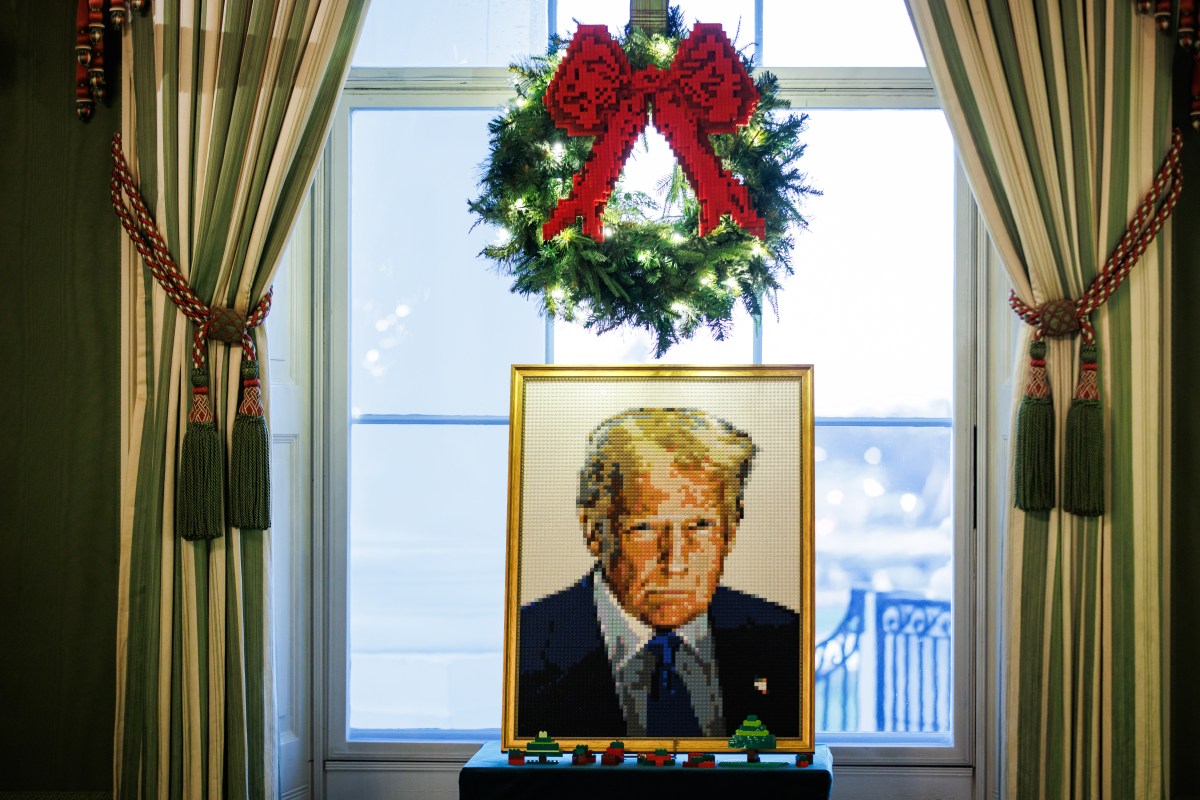
It was looking like a rough holiday season for President Donald Trump’s Republicans until the leader of the Chinese Communist Party came to town.
Hidden beneath the pageantry of Xi Jinping’s recent state visit to Washington, D.C., was an agreement to exempt $60 billion worth of goods from higher tariffs to encourage more trade in non-sensitive areas that accounted for a modest 14.5 percent of total two-way trade in 2025.
Under the "30-for-30” lists announced by both sides this week, China will lower import duties on American consumer products like hairspray, as well as purchases from the U.S. agricultural and energy sectors. The U.S. will reduce tariffs on various household items found on store shelves, meaning lower prices for everything from bed linen to fairy lights.
China’s leader came to America bearing gifts, including two giant pandas for Zoo Atlanta and a tailored trade deal that appeals to the very voters the GOP needs in November’s midterms—farmers and ordinary Americans—and the shrewd play could help save Trump’s Christmas.
China’s list of 1,619 products cleared for lower import duties includes essential commodities: beef, pork, seafood, infant formula, medical equipment, timber and coal, as well as breeding stock to improve the genetic quality of its own animals.
The world’s largest producing nation has always needed external agriculture and energy to sustain its population of 1.4 billion people and to power its sprawling factories. It could’ve got them from anywhere, but it knows American leaders like Trump have always cared about how much of both Beijing agrees to buy from U.S. producers in America’s heartland.
Xi knows that Trump knows that farmers and ranchers in Middle America can swing elections.
The lists—derived from past annual trade figures—were decided "based on their respective market needs and industry interests," the Chinese Commerce Ministry said.
The White House is lowering the barrier for retailers to import more Chinese-made toys, appliances, baby goods, kitchenware and Christmas gifts.
The U.S. list of 77 categories is a reminder of just how many everyday items are manufactured halfway across the world and then shipped into American homes for basic economic reasons—and why prices went up when Trump launched his tariff war on China last year.
This holiday season, a Chinese assembly worker or robot likely made the lights on your Christmas tree, the figurines of the Virgin Mary and baby Jesus in the manger displayed beneath it, the gift-wrapped soccer ball for your son and the new toy doll for your daughter—but only the non-wireless version, of course.
The U.S. and China traded $414.6 billion in goods last year, according to U.S. government statistics, but the collective shoulder shrug over the safe space created for less than a fifth of the economic relationship appears to miss the point.
Many Americans could benefit from the formal determination of non-sensitive goods, which lays the groundwork for dropping duties to single digits on products found in every home—things U.S. retailers struggle to source from anywhere else.
"Most shoppers never look at where something was made. They look at the price and whether it does the job," said Joel Goldstein, whose company Mr. Checkout Distributors has brought Shark Tank products to retail shelves across the United States.
Goldstein runs a network that supplies tens of thousands of big and small stores. Independent store owners have been absorbing rising tariffs since 2018, he told Newsweek.
"Toys, playing cards, flashlights, plastic tableware, Christmas lights and ornaments, toasters and coffee makers. That is the everyday merchandise independent stores sell, and almost all of it comes from China because nobody else makes it at that price," he said.
"In the dollar store and discount world, a quarter matters. Those customers count…. Walmart can call a factory and get a better price or spread a tariff across millions of units until it's pennies. An independent buying a case at a time has no such option," Goldstein said.
"Tariffs hit the small guy harder than the big guy," he said.
It’s hard to argue that $60 billion is a small sum, even if the products on the U.S. and Chinese lists aren’t what American businesses really want to buy and also aren’t what Chinese manufacturers really want to sell—high-value tech.
Americans consume a lot of tech—smartphones, computers, TVs, drones and electric cars—and China can make them all. They are higher-cost, new industry exports that could give the Chinese economy an edge over other producing nations, but they’re also on a growing number of government watch lists for economic and national security reasons.
Beijing has lobbied Trump to lower the over 100 percent tariff on Chinese electric car imports and reverse the U.S. Commerce Department’s ban on the sale of Chinese connected vehicles. It doubtless would like more American users of its AI models too.
Big Tech is one of the victims of what political scientist Xiaoyu Pu calls the "over-securitization" of the U.S.-China relationship across government, business and academia—started by Trump and "institutionalized and expanded" by former President Joe Biden.
"China’s own increasingly expansive conception of national security has also contributed to a mutually reinforcing action-reaction dynamic. Measures that one side describes as defensive are frequently interpreted by the other as offensive or protectionist, producing further securitization," Pu, an associate professor at the University of Nevada, Reno, told Newsweek.
The trade relationship could benefit from clearer guidelines like the lists issued by the U.S.-China Board of Trade, he said.
"The challenge, however, is implementation. The boundary between security-sensitive and non-sensitive economic activities is often unclear and continually contested, especially for emerging technologies. Political pressures, bureaucratic incentives, and reciprocal measures by the two countries can also continually expand what is defined as a national-security concern. A supposedly ‘small yard’ can therefore grow over time," Pu said.
"The Board of Trade would be most valuable if it not only identifies non-sensitive commerce today but also creates institutional guardrails against the unnecessary expansion of security restrictions tomorrow," he said.
China has secured a detente with Trump’s America that Xi can use to lock in his own extended rule when the Communist Party gathers for its twice-a-decade national congress next fall. It has given Trump some much needed stability, which is just as well for Xi, who wants to buy time for the Chinese economy and military to close the gap with America.
Trump will play the "30-for-30” lists as a win for U.S. market access in China and for U.S. consumers back home, but any price-sensitive American shoppers likely won’t see any difference this holiday, according to Goldstein of Mr. Checkout, who said the announcements lacked tariff rates and a start date.
"Holiday goods were ordered months ago and most of it has already landed. The tariff was paid when it came off the boat, and that cost is already in the price on the shelf," Goldstein said. "Where it could matter is reorders and next year. If the cuts go through, small stores should start to see it in the spring and in Christmas 2027."
"My one caution is that prices go up fast and come down slow. The independent buying a case at a time was the first to feel the increase, and he will be the last in line to see the savings," he said.
Beijing’s endgame is to expand the lists to include computer chips and other U.S. advanced technology for Chinese companies, but Washington isn’t having that conversation right now, with the Trump administration unlikely to jeopardize its support among the China-skeptic members of the electorate.
Jamieson Greer, the U.S. trade representative, said the Board of Trade would deal with "pure trade issues," and that discussions over U.S. export controls or items of national security concern were "off the table."
China will keep trying and it knows just what Trump wants. U.S. soybeans, the top economic crop of GOP-leaning Iowa, was missing from China’s list, but its negotiators agreed to establish an "agricultural working group" under the Board of Trade to address sector-specific asks.
Trump and Xi will meet at least two more times this year, at the APEC summit in November in southern China and at the G20 summit in Florida the following month.
The U.S. president will be licking his chops.
For deeper, expert-led insights into China and its relationship with the United States, sign up to Newsweek's China Decoded newsletter.


