How COVID-era 'freedom' politics still shape — and challenge — Pierre Poilievre's Conservatives - Toronto Star
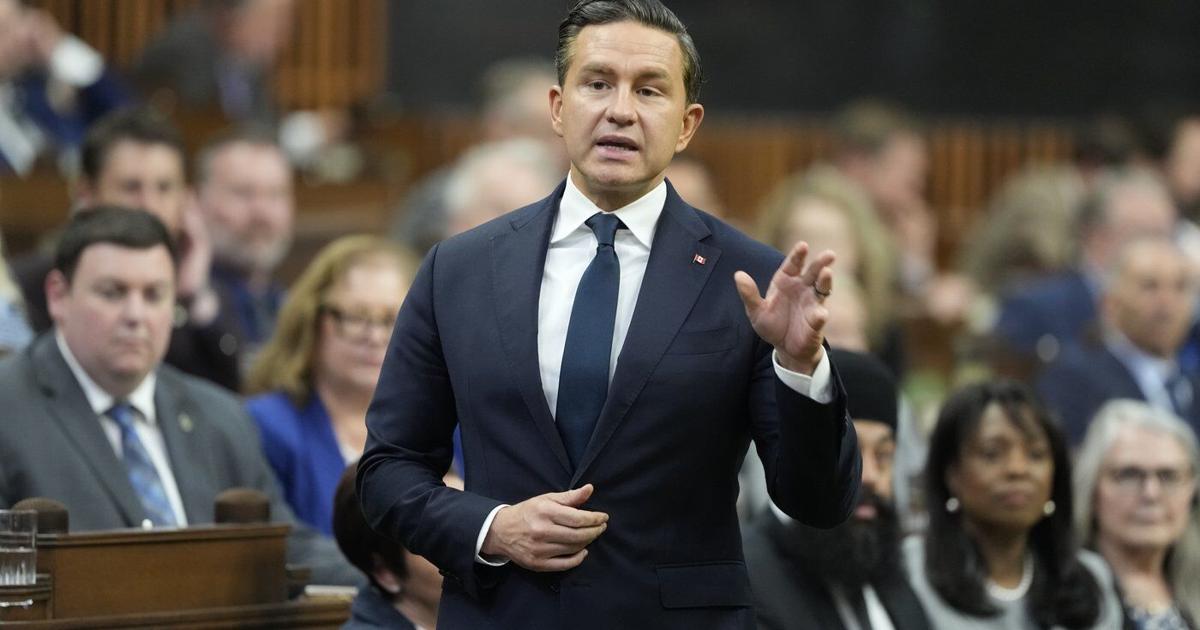
While libertarians and those who favour a smaller government have long had a place in the Conservative party, their influence within it and on Parliament Hill has grown.
Conservative Leader Pierre Poilievre speaks in the House of Commons on June 18, 2026.
OTTAWA — Earlier this month, with MPs still on summer break, a group of Canadians with a deep distrust of the federal government descended on a parliamentary committee room to tell politicians they felt lied to.
The men and women from across the country came to Conservative MP Dean Allison’s event about COVID-19 vaccines, the injuries and deaths they believe were caused by them, and the vaccine injury support program, which the government recently took back from the private contractor overseeing it.
Many said they took the vaccine without hesitation but now believe they are victims of a rushed process and government coverup, and have lost faith in public institutions.
The gathering offered a window into a constituency that emerged during the pandemic — one that has become increasingly embedded in the Conservative coalition assembled by Pierre Poilievre.
Six years after COVID-19 first upended Canadian politics, the movement galvanized by lockdowns, mandates and debates over individual freedom hasn’t gone anywhere — and as Poilievre looks past pandemic-era grievances toward the next election, keeping those voters engaged without alienating the centre is becoming one of his party’s defining challenges.
Supporters say those voters helped him secure the leadership and became some of his most ardent supporters.
But as Conservatives look ahead to the next election, the movement that grew out of the pandemic is also offering the party a new pool of voters who were not traditionally part of the Conservative coalition — even as Poilievre tries to broaden his appeal to more centrist Canadians.
While libertarians and those who favour a smaller government have long had a place in the Conservative party, their influence within it and on Parliament Hill has grown.
Enter Matt Strauss, the ICU doctor turned MP for Kitchener South—Hespeler, one of the rookie MPs helping define this emboldened wing.
“I don’t think I would have entertained entering electoral politics at the stage of my life had every other part of my life not become political on account of the pandemic,” he said.
What began with sleepless weeks watching caseloads rise, wondering whether to cancel his wedding and later volunteering in hospitals ended with Strauss being branded a controversial public health figure for expressing skepticism about lockdowns, mask mandates and vaccination mandates.
Although Strauss was already a Conservative, Poilievre’s message of freedom, bolstered by references to prime ministers Wilfrid Laurier and John Diefenbaker, resonated with him as someone who believes in “core liberal values.” It also resonated with the thousands who packed Poilievre’s rallies and watched him online.
Strauss said it wasn’t just how Poilievre delivered that message, but what those who were listening were experiencing.
“There is a segment of the population — I can think of someone in my extended family who chose not to be vaccinated — who will never forget that experience,” he said.
“For that 10 to 12 per cent, this issue is everything. You don’t forget being cast out of society.”
Allison concedes most Canadians have moved on from the pandemic, but he said his event, billed as an “inquiry,” was about the people who can’t.
Over four days, dozens of people shared stories, including a mother whose 24-year-old daughter died of cancer after being vaccinated, a bodybuilder who said he lost his strength, about a Conservative party staffer who suffered a heart attack and later died, and several others left disabled, which they attributed to the vaccine.
Alongside the personal stories were doctors who made claims unsupported by medical research, an Ottawa detective who alleged he was demoted after investigating deaths involving children, and a U.S. senator who has led investigations into Anthony Fauci.
None of the claims were ever challenged, and no vaccine makers, public health officials or government ministers testified because the “inquiry” had no legal standing.
Allison told the Star he didn’t know where the exercise goes from here, but pledged to keep listening.
“I’m not sure what the next steps are. Maybe this is it,” he said, even as he defended bringing the conversation back to the public — a decision some Conservative party insiders rejected as unwise.
“We look weird when we do these things,” said Fred DeLorey, who ran the party’s 2021 election campaign. “The general public looks at us as we’re weirdos. That’s not helpful.”
While nine Conservative MPs dropped into the event, Poilievre was nowhere to be seen and made no public statements about it. Among those who noted his absence online was Tamara Lich, one of the key organizers of the so-called “Freedom Convoy,” for whom Poilievre has previously voiced support.
Asked about his position on the issue of vaccine-related injuries and the event itself, his office did not respond to a request for comment. Allison nevertheless said it happened with Poilievre’s blessing.
Speaking to the “Talk Truth” podcast back in June — one of many smaller forums he has spoken to where vaccines, Christian faith and free-speech related matters are interwoven — Allison said Poilievre informed him “that not a week or two goes by where someone does not approach me and tell me that they’re injured.”
At the inquiry, Conservative MP Chris Lewis said doctors told him his mother’s cancer was a “turbo cancer” accelerated by the vaccine, a claim not supported by medical research. Conservative MP Ted Falk accused health officials of changing their story on vaccine effectiveness and said his supporters want someone held responsible.
“One of the questions that people in my riding have been asking me, my constituents, is what kind of accountability will there be for individuals that told us to do something that they knew wasn’t true,” he said.
For Andrew Lawton, the MP for Elgin—St. Thomas—London South, the new voters created out of the pandemic came with a raison d’être around freedom and autonomy.
He points to the support Alberta MP Blaine Calkins received from the natural health community for a private member’s bill focused on Health Canada regulations governing products such as vitamins and supplements. Lawton says many of those supporters “are not politically conservative.”
“That is really one of the governing principles behind a lot of the people who are part of the expanded Conservative coalition now,” he said.
Lawton, who is helping craft the party’s next election platform, is canvassing ideas from stakeholders. Asked whether in a post-pandemic world, Conservatives are more interested in championing ideas around wellness, he said, “There’s certainly an interest.”
He said he’s heard concerns in his riding concerns from the agricultural sector about regulations viewed as out of date.
“I know that there’s been a discussion on a lot of these issues in the United States,” Lawton said. “The last thing we want is to import more American political debates. But at the end of the day, I think a lot of people post-COVID have taken a lot more of an interest in their health and making their own choices.”
While pandemic-era mandates may be a thing of the past, concerns about government overreach continue to shape current policy debates, particularly around technology.
Conservative MP Aaron Gunn can rattle off a list of bills — from hate speech legislation that removed an exemption for religious defences and laws seeking to grant police and government more powers to access data and telecommunications services, to proposals to regulate social media using sweeping new powers — that he says animate the Conservative base in a bigger way.
A suspicion of government, he said, is the common theme.
“Among Conservative voters and the Conservative base, these (issues) are as important if not more important than any other issues,” he said.
Gunn adds that there is a greater level of sensitivity and wariness than before.
“Because of what happened during COVID, a lot of Conservatives ask themselves, ‘How could this be used or weaponized in the future against people like me?’”
Strauss says concerns about proposals like the government’s bill regarding “lawful access” to encrypted message data touch on the same civil liberties concerns that were sparked during the pandemic. “It is their issue.”
He attributes the increase in Conservative vote share in the last election, compared with 2021, to voters who were either harmed by pandemic-era measures or are more “freedom-minded.”
“I would say over the Harper years, the Conservative party lost some of those individuals and those folks are back in the coalition.”
Keeping voters who rallied behind Poilievre during his leadership campaign and last year’s election is key to future Conservative success, his supporters say. But the Conservative leader is also under growing pressure to improve his poll numbers and broaden his appeal to more centrist voters, including traditional Conservatives who have drifted to the Liberals.
Poilievre’s pandemic-era voters — political newbies, mostly under 40 and more racially diverse, who saw COVID-19 as proof the systems they trusted had failed them — are also seen by those around him as less engaged on the issue now dominating Canadian politics: Donald Trump.
Abacus Data CEO David Coletto told the Star that Poilievre’s challenge is managing a coalition whose core supporters often care less about Trump than about issues they expect him to address, such as immigration, and that can complicate his efforts to deliver a coherent message.
“There are among that Conservative group, a lot of people who don’t see Donald Trump as the problem,” Coletto said.
As Poilievre tries to navigate the Canada-U.S. relationship, debates have spilled out online over anti-Liberal and U.S.-friendly messaging from centre-right influencers who rose alongside his political movement during the post-pandemic years, even within his own caucus. In a social media video, outspoken Conservative MP Jamil Jivani chalked up today’s political climate to the federal Liberals “exploiting a crisis,” likening it to “what happened during COVID.”
To Shuvaloy Majumdar, the MP helping shape the Conservatives’ message on trade by calling for greater transparency from the Carney government, the debates raging online and within the wider movement stem from an erosion of trust during that era.
“When you have the condescension of one side colliding with the anger of the other, you end up in a polarized environment that hurts the country,” Majumdar told the Star.
Those who became politically engaged during the pandemic and found a home with the Conservatives are not only here to stay but intend to keep making themselves heard.
“It was a really defining moment in your life and those people, I think, are going to be Conservative voters for probably the rest of their lives, or at least for a generation,” said Gunn.
Mitch Hempel, who was an adviser to former party leader Erin O’Toole, said that even among Conservatives, most people have moved past the pandemic — but that those who haven’t are even more invested.
“I think there are people for whom that three-year period of time is going to define the rest of their time in politics, whether we like it or not.”
Error! Sorry, there was an error processing your request.
There was a problem with the recaptcha. Please try again.
You may unsubscribe at any time. By signing up, you agree to our terms of use and privacy policy. This site is protected by reCAPTCHA and the Google privacy policy and terms of service apply.
Ryan Tumilty is an Ottawa-based reporter covering Parliament Hill. Reach him at rtumilty@thestar.ca and follow him on X: @ryantumilty.
Stephanie Taylor is an Ottawa-based reporter covering federal politics for the Star. Reach her via email: staylor@thestar.ca