How Delhi beat bus drivers' strike by bullying, bribing, blackmailing
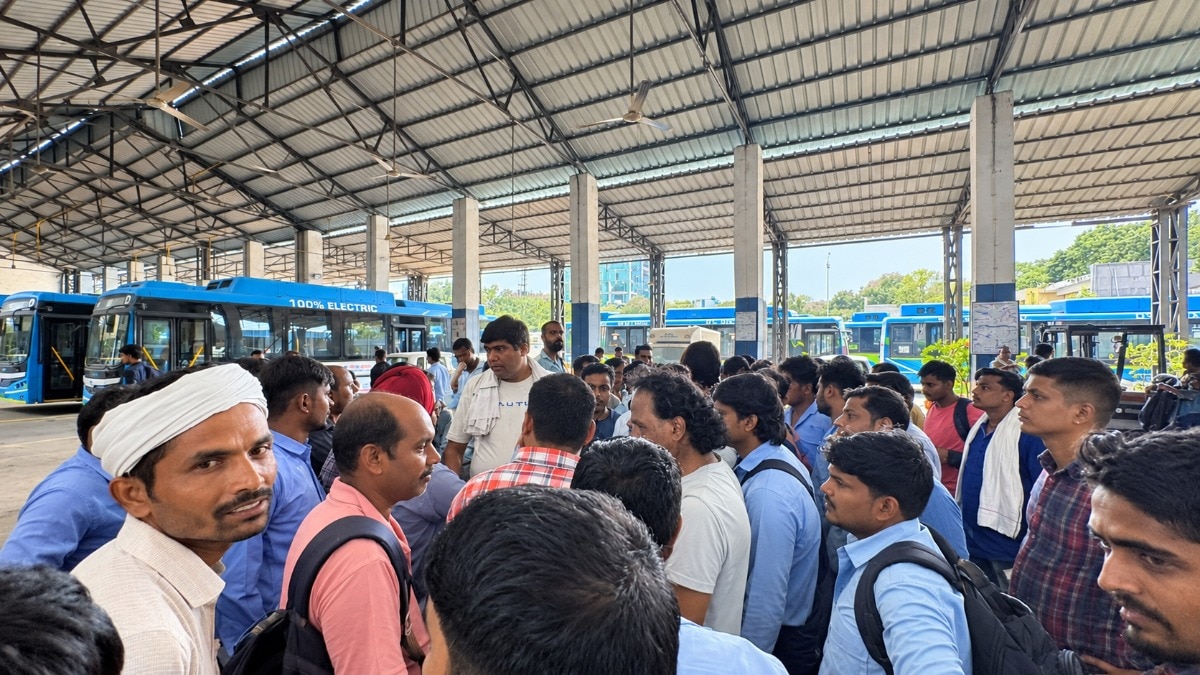
"Believe anyone, but drivers." For Vikky, a contractual Delhi Transport Corporation (DTC) driver, the biggest shock on Friday was not the authorities' attempt to get buses back on the roads. It was watching some of his fellow protesters return to work.
Vikky and five other protesting drivers told India Today Digital that they felt "backstabbed" after some contractual drivers who had joined the agitation agreed to resume duties. According to the protesting drivers, the authorities used a mix of persuasion, assurances, threats and inducements to break the strike at some depots — an approach rooted in ancient Indian political thought and commonly described as saam, daam, dand, bhed.
The contractual drivers began their strike on Tuesday (September 15), demanding better wages, medical facilities, social security, improved working conditions and greater job security. Their demands include a minimum daily wage of Rs 2,000, medical facilities, annual and festival bonuses, payment for government holidays, a weekly day off, protection from salary deductions after accidents, a 100-km daily route limit, and direct absorption into the DTC instead of employment through third-party contractors.
The DTC has 37 depots across Delhi-NCR, while the DTC Bus Drivers' Union estimates that nearly 12,000 drivers work on a contractual basis.
The strike had brought large parts of Delhi's bus network to a standstill, with commuters waiting for hours and hundreds of buses remaining parked at depots. Around 280 buses from the Burari depot alone remained parked during the first two days of the agitation.
But by Friday, the authorities were trying to push buses back onto the roads.
But how did the authorities manage to get some protesting drivers back behind the wheel? Let's have a look at the strategies employed.SAAM: CALL THE DRIVERS AND CONVINCE THEM
At several depots, authorities first tried to persuade the drivers to return to work.
The transport department had already held meetings with the protesting drivers, while Delhi Transport Minister Pankaj Singh appealed to them to call off the agitation and said their concerns would be addressed. The minister said medical insurance and several other demands had been agreed to, while the salary issue would be taken up with the Labour Department.
But according to drivers at the Nehru Place depot, persuasion was followed by tougher tactics.
"The authorities called all the protesting drivers to Nehru Place depot and threatened us that they would blacklist us and never allow us to work anywhere," Ravi Kumar, a contractual driver operating from the Kalkaji depot, told India Today Digital.DAAM: DTC'S PROMISES OF PERMANENCY TO THE CONTRACTUAL DRIVERS?
The protesting drivers also alleged that some of their colleagues were offered what they called promises of permanent employment.
"Some of our drivers were lured. They were given fake offers of making them permanent," Ravi said.
According to the protesters, some drivers who had initially joined the strike subsequently agreed to return to duty.
The allegations come against the backdrop of a workforce where contractual drivers say they receive significantly fewer benefits than permanent DTC employees. A driver from the Nehru Place depot told India Today Digital that drivers hired through third-party contractors are paid Rs 862 per day and do not receive social security, paid leave or an annual bonus.DAND: DELHI POLICE ACTION AT KALKAJI DEPOT
If the situation at the Nehru Place depot represented an attempt to bring drivers back through meetings and assurances, the Kalkaji depot presented a different picture.
Around 70 contractual drivers were protesting outside the depot gates on Friday. They had been sitting at the location since Tuesday and refused to take buses out.
The drivers were cooking food and resting outside the depot when Delhi Police personnel asked them to vacate the spot. When they refused, the protesters said, police forced them to leave.
The protesting drivers subsequently entered the depot office and decided to submit mass resignations. As the situation escalated, authorities tried to calm them down.
"Today or tomorrow, the buses will go out. If you want a job, please help us take the buses to the roads, or else, like other places, by tomorrow the situation will return to normalcy here," a contractual driver quoted the authorities as saying.BHED: AUTHORITIES ALLEGED PLAN TO BREAK THE STRIKE FROM WITHIN
The final element, according to the protesters, was the division within the striking workforce.
As some drivers returned to work, those continuing the agitation accused them of abandoning the collective fight.
"There is no use of protesting. We have been brought here to take the buses to the roads, and these drivers will surely lose their jobs. The authorities won't care," said another contractual driver who works from the Sarojini Nagar depot and was asked to report to Kalkaji depot.
By around 11 am on Friday, buses began appearing on roads at some locations as authorities got permanent drivers and some contractual drivers to operate services. But this did not mean the wider strike had ended. Reports on Friday said several buses were still off the roads and the agitation had entered its fourth day.
For commuters, however, even a partial return of buses matters. "I had to reach the office by 10 am, and I've been waiting for a bus since the last one hour," Sanjay, a commuter from Sri Niwaspuri, told India Today Digital.
DTC buses remain one of Delhi's most economical modes of public transport, making the strike particularly painful for daily-wage workers, students and other commuters dependent on affordable bus services.
The administration's efforts might have put some buses back on the roads, but the scenes at Kalkaji depot and other depots suggest that getting buses moving and resolving the drivers' grievances are two very different challenges. For now, some of Delhi's buses are back on the road, but the drivers' strike remains unresolved.- EndsPublished By: Avinash KateelPublished On: Sep 18, 2026 15:04 IST