
How did an axe come into flydubai cockpit? It was meant to be there. Here's why
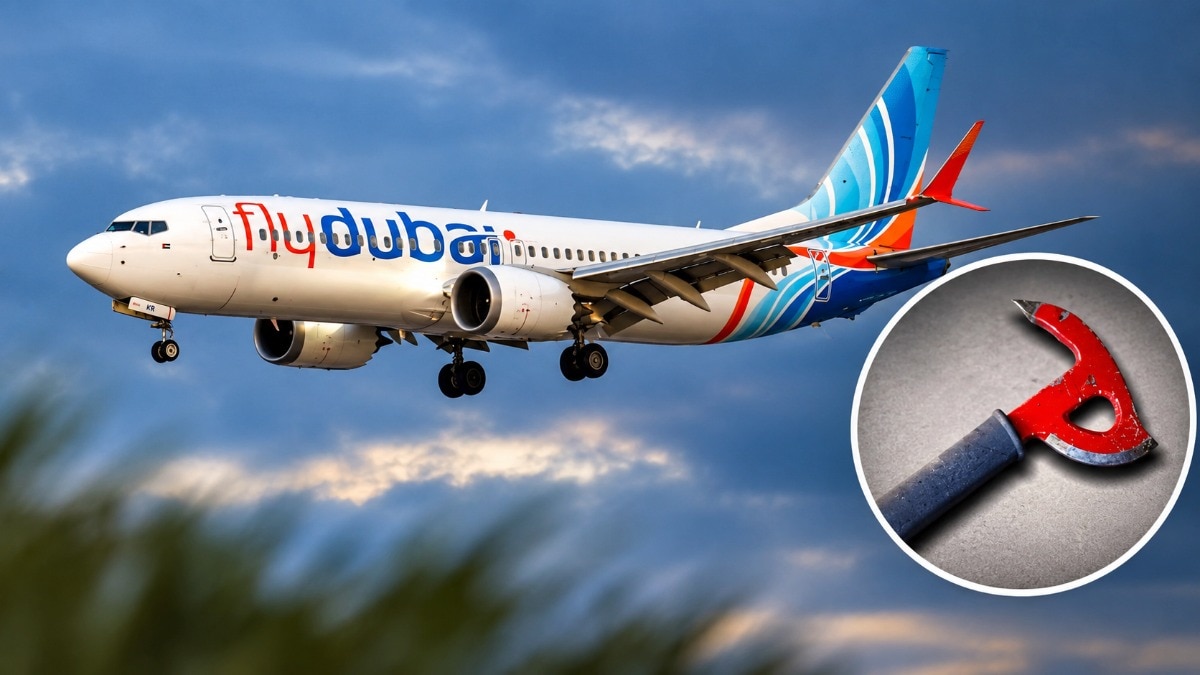
We all know that airport security generally take away passenger's scissors, blades and other sharp objects. So, after Israeli Prime Minister Benjamin Netanyahu raised the possibility that an axe might have been used by the Omani co-pilot to attack Indian pilot, Captain Smit Machchhar, on flydubai Flight FZ1073, sceptics asked an obvious question. How did someone get an axe through Dubai airport security and into the cockpit? The answer might be surprising, but it is simple.
If the weapon of the attack on Captain Machchhar by his Omani co-pilot, was indeed an axe, it might not have passed through security at all because commercial aircraft carry a crash axe or similar tool to breach hard surfaces (like a plane's fuselage) as emergency equipment.
The question emerged after the September 30 incident aboard FZ1073, flying from Dubai to Tel Aviv. The Omani co-pilot attacked Captain Machchhar and the aircraft went into a rapid descent before passengers and crew intervened. Thanks to Captain Machchhar's swift move, passengers rushed into the cockpit, tackled the Omani co-pilot, and prevented the plane from crashing.
Israel is treating the incident as an attempted terror attack. It was an "attempted jihadi terror attack", said Israeli Defence Minister Israel Katz. Israeli PM Netanyahu on Thursday claimed the Omani co-pilot who attacked the Indian captain had undergone radical Islamist indoctrination. Flydubai confirmed an "altercation" on the flight deck but cautioned against "premature speculation." The UAE General Civil Aviation Authority (GCAA) described it as a "security incident" and said an investigation was under way.
Israeli PM Benjamin Netanyahu raised the possibility of the use of an axe while recounting the incident in an interview with Fox News.
"On a flight from Dubai to Israel, as they were approaching Israel, there was an attack by one of the pilots against the other pilot. Apparently, he stabbed him, or he hit him with an axe. He was bleeding profusely," Netanyahu said.
Reuters, however, reported it could not determine what weapon was used. Passengers reported seeing a man holding what appeared to be a knife, while a pilot working in the region told Reuters that pilots could potentially have access to metal meal-service knives or a crash axe available in most cockpits.
So, an axe inside an aircraft cockpit isn't necessarily a security failure. It was there because aviation safety rules require emergency breaching equipment. In the UAE's case, where flydubai is based, aviation rules mandate that an aircraft of this size carry at least one crash axe or crowbar in the flight crew compartment.
"Airport security will confiscate every sharp object from you, including a nail cutter, so the obvious question is how an axe could get into an aircraft cockpit. But it didn't necessarily have to be smuggled in. Commercial aircraft carry a crash axe or similar breaching tool as part of their emergency equipment. It is there to help the crew cut through panels and light structures, reach otherwise inaccessible areas during a fire or other emergency, or create access when needed after a crash," our in-house columnist and satirist Kamlesh Singh, popular as Teen Taal's Tau, wrote on X.UAE RULES REQUIRE AN AXE OR CROWBAR IN COCKPIT
Like the US Federal Aviation Administration (FAA), the UAE has its own aviation regulator, the General Civil Aviation Authority (GCAA), whose rules apply to Dubai-based flydubai.
The GCAA's Commercial Air Transport regulations mandate big commercial planes to have an axe. Under its CAT.IDE.A.255 regulation, titled "Crash axe and crowbar", an aeroplane with a maximum certificated take-off mass of more than 5,700 kg or a maximum operational passenger seating configuration of more than nine must be equipped with "at least one crash axe or crowbar located in the flight crew compartment".
Also, for an aircraft configured for more than 200 passengers, the UAE rule additionally requires a crash axe or crowbar in or near the rearmost galley. Any such equipment located in the passenger compartment must not be visible to passengers.
In other words, on an airliner of the size involved in FZ1073, which was a B737 MAX 8 and seat up to 174 passengers depending on cabin configuration, having an axe or crowbar available to the flight crew isn't an anomaly. It is mandated emergency equipment.WHY WOULD PILOTS NEED AN AXE?
The name "crash axe" is a part of the answer. Such an axe is a surface breaching tool in case of an emergency.
According to the Airbus A330 Flight Crew Operating Manual (FCOM), it's used for cutting through light structures, panels and windows to gain access or provide an exit during an emergency. Crash axes can also have insulated handles, allowing them to be used where electrical equipment may pose a hazard.
It can become important during an onboard fire. Smoke or fire may originate behind an interior panel rather than somewhere immediately accessible to the crew. An axe can also allow the crew to breach lighter structures or panels to reach the affected area.
It can also help create access or an escape route after an accident. According to the US FAA's Transport Airplane Cabin Interiors Crashworthiness Handbook, crash axes must be considered for gaining access when flight-deck doors are jammed. But the FAA also noted that an axe would not provide the same degree of access as dedicated door-design safeguards.advertisementPILOTS TOO ARE SCREENED EVEN AS EMERGENCY TOOLS STAY ON THE PLANEThe presence of such equipment onboard also explains why the question "How did an axe clear airport security?" is misleading.
Two pilots working in the Middle East told Reuters that pilots undergo security screening like passengers and would not be allowed to carry weapons such as knives or guns aboard. But authorised emergency equipment already belonging to the aircraft is a different matter.
Captain CS Randhawa, president of the Federation of Indian Pilots, also identified the equipment while discussing the incident with IANS.
"This is basically a crash axe, which is part of the safety equipment in the cockpit of any commercial aircraft. It is primarily used to break open the cockpit door if it gets jammed after a crash," Randhawa said. He went further, saying, "Now, this crash axe has been used," while adding that several details of how the altercation unfolded remained unclear.
For now, these assessments could be far from official investigation findings and the UAE GCAA has explicitly asked people not to circulate unofficial information or pre-empt its findings. But, if an axe was indeed used by the Omani co-pilot to attack his Indian colleague, what Kamlesh Singh said offers a thoughtful perspective. "The irony in the Flydubai case is that if a crash axe was indeed used in the attack, a tool kept aboard to save lives in an emergency may itself have been turned into a weapon," he wrote.- Ends
Sushim Mukul is a keen observer, with interest in polity, geopolitics, culture and heritage.
/file/dailymaverick/wp-content/uploads/2025/05/928r7swywjkrichh08c73a7olv8u.jpeg)

_2026_10_01_15_38_48.jpg)