How George Clooney’s Possible 2028 Dem President Picks Are Faring - Newsweek
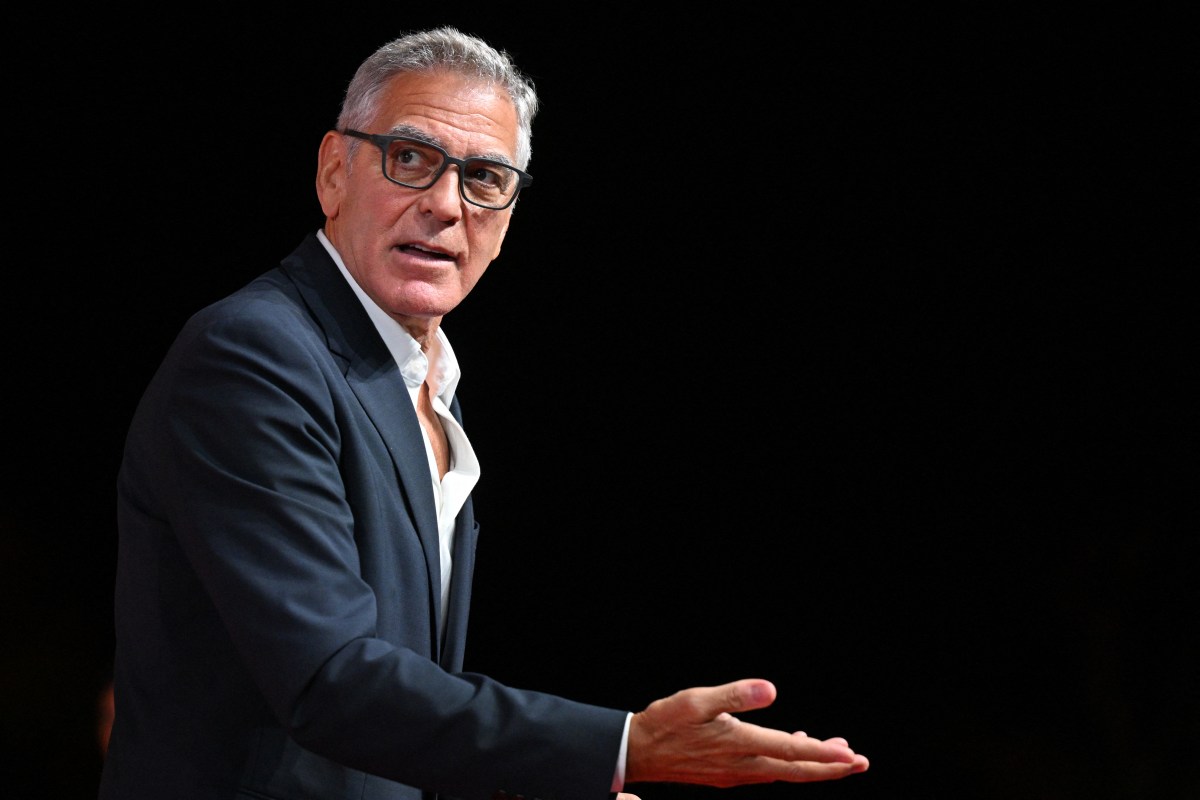
Actor George Clooney has identified three Democrats he is watching ahead of the 2028 presidential election, but the actor and prominent Democratic fundraiser says he plans to wait until after November's midterm elections before endorsing anyone.
That means the November 3 elections could provide an early political test for two of the three figures he singled out: Georgia Senator Jon Ossoff and Illinois Governor JB Pritzker, both of whom are seeking reelection this year. Kentucky Governor Andy Beshear, meanwhile, is not up for election this November.
Speaking at The Future of Creativity event in Venice in September, Clooney said, "I think we're all very excited by this young senator from Georgia, Jon Ossoff. I am 65 years old, and I think that we need some young voices that are coming up with new ideas and some new thoughts."
He also said he liked Pritzker and Beshear, while making clear that he had not yet settled on a candidate.
Newsweek has contacted representatives for Clooney, Ossoff, Pritzker and Beshear for comment.
The remarks are notable because of Clooney's high-profile intervention in the 2024 presidential election. In a New York Times opinion essay in July 2024, he called on President Joe Biden to end his reelection campaign after Biden's poor debate performance against Donald Trump. Biden withdrew later that month and endorsed Vice President Kamala Harris, who became the Democratic nominee before losing to Trump.
For now, however, early polling suggests none of Clooney's three prospective choices is the clear favorite for the Democratic nomination.
The RealClearPolling national average, covering polls from July 19 through September 28, has Harris at 26.3 percent, California Governor Gavin Newsom at 14.3 percent, former Transportation Secretary Pete Buttigieg at 12.6 percent, and Congresswoman Alexandria Ocasio-Cortez at 10 percent.
Ossoff follows at 8.8 percent, while Beshear is at 4 percent and Pritzker at 3.2 percent.
In a September 26-28 Harvard-Harris poll, for example, Ossoff registered 6 percent and Pritzker 5 percent, while Harris had 38 percent. An Echelon Insights poll conducted September 17-21 put Ossoff at 8 percent and both Beshear and Pritzker at 2 percent. A July Emerson poll painted a different picture, giving Ossoff 13 percent and Beshear 7 percent.
Of Clooney's three names, Ossoff currently has the strongest standing in national presidential polling and faces perhaps the most consequential test next month.
The Georgia Democrat, elected to the Senate in a January 2021 runoff, is seeking another term against Republican Rep. Mike Collins on November 3. Ossoff's first Senate victory came by a narrow margin over Republican David Perdue.
The RealClearPolling average has Ossoff at 51.1 percent to Collins' 43.1 percent, an eight-point advantage. Its listed September polls have all shown Ossoff ahead, although by margins ranging from four to 10 percentage points.
A September Big Data Poll survey of 678 likely Georgia voters found Ossoff leading Collins by 55 percent to 45 percent, an 11-point margin. The poll was conducted September 21-23.
For Ossoff, a second consecutive victory could also strengthen his standing in conversations about the Democratic Party's future.
Clooney's own remarks suggest Ossoff's age is part of his appeal.
At 39, Ossoff represents a younger generation of elected Democrats at a time when the party continues to debate generational change following the 2024 election.
As of October 4, Ocasio-Cortez leads the Polymarket odds for the 2028 Democratic nomination at about 17 percent, followed by Newsom at 16 percent and Ossoff at 15 percent. Harris stands at 7 percent, Shapiro at 6 percent, Buttigieg at 5 percent, Beshear at 3 percent, and Pritzker at about 1 percent. Prediction-market prices reflect traders’ expectations rather than public opinion.
An August Emerson College survey has Ossoff leading Vice President JD Vance 49 percent to 44 percent and Secretary of State Marco Rubio 47 percent to 44 percent in hypothetical 2028 matchups. Such polling this far ahead of an election is highly provisional and measures voter preferences under hypothetical candidate fields rather than forecasting an eventual result.
Pritzker also faces voters on November 3 as the Illinois Democrat seeks another term as governor.
Unlike Ossoff, however, there is relatively little recent public polling of his state race. The RealClearPolling page for a Pritzker matchup against Republican Darren Bailey lists a November 2025 Victory Research survey of 1,200 likely voters that gave Pritzker a 54-34 percent advantage. Pritzker defeated Bailey in their 2022 contest by double digits.
His potential presidential standing is more modest.
The current RealClearPolling national average puts him at 3.2 percent for the 2028 Democratic nomination. Recent individual results include 5 percent in the late-September Harvard-Harris poll and 2 percent in September's Echelon Insights survey.
Those numbers place him well behind the leading names currently being tested, but the Democratic field remains wide open.
Beshear, a two-term Democratic governor in Republican-leaning Kentucky, is Clooney's third name.
Unlike Ossoff and Pritzker, Beshear does not face voters in the 2026 midterm elections. His current gubernatorial term followed his reelection in 2023.
In national polling of a potential 2028 Democratic field, Beshear generally remains in the low single digits. The RealClearPolling average has him at 4 percent, ahead of Pritzker but behind Ossoff and several other potential contenders.
The July Emerson survey put him at 7 percent, while Big Data Poll had him at 4 percent in September. Echelon Insights placed him at 2 percent later that month.
Beshear previously told Newsweek that he believes the next president should be a Democratic governor, arguing that governors have the executive experience needed for the White House.
The polling picture offers an important caveat to Clooney's shortlist.
That volatility makes the early numbers better viewed as snapshots of name recognition and current voter preference than reliable predictions of a presidential contest still two years away.
Clooney himself has left his options open. He said in September that he would not endorse anyone until after the midterms, while ruling out a run of his own.
For Ossoff and Pritzker, November 3 will provide something more concrete than hypothetical presidential polling: a test at the ballot box before Clooney and other Democratic donors and voters begin making firmer judgments about the party's 2028 field.
Contact Newsweek editors on this story: Matthew Cannon and Cristina Diciu.