How Kazakhstan transformed itself into Central Asia's tennis hub
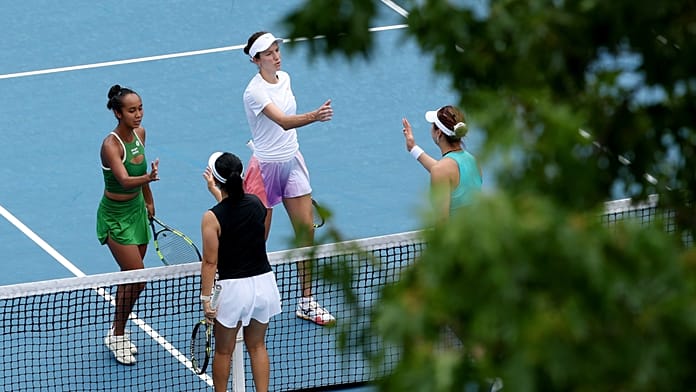
Elena Rybakina has made history for Kazakhstan by becoming the world No. 1 in women’s tennis after defeating Aryna Sabalenka at the US Open. This year, she won both hard court Grand Slam titles.
Her achievement marks a new chapter for Kazakhstan, a country not traditionally known as a tennis nation.
Kazakh President Kassym-Jomart Tokayev congratulated Rybakina, saying her success can help nurture a new generation of tennis players in Kazakhstan.
"It's history, and I'm very proud representing Kazakhstan. Every time I come back to Kazakhstan, no matter which city I go, it's always so many kids," Rybakina said at a press conference in New York.
"We are competing against countries where tennis has been prospering for more than 100 years and they have more than 40,000 courts," added Dias Doskarayev, Vice President of the Kazakhstan Tennis Federation.
Yet in Central Asia, Kazakhstan has emerged as a clear leader in the sport.
Over the past two decades, the country has transformed its tennis landscape by expanding infrastructure, developing professional academies, nurturing new talent and attracting international tournaments.
"Just an example, Germany has more than 50,000 courts. Even Japan has more than 40,000 courts, while we have only 400 and our population is smaller. That is why we have to work on quality," Doskarayev added.
According to the KTF, investment in tennis has totalled $200 million since 2007.
"We had only 55 courts in 2007, mainly in Almaty and around 500 players in total across Almaty, Astana, Karaganda and Shymkent," Doskarayev said.
Today, the number of players has grown to around 45,000. The federation says tennis has also become more affordable.
"The stereotype that tennis is a rich man's sport no longer exists. For example, in 2007 and 2008, renting a court cost around $100 per hour. Today, the monthly training fee for children is around $50," Doskarayev said.
At the highest level, Kazakhstan is represented by players including Alexander Bublik, Yulia Putintseva and Anna Danilina.
Tennis is gaining popularity among a new generation of Kazakh children. More and more parents are choosing to put their kids on the court.
Training opportunities are now available in every region of Kazakhstan, with 39 tennis centres and clubs across the country.
"We are also working with children's programmes in kindergartens. Now we have more than 145 kindergartens that we partner with," said Dias Doskarayev, Vice President of Kazakhstan’s Tennis Federation.
"We are giving equipment to the kindergartens, certifying the instructors and making sure that the kids get involved in tennis."
The country has also developed professional academies to prepare the next generation of players. One of them is Team Qazaqstan, a sports school focused on developing the country's tennis reserve.
"The academy was established in 2008. It was the idea of Bulat Utemuratov, the president of KTF, who wanted to bring all the talented players together in one place," the Tennis Federation explained.
Young players are selected by a commission of around seven specialists in tennis, psychology and fitness. The commission travels across Kazakhstan, watching children compete in tournaments and observing them during training.
The academy has partnered with institutions including the Gorin Tennis Academy in Northern California and the Sergio Bruguera Academy.
It is also working with renowned coach Riccardo Piatti in Bordighera, who is known for his work with Novak Djokovic and Jannik Sinner.
The federation says the number of ranked players is growing, while more Kazakh juniors are reaching higher-level international competitions.
Among the promising young players are Zangar Nurlanuly, Amir Omarkhanov, Akhmadi Makhanov, Eva Korysheva and Daniel Tazabekov.
Two Kazakh players have reached the world junior top 10. One of them reached the semi-finals of the US Open junior tournament last year and again this year.
At the Australian Open, Amir Omarkhanov finished in the top five of the world junior rankings and reached the quarter-finals.
Kazakhstan’s under-14 team is now fourth in the world junior team competition.
Kazakhstan hosts around 250 tournaments every year, including more than 50 international competitions. These include ITF tournaments, ATP Challenger events, Tennis Europe competitions and Asian Tennis Federation events.
The country will also see several major tennis events before the end of the year.
The Kazakhstan men's national team will face Thailand in the Davis Cup from September 12 to 19.
The Kazakhstan women's national team will face Spain in the Billie Jean King Cup from September 21 to 26.
The Almaty Open ATP 250 will take place from October 17 to 25.