How Plague Compares to Ebola, COVID and Deadly ‘Black Death’ Pandemic - Newsweek
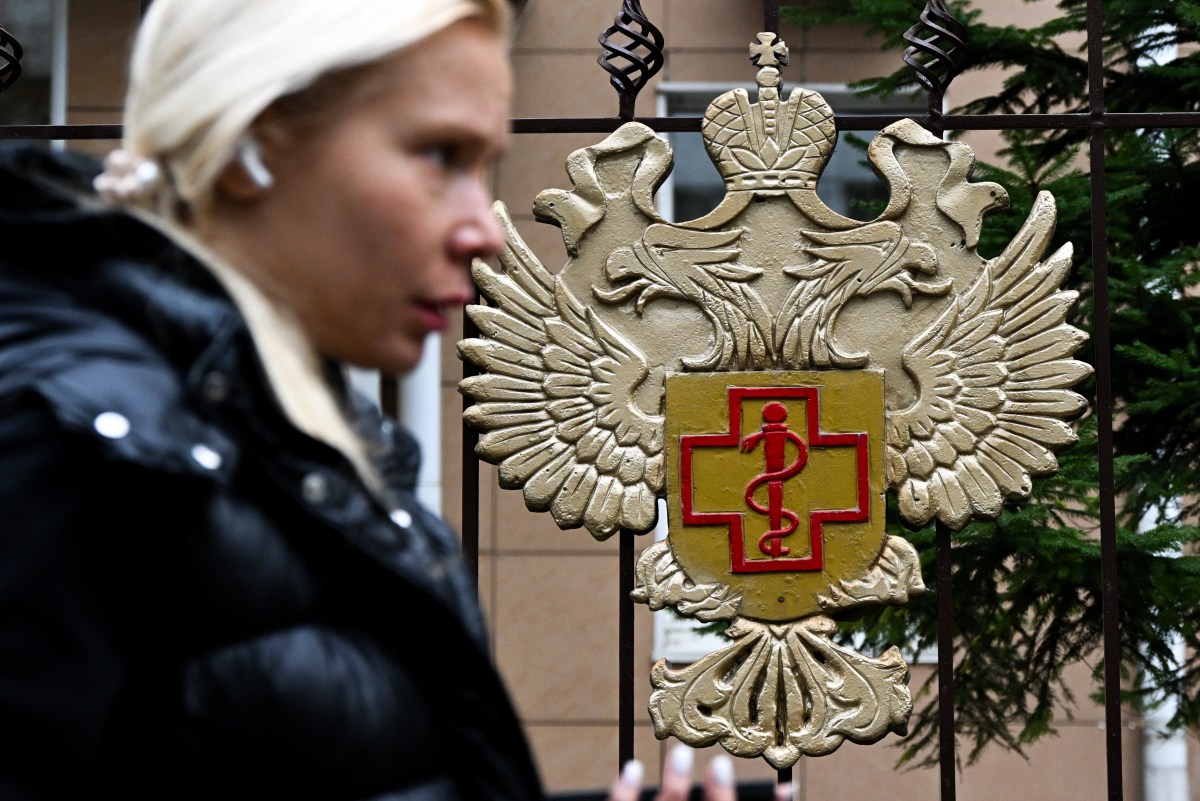
Health guidance highlights key differences between plague and other serious infectious diseases after a Russian lab worker reportedly died from a suspected case of the disease.
A Department of Health and Human Services spokesperson told Newsweek on Monday that the Centers for Disease Control and Prevention (CDC) was “closely” monitoring the situation with its interagency partners.
“The safety and security of U.S. citizens is our highest priority,” it said.
As Newsweek reported, Russian media sources said that a woman who worked for a plague research institute near Irkutsk in Siberia was hospitalized and later died, after she told colleagues she had inadvertently broken a test tube with live bacteria while collecting samples. The woman was named by independent Russian language outlet People of Baikal as 28-year-old Darya Shipilova.
Russian health watchdog Rospotrebnadzor said Sunday that the Irkutsk Anti-Plague Institute employee had been diagnosed with “pneumonia of unknown etiology.” Testing had not identified microorganisms associated with her work, the statement added.
Axios reported on Sunday that the White House was monitoring reports and related quarantines. It said that health authorities in Russia have taken precautionary measures in response to the woman’s death but had not confirmed she contracted the plague.
Newsweek contacted the World Health Organization (WHO) and Rospotrebnadzor for comment on Monday.
The CDC lists the common forms of plague as bubonic, pneumonic and septicemic, and says its symptoms depend on how a person is infected.
Pneumonic plague is the most serious form of the disease and the only form that can be passed from one person to another, according to the agency. Its symptoms include fever, headache, weakness, a rapidly developing pneumonia with shortness of breath, chest pain, cough, as well as sometimes bloody or watery mucous.
Pneumonic plague develops either when bacteria from untreated bubonic or septicemic plague reach the lungs or when a person inhales infectious droplets coughed into the air by an infected person or animal, the CDC says.
Bubonic plague symptoms include fever, headache, chills and weakness and one or more swollen, painful lymph nodes, called buboes, according to the agency, while symptoms of septicemic plague also include fever and chills, along with extreme weakness, abdominal pain and shock. Bleeding into the skin and other organs, is also possible, and tissues, including skin, can blacken and die—especially on fingers, toes and the nose, the agency adds.
According to the WHO, the plague has a case-fatality ratio of 30 percent to 100 percent if left untreated.
"The pneumonic and septicemic forms are invariably fatal unless treated early," it says.
Ebola disease is a rare but severe illness that can often be fatal, according to the WHO. It is caused by viruses that can get into the human population when individuals have close contact with the blood, secretions, organs or other bodily fluids of infected animals, as well as through direct contact with an infected person’s blood or bodily fluids. Transmission can also occur through contaminated objects and surfaces.
The agency says symptoms can be sudden and include fever, fatigue, malaise, muscle pain, headache and sore throat, followed by vomiting, diarrhea, abdominal pain rash and symptoms of impaired kidney and liver functions.
Ebola’s average disease case fatality rate is approximately 50 percent, according to the WHO, which says case fatality rates have varied from 25 percent to 90 percent in past outbreaks.
Survival can be improved by early intensive supportive care with rehydration and the treatment of symptoms, it says.
The WHO says COVID-19 is a disease caused by the SARS-CoV-2 coronavirus, and that the most commonly reported symptoms among currently circulating variants are fever, chills and a sore throat.
The SARS-CoV-2 virus spreads through the air in infectious respiratory particles from an infected person and can also spread by touching contaminated surfaces and then the eyes, nose or mouth. The agency says most who are infected make a recovery without the need for treatment due to increasing immunity from past infections and/or vaccination.
“Older adults, people with underlying health conditions, and unvaccinated individuals are at higher risk of severe illness,” it says.
According to a 2025 WHO fact sheet, there have been nearly 780 million confirmed cases and more than 7.1 million deaths reported worldwide since December 2019, though the true totals are likely higher.
Simon Clarke, associate professor in cellular microbiology in the School of Biological Sciences at the University of Reading in the U.K., said that pneumonic plague is “a very different disease” from COVID-19.
“Unlike many viral respiratory diseases, plague is caused by bacteria and is generally treatable with antibiotics if identified quickly,” Clarke added.
The plague was known as the “Black Death” during the 14th century, leading to more than 50 million deaths across Europe, according to the WHO.
While it devastated Europe historically, “nowadays, plague is easily treated with antibiotics and the use of standard precautions to prevent acquiring infection,” it explains.
The plague “is caused by bacteria, Yersinia pestis, famous for causing the Black Death, that remains with us today mostly in animals across parts of Asia, Africa and the Americas,” Clarke said.
Contact Newsweek editors on this story: John Fitzpatrick and Dave Siminoff.