How Punjab's drugs battle has become an election war
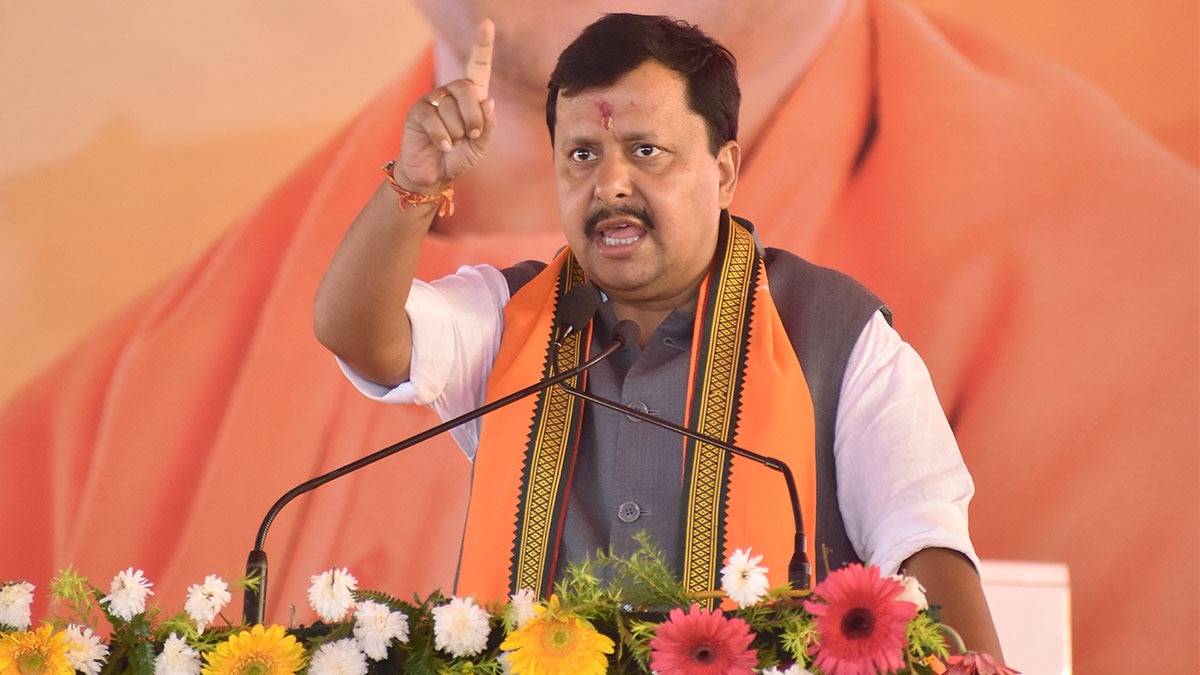
On September 18, BJP national president Nitin Nabin flagged off the party’s first ‘Nasha Mukt Punjab Yatra’ at Madhopur in Pathankot. Four yatras, starting from Madhopur, Fatehgarh Sahib, Fazilka and Talwandi Sabo, will cover nearly 4,000 km across all 117 assembly constituencies of the state in 13 days. The yatras will converge in Jalandhar on September 30 for a rally by Union home minister Amit Shah.
This is the BJP’s most ambitious exercise in a state where it holds two assembly seats and none of the Lok Sabha even though its vote share rose to 18.56 per cent in 2024, helped by the RSS outreach to Mazhabi Sikhs in rural areas. For the assembly polls next year, the party will contest all 117 seats without former ally Shiromani Akali Dal (SAD). A key promise is the eradication of drugs from Punjab within two years of assuming office.
The BJP says the ‘Nasha Mukt Punjab Yatra’ is not a political campaign. At Fazilka, Union minister Arjun Ram Meghwal called it social reform, then in the same speech accused the Bhagwant Mann government of ruining the system and alleged police collusion in narcotics trade.
Since Nabin’s visit, Punjab has been swamped by Union ministers, chief ministers and former chief ministers of various states, ministers of several state governments and key parliamentarians—a carpet bombing of the BJP’s message to the Punjab electorate.
What sets this yatra apart is the national architecture behind it. On September 22, midway through the yatra, Shah told state anti-narcotics chiefs that the vision of Viksit Bharat 2047 was impossible if the youth was in the grip of drug addiction. He called drugs the hardest battle after Kashmir, the Northeast and Maoism, and unveiled a ‘Vision Document 2026-2029’ to fight it.
In January, Shah had announced a three-year national campaign beginning March 31, ordered ministries and state police to draw up roadmaps to 2029, and said drug traffickers deserved no compassion. The government points to narcotics seizures: over 11.9 million kg in 2014-26 (under the Narendra Modi government) as against about 2.6 million kg in 2004-14.
Punjab is the first political test of this national narrative, and the BJP’s two-year promise would land inside the Centre’s 2029 horizon. But the framing cuts both ways. If drugs are a security problem, the Centre shares ownership. And in Punjab, the problem is dual.
The first problem runs across the 553-km-long border with Pakistan. Heroin once crossed on foot, sometimes with counterfeit currency: back in 2013, the Border Security Force (BSF), for instance, had found 18 kg of heroin and fake Rs 1,000 notes near the fence at Khemkaran.
Drones changed the economics. In 2025, the BSF seized 272 drones from Pakistan and over 367 kg of heroin, along with more than 10 kg of RDX, 12 grenades and 200 weapons. This July, a drone drop near Ferozepur’s Bula Rai village carried five pistols and 47 cartridges; in Tarn Taran, another carried methamphetamine.
Drugs and guns now arrive together and feed the same networks. The National Investigation Agency (NIA) says gangsters in Indian jails and in Pakistan, Canada, Malaysia, Portugal and Australia finance killings, extortion and pro-Khalistan outfits through drugs and arms smuggling and hawala. Canada-based gangster Lakhbir Singh Landa of Tarn Taran, investigators allege, grew from small arms and extortion calls to rocket launchers and heavy heroin consignments with Pakistan-based Harvinder Rinda. These remain allegations, disputed by the accused.
The same infrastructure moves people. In 2023, the Punjab Anti-Gangster Task Force arrested a Jalandhar immigration operator accused of procuring fake passports for gangsters while duping ordinary aspirants. Gangsters such as Goldy Brar, Landa and Arsh Dalla fled abroad and kept operating. The dunki trade runs on similar agent networks. A man in Tarn Taran paid about Rs 45 lakh to reach the US through Central America and was beaten and robbed on the way.
This is Shah’s terrain in Jalandhar: narco-terror with a Pakistani source and a diaspora gangster network. It is also where the Centre’s responsibility is hardest to deny.
The second problem is domestic—the shift to synthetic drugs and diverted pharmaceuticals. By July 2024, about 17 kg of crystal methamphetamine had been seized that year against roughly 1 kg in 2023, with police saying smugglers were manufacturing locally as the Taliban’s opium ban in Afghanistan had squeezed heroin supply. Globally, the UN reports record methamphetamine seizures and pharmaceutical-opioid seizures nearly 130 per cent above 2020 levels.
The pill pipeline runs through other states. The Amritsar police once traced tablets ordered from inside Goindwal Sahib Central Jail to an Ahmedabad pharma unit, where a raid recovered over 1.47 million tablets. The Fatehgarh Sahib police traced a peddler to a licenced firm in Delhi and Haryana holding around 600,000 unlabelled injections.
The border is central; drug licencing and chemist regulation are largely state matters. Congress MP Sukhjinder Singh Randhawa, criticising the BJP yatra, said the focus could not stay on heroin alone. A two-year eradication plan cannot easily end a market manufactured inside India.
The BJP campaign also rode on a death. On September 6, Gulzar Singh, 47, a Dalit labourer from Sangrur, questioned finance minister Harpal Singh Cheema about ‘chitta’ in his area; his family says he was pressed to apologise and faced casteist slurs. His eldest son was addicted. Gulzar died the next night after consuming poison.
Police booked five people, including panchayat members, under abetment and SC/ST Act provisions; the panchayat denies harassment. Opening the yatra, Nabin said he stood with families in unimaginable pain. The death gave the BJP’s ‘Mavan Mangdian Jawab’ campaign a face, and a Dalit one at that, on a route ending in Doaba.
Punjab has heard the drugs narrative before, often with roles reversed. In October 2012, Congress leader Rahul Gandhi had said seven in 10 Punjabi youths had a drug problem, a figure its source study’s author later said was misread. Then deputy chief minister Sukhbir Singh Badal had replied that stopping drugs from Pakistan was the BSF’s job. So, the border argument that the Mann-led Aam Aadmi Party (AAP) government gives today was first made by a BJP ally of yesteryears.
Talwandi Sabo, where the BJP’s fourth yatra began, is where then Congress leader Captain Amarinder Singh had in December 2015 vowed to break the drugs network within four weeks of taking office. AAP campaigned on the same pledge in the 2022 polls. The BJP’s former state unit chief Shwait Malik says chief minister Mann has since missed five deadlines. In fact, in Punjab, every government since 2007 has won elections partly on the drugs issue and also been judged on it.
The narcotics damage cuts across caste, class and region: elite and political circles, border villages, diaspora families, textile workers and even Dalit labourers. While heroin is concentrated on the border, pills travel far and wide through chemists.
The state’s numbers confirm the scale. Since March 2025, police report 60,582 FIRs, 79,784 arrests, 3,803 kg of heroin seized and Rs 366 crore in property frozen. The unanswered questions: how many arrests were of drug users and couriers, and how many cases ended in conviction?
The deras took this terrain first. De-addiction, blood donation and mass weddings became Dera Sacha Sauda’s hallmarks among Malwa’s poor, where its following grew the fastest. It now offers free lodging, meals and medication to those quitting drugs.
The state machinery had lagged—a 2014 assessment found Punjab had no state-funded rehabilitation centres. But things have moved since. This June, Mann launched the anti-drugs ‘Soorma’ campaign, enlisting recovered addicts to guide others into treatment.
AAP has hit back at the BJP. Mann told the Centre to check the narcotics problem in BJP-ruled Gujarat first, and said Punjab had purchased anti-drone systems itself despite border security being the Centre’s job. The Congress and SAD, meanwhile, are demanding Cheema’s removal. It is a four-cornered fight, not a two-party one.
The thing is neither the central nor the state government owns the whole problem. The BJP’s yatra may have made drugs a defining issue for the 2027 polls, but the party needs to convince voters why its promise of drugs eradication in two years will hold when all earlier promises made by various stakeholders broke. For the BJP, the 4,000 km yatra is the easy part. The harder journey is delivering and gaining credibility.