How Southern start-ups are solving local problems, building for global markets
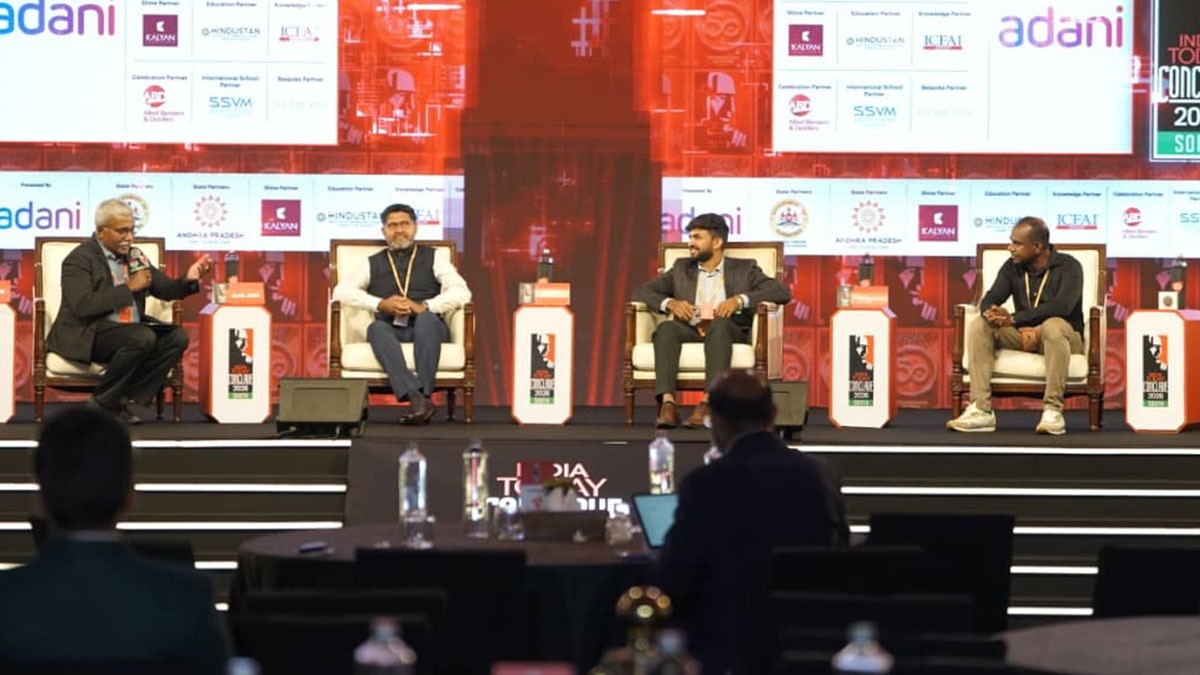
Kerala’s start-up story is increasingly moving beyond software and services, with young entrepreneurs building robots, assistive technologies and semiconductor intellectual property for problems ranging from manual scavenging and autism therapy to satellite communications. Three stakeholders in this journey shared their experiences during the session ‘The Southern Start-up Moment: Opportunities and Challenges’ at the India Today Conclave South in Kochi on September 30.
Rashid Karimbanakkal, co-founder and director of Genrobotic Innovations, said his entrepreneurial journey began in college, where a group of engineering students met through the National Service Scheme. A fatal accident involving three people cleaning a manhole in Calicut led them to develop Bandicoot, a robot designed to clean sewers without human intervention.
Karimbanakkal’s company now has more than 400 robots operating across 22 states and has expanded to Malaysia, Singapore and South Africa. It has also moved into healthcare, defence and space— Karimbanakkal said it had recently received an order from the Indian Space Research Organisation (ISRO).
Sathyanarayanan A.R., founder and CEO of Embright Infotech, described the challenges in building technology for autism and behavioural training. The firm’s AutiCare platform uses immersive technologies to assess children across multiple parameters and help therapists personalise interventions. From a 30-member team, the company has grown to 215 and its technology is being implemented in more than 50 centres. Sathyanarayanan, however, said the bigger challenge was persuading institutions to adopt technology in a niche field where conventional human resources were still available.
Rijin John, Co-founder and CEO of Silizium Circuits, represents the semiconductor end of the start-up spectrum. His company develops semiconductor IP for wireless technologies, including 4G, 5G and 6G. He said the company began by addressing the strategic need for an indigenous alternative to GPS and developed technology around NavIC (Navigation with Indian Constellation). The challenges, he said, included expensive semiconductor design tools, skilled manpower and funding.
A common thread among the three entrepreneurs was that the biggest opportunity lies in solving difficult, narrowly defined problems rather than merely replicating established products. They also stressed on the importance of government support, local talent and access to markets.
For Kerala’s start-ups, another challenge is scaling beyond the state. Sathyanarayanan said entrepreneurs must look to other states and global markets when local demand is insufficient. John argued that start-ups can compete with global giants precisely because they are smaller, more adaptable and capable of concentrating on niche technologies.