How Sukanta Majumdar held the stage with acting debut in play
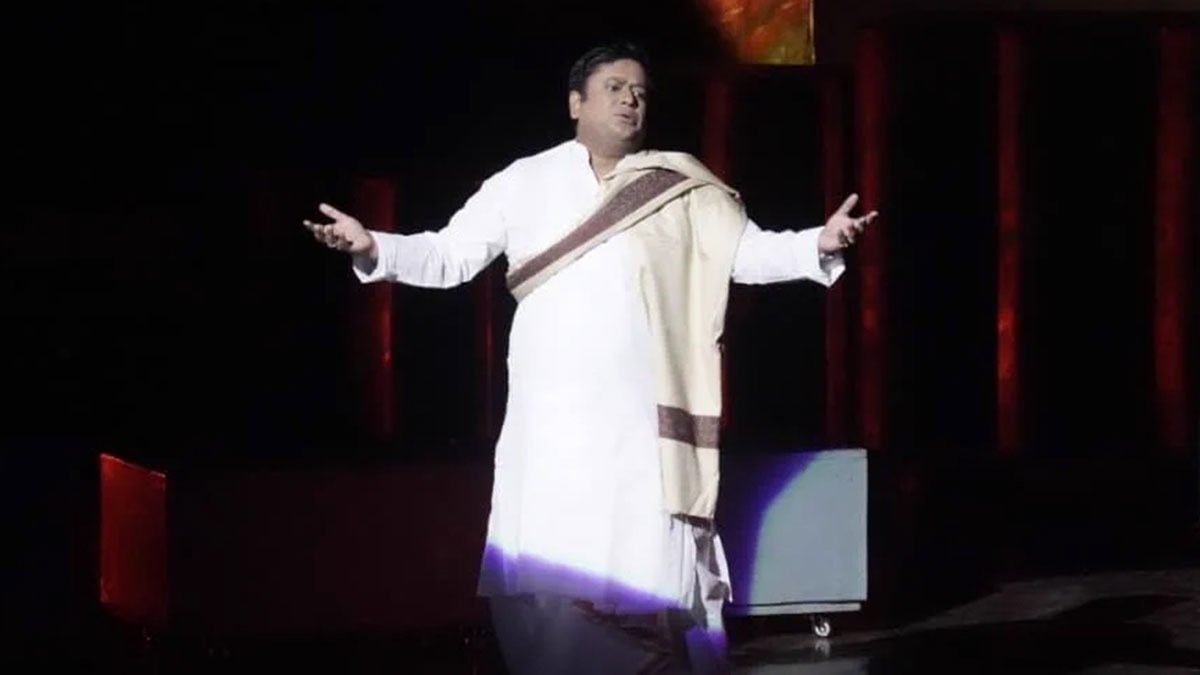
Union minister of state and BJP leader Sukanta Majumdar has found himself a rather different stage to occupy, trading political speeches and party meetings for theatrical dialogue. The occasion was the staging of Kesari Hatya, a historical drama on the life, political career and mysterious death of Syama Prasad Mookerjee, at the Rabindra Sadan in Kolkata on November 1.
Produced by Bengal-based theatre group Ranga Opera, the play traces Mookerjee’s political journey, including his resignation from Jawaharlal Nehru’s cabinet, the formation of the Bharatiya Jana Sangh and his political association with a young Atal Bihari Vajpayee. It was Vajpayee who was brought to life on stage by Majumdar while actor Kaushik Adhikari played Mookerjee. The play is directed by Debashis Biswas.
The minister, who was approached by the theatre group nearly two months ago, said he had little hesitation in accepting the offer. “I was offered this role and since like any other Bengali I too wanted to act on stage, I agreed,” Majumdar said.
“I hope you like this play,” he added as the audience clapped.
Rehearsals, however, had to compete with the demands of ministerial life. Majumdar said preparations continued between official engagements, with the minister even making time for rehearsals after returning from visits to other states. “I could do only two rehearsals previously and one on the night before the performance,” he said, adding that he had only returned from Arunachal Pradesh the day before.The production attempts to go beyond the familiar episodes of Mookerjee’s life. According to the organisers, earlier theatrical productions had touched upon significant moments in his political career but had not offered a comprehensive account of his agitation over Jammu and Kashmir, the role of the RSS and Bharat Sevashram Sangha during that period or the circumstances surrounding his death in June 1953.
Mookerjee was arrested in Kashmir while protesting against the special constitutional arrangements under Article 370. His sudden death in custody remains controversial, with his supporters questioning the circumstances and alleging a political conspiracy.
Majumdar appeared pleased with the audience's response and expressed hope that Kesari Hatya would receive more performances and travel to districts across Bengal.
The minister was not entirely new to experimenting with life beyond politics. In December 2024, he had walked a fashion-show ramp as a model. Now, he has returned to the spotlight, this time with a script, a costume and a rather more demanding role to remember.
Among those present at Rabindra Sadan were Subrata Gupta, advisor to West Bengal chief minister Suvendu Adhikari, Shibpur MLA and actor Rudranil Ghosh and former Rajya Sabha MP Jawhar Sircar.
For Majumdar, the transition from political platform to theatrical stage appears to have been a reasonably comfortable one. Whether he has discovered a second career in acting may be premature to say. But, for one evening at least, the minister was happy to let the applause do the talking.
Arkamoy Datta Majumdar is an Assistant Editor with India Today magazine, based in Kolkata. He writes about politics, international relationship, football, and society, with a particular focus on eastern India and the political transformation of West Bengal. He oversees the editorial operations in the eastern states of West Bengal, Odisha and Sikkim.
His reporting sits at the intersection of politics and everyday life. He covers elections and political parties, governance and public policy, political movements, identity and cultural politics, federalism, border issues and the changing relationship between the state and its citizens. In West Bengal, his work has closely followed the rise of the BJP, the evolution of the Trinamool Congress, the Left and Congress, electoral politics, voter-list and citizenship questions, welfare politics and the ways in which political competition increasingly plays out through culture, religion, education and public institutions. He has covered the crucial Bangladesh elections of 2026 from Dhaka.
He also follows the wider politics of the eastern region, particularly where questions of borders, migration, regional identity, security and diplomacy intersect with domestic politics.
For Arkamoy, political journalism is as much about understanding people and places as it is about following politicians. He is interested in what happens between an announcement and its implementation, between a political slogan and its impact on the ground, and in the quieter social and cultural shifts that often reveal where politics is heading.