
How technology is driving shared prosperity across BRICS
By continuing to browse our site you agree to our use of cookies, revised Privacy Policy and Terms of Use. You can change your cookie settings through your browser.
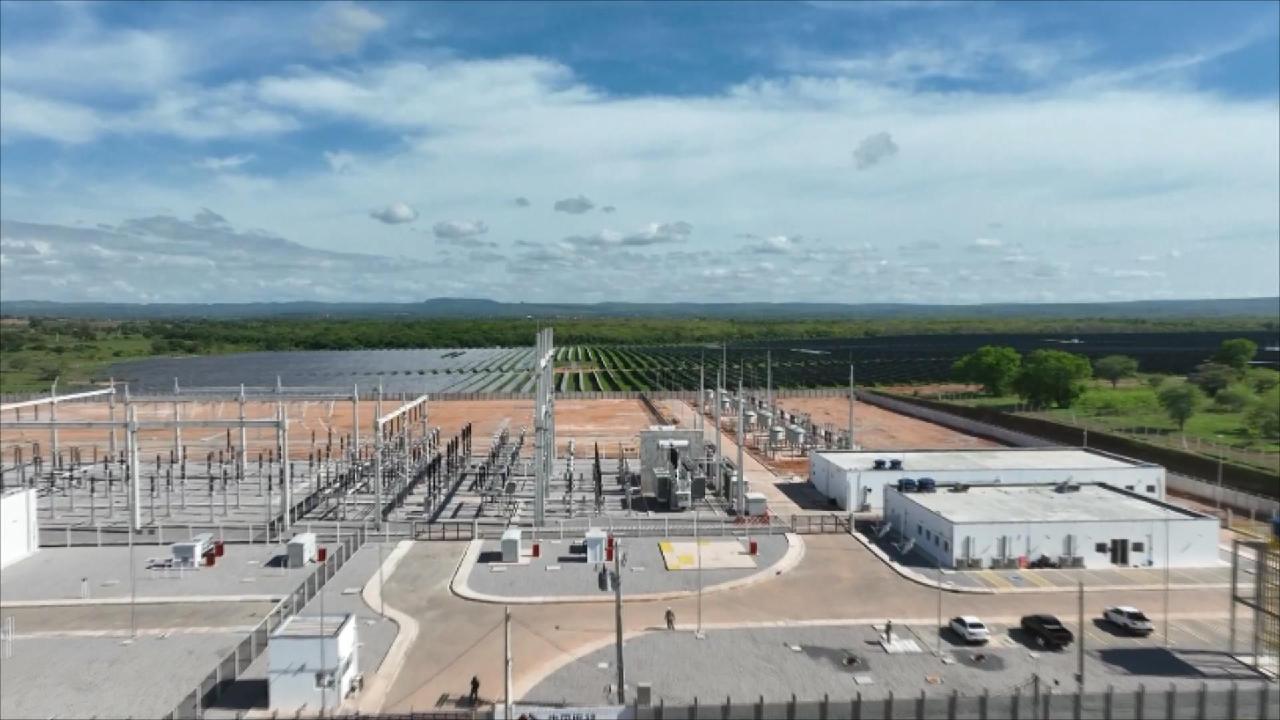
An aerial shot of the photovoltaic power plant project in Mauriti, a city in northeastern Brazil's Ceara state. /CMG
Chinese President Xi Jinping has called for broader international cooperation on emerging technologies, saying that Global South countries should "work faster to evolve a consensus-based global AI governance framework, so that new technologies can light the way toward shared prosperity."
Xi made the remarks on Sunday at Session II of the 18th BRICS Summit in New Delhi, India.
During his speech, he proposed five initiatives on "greater BRICS" cooperation in areas of AI, trade and investment facilitation, digital industry, smart manufacturing and talent development.
The proposals come as China and other BRICS countries have been expanding practical cooperation in areas ranging from renewable energy to AI, turning technological advances into opportunities for local communities.
In Mauriti, a city in northeastern Brazil's Ceara state, abundant sunlight is being converted into clean electricity through a 425-megawatt solar complex built by PowerChina.
The photovoltaic power plant project began construction in 2023 and entered commercial operation in 2025. It is expected to generate nearly 1 billion kilowatt-hours of electricity annually while creating jobs and supporting local economic development.
But for the local community, the impact goes beyond electricity generation.
More than 90 specialized training programs were reportedly provided during construction, helping local workers develop technical skills. One of them is Vinicius Martins, a Mauriti native who studied information technology at a local vocational school.
Now a technical assistant, Martins joined the project in 2023. "This project changed my plans for my career," Martins said.
Mauriti Mayor Joao Paulo Furtado said local workers received training to qualify for jobs at the Chinese company’s project and gradually developed into skilled technicians.
The influx of workers and related business activity has also benefited the city's economy. Local businesses in housing, retail and catering have seen increased demand. Hardware store owner Guilherme Monteiro said his sales had risen by about 30% over the past two years.
The case illustrates how technology and investment can generate benefits beyond infrastructure itself, from skills development to new economic opportunities.
Digital technologies are also creating new links between China and other BRICS members and partner countries.
The Urumqi hub of BRICS' digital industry ecosystem cooperation network was launched in northwest China's Xinjiang Uygur Autonomous Region in June. It is the second such hub in China after Xiamen and is designed to strengthen digital cooperation with countries across Central Asia and Eurasia.
The hub aims to connect Chinese digital technology and industrial resources with overseas demand, exploring a model that combines research and development in eastern China, industrial integration in Xinjiang and digital services for markets to the west.
The goal is to move cooperation from being geographically connected to becoming digitally connected.
In Xiamen, east China's Fujian Province, another initiative is focusing on making AI more accessible to businesses.
The Xiamen Digital BRICS Open AI Innovation Center officially opened on Thursday. Built around an online platform, offline facilities and an industrial ecosystem, the center is designed to connect AI technologies with practical applications in areas such as manufacturing, finance, trade and transportation.
It also aims to address challenges faced by companies in adopting AI, while nearly 30 companies have reached strategic cooperation agreements covering AI applications in BRICS markets, embodied intelligence, scenario-based innovation and digital finance.
From solar power in Brazil to digital cooperation in China's western regions and AI applications in Xiamen, these projects show how emerging technologies can become more than tools for technological advancement.

