How the SAS tracked a notorious IRA sniper to a secluded thorn bush - The Independent
Want to bookmark your favourite articles and stories to read or reference later? Start your Independent Membership today.
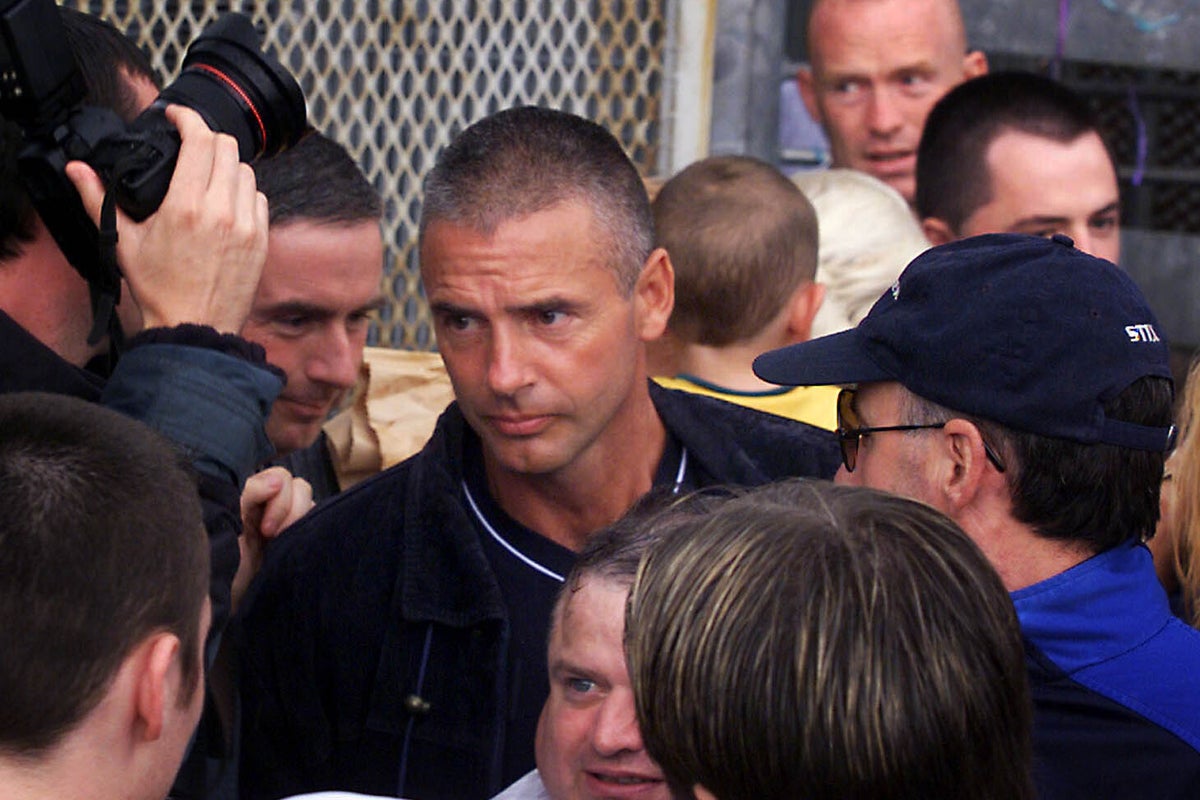
Special Forces veterans have revealed details of how a notorious IRA sniper was hunted down and captured during the final years of the Troubles in an operation they say illustrates how their secret war helped create the conditions for peace.
British forces had been chasing Bernard McGinn for months. He had, they believed, killed nine people with a powerful new rifle.
Seen as a key target, McGinn’s arrest in 1997 came at one of the most politically volatile times of the peace process when intense negotiations were continuing despite continued IRA attacks on the mainland.
Now, for the first time, the soldier who commanded the operation describe s what unfolded that day in April in the latest episode of SAS: The Shadow War.
In order to reach McGinn, the SAS commandos had to get past scores of IRA lookouts protecting him and three others gathered inside a secluded farm complex near Crossmaglen, South Armagh.
“[It was] very difficult in broad daylight to have got onto target without the cover being blown… but we did manage to do it without anybody knowing,” says the former SAS operator, identified only as Tom, whose voice has been disguised.
His team, backed by surveillance teams from 14 Intelligence Company and specialist police, were intent on arresting the gang but knew violence was likely.
“There was at least one sniper who'd killed nine people with a 50 cal weapon, a 50 cal sniper rifle, and a couple of other AK-47s and some quite determined people there,” he says. “So when you're going into that farm complex, we're all professional, but it concentrates the mind.”
The SAS swept into the entrance of the barn, leaving the IRA “absolutely startled. Surprised.” But one man was separate from the other three. He realised something was wrong as soon as the assault began.
“He sniffed something was wrong. And the moment things went live and noisy, he was off in a shot. Luckily, somebody out of the corner of their eye saw a man running at high speed, and he and a couple of others gave chase,” Tom told the podcast.
The fugitive made it roughly 200 metres before exhaustion overtook him: “He was knackered, basically, and hid under a bush — big thorn bush. But they saw where he went, and they got him out.”
McGinn was tried and sentenced in 1999 to 490 years for multiple offenses including three murders, among them the killing of Bombardier Stephen Restorick, who was killed by a sniper’s bullet in 1997.
His arrest came amid an effort to increase the level of terror attacks by the IRA, despite the peace talks behind the scenes. A year earlier, a massive bomb had rocked the Docklands in London, killing two and injuring more than 100.
One former surveillance operator interviewed by The Shadow War, identified as Bob, describes an even more ambitious mainland plot which, he says, British intelligence uncovered.
According to his account, five IRA members operating in London were planning a massive, coordinated bombing campaign involving ten one-tonne truck-bombs.
Bob says surveillance led the security services to lock up garages containing around 10 tonnes of homemade explosives, additional explosives, weapons and thousands of rounds of ammunition.
He says the plan involved around 50 IRA members who were to arrive from different parts of Europe, collect the specially prepared vehicles and drive them to targets including Downing Street, financial districts and other transport nodes.
The scale of the plan was so large that the police decided not to allow the plot to develop further and moved against members of the cell already in London. During a raid on a bed and breakfast in Hammersmith, IRA quartermaster Dermot O’Neill was shot dead by police.
Bob describes the intervention as the disruption of what he believed could have become the IRA’s largest mainland operation.
Several former special-forces soldiers interviewed for the Shadow War series believe that, by the mid-1990s, the IRA had been penetrated so deeply by intelligence and placed under such sustained operational pressure that its leadership knew it could not win militarily.
Others do not agree – given that it was equally clear that the British knew there was no military solution to the conflict.
Mary Kelly, the veteran Northern Irish journalist who reported for the Belfast Telegraph and covered the political evolution of the conflict, says military pressure played a role but was not the decisive factor.
“I think it is a theory more beloved of people who believe in the military standpoint,” she said. “I think it was a factor, but I don’t think it was the overriding factor.”
Kelly says the more important change began after the 1981 hunger strikes. Bobby Sands was refusing food when he was elected to Westminster and was the first of ten to die that year demanding political status for IRA prisoners.
Sinn Féin increasingly realized that politics could achieve more than armed struggle, Kelly believes.
“Their votes were increasing all the time,” she adds. “They were learning the lesson that politics was a possible way out.”
She also points to war-weariness after decades of violence and accepts that intelligence penetration damaged republican confidence.
But in her view, the political prize mattered more. Gerry Adams was elected as an MP for Sinn Féin, which was often described as the “political wing of the IRA” in 1983, and Martin McGuinness, a former IRA commander, won a seat for Sinn Fein in 1997. None of the republican MPs actually took their parliamentary seats.
Former BBC Northern Ireland security correspondent Brian Rowan says both sides saw they were trapped in a stalemate.
“Both could cause each other a lot of harm, a lot of damage,” he says. “But could they actually win?”
It was the realisation that neither side could, he argues, that opened the path to ceasefires and political agreement with the Good Friday Agreement in 1998. Under the terms of that agreement, sniper McGinn was released after serving 16 months.
Listen to the first seven instalments of SAS: The Shadow War now, or become an Independent Member for exclusive early access to the entire series. Available on Apple Podcasts and Spotify