How UP govt subsidies are changing economics of farming in Meerut
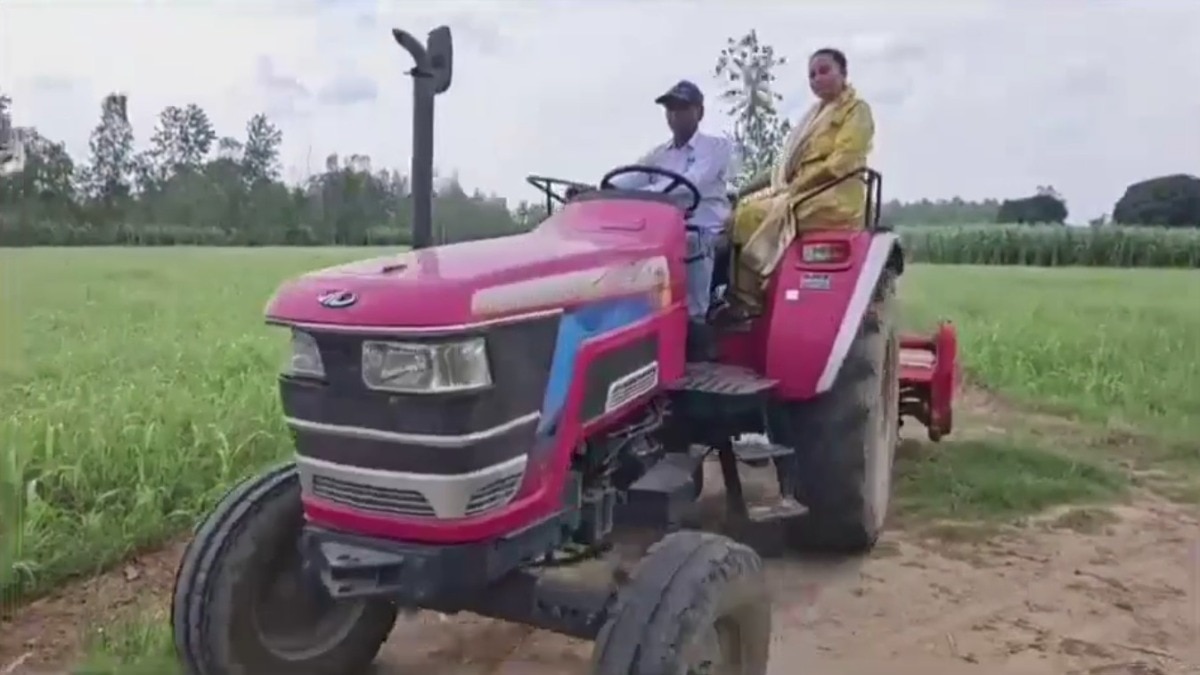
For farmers in Meerut, a tractor is no longer just a tractor. With government subsidies making expensive agricultural machinery more accessible, it is becoming a tool to cut costs, save time and, for some farmers, create a new source of income.
Across rural areas, schemes such as the Sub-Mission on Agricultural Mechanization (SMAM) are helping farmers buy modern equipment with subsidies ranging from 40 to 80 per cent, depending on the category and scheme.
The machines include tractors, super seeders, balers, rotavators, deep-ploughing equipment and harvesting machines. Their impact is increasingly visible in the fields, where work that once took two days can now be completed in one.
For Mawana farmer Nand Kishore, the change has been particularly significant.
Kishore has around six acres of land, where he mainly grows potatoes and sugarcane. Under the government's Farm Machinery Bank scheme, he acquired agricultural machinery worth around Rs 42 lakh, including a 75-horsepower tractor and several modern implements.
He says that for a project costing around Rs 30 lakh, he received nearly 80 per cent subsidy, amounting to about Rs 24 lakh.
"Without the subsidy, we could not have bought these machines. We simply did not have that much money," says his wife, Seema.
That subsidy has changed more than what sits in their farmyard. It has changed how the family works.
Kishore says the machinery has reduced the time required for farm operations by around 50 per cent. A job that earlier took two days can now be completed in a day. The need for hired labour has also fallen sharply.
Seema has seen that change over the 27 years of her marriage, during which she has worked alongside her husband on the farm.
"Earlier, we had to call a tractor separately for ploughing and again for sowing. Now the tractor comes once and sowing, fertilising and ploughing can all be done together. We hardly need labour now," she says.
For the family, the machines have also created an opportunity beyond their own six acres.
When the equipment is not being used on their fields, Kishore rents it out to other farmers. He says this brings in an additional Rs 4–5 lakh a year.
The machinery includes a baler, super seeder, wheat harvesting machine and equipment for deep ploughing. Kishore says the deep-ploughing machine, which costs around Rs 5 lakh, helps break the hard layer beneath the soil and improves the condition of the field.
The result is a different economics of farming: less time spent waiting for labour and machinery, lower dependence on manual workers and an additional income stream from equipment that would otherwise remain unused.
For Kishore, getting access to the scheme was also linked to institutional support. He says the agriculture department sent a letter to the bank, helping move forward the loan process required to purchase the machinery.
He believes more farmers can benefit if they understand how the schemes work and make use of the available support.
Seema says their experience has also encouraged other farmers around them to explore government subsidies.
"We have benefited a lot. If we had not received the subsidy, we could not have bought these machines. It was simply not possible because we did not have that much money," she says.
She also credits the machinery with improving the family's income and reducing the physical and logistical burden of farming.
The larger shift is not simply from traditional tools to modern machines. It is from machinery being an expense that an individual farmer cannot afford to machinery becoming a productive asset that can be used across several farms.
A subsidised tractor can reduce the time needed to cultivate one farmer's land. When rented out, the same tractor can become a source of income for its owner and a service for another farmer.
That is how schemes supporting agricultural mechanisation are beginning to change the economics of farming in Meerut — helping farmers spend less time arranging labour and equipment, while giving some of them a chance to earn from the machines they now own.- EndsPublished By: Vivek Published On: Sep 22, 2026 18:01 IST