Human brain is not a single organ. New discovery could rewrite medicine
For centuries, scientists have thought of the human brain as a single organ that develops from one starting point. But a new study led by Stanford researchers suggests that the brain is actually built from two separate systems that developed independently more than 500 million years ago.
The discovery challenges a long-held understanding of how the brain develops and could help scientists better study diseases that affect the brain stem, including spinal muscular atrophy (SMA) and amyotrophic lateral sclerosis (ALS).
The human brain has three broad regions: the forebrain, midbrain and hindbrain. The forebrain is responsible for many of the abilities that make us human, including language, reasoning, consciousness and abstract thinking.
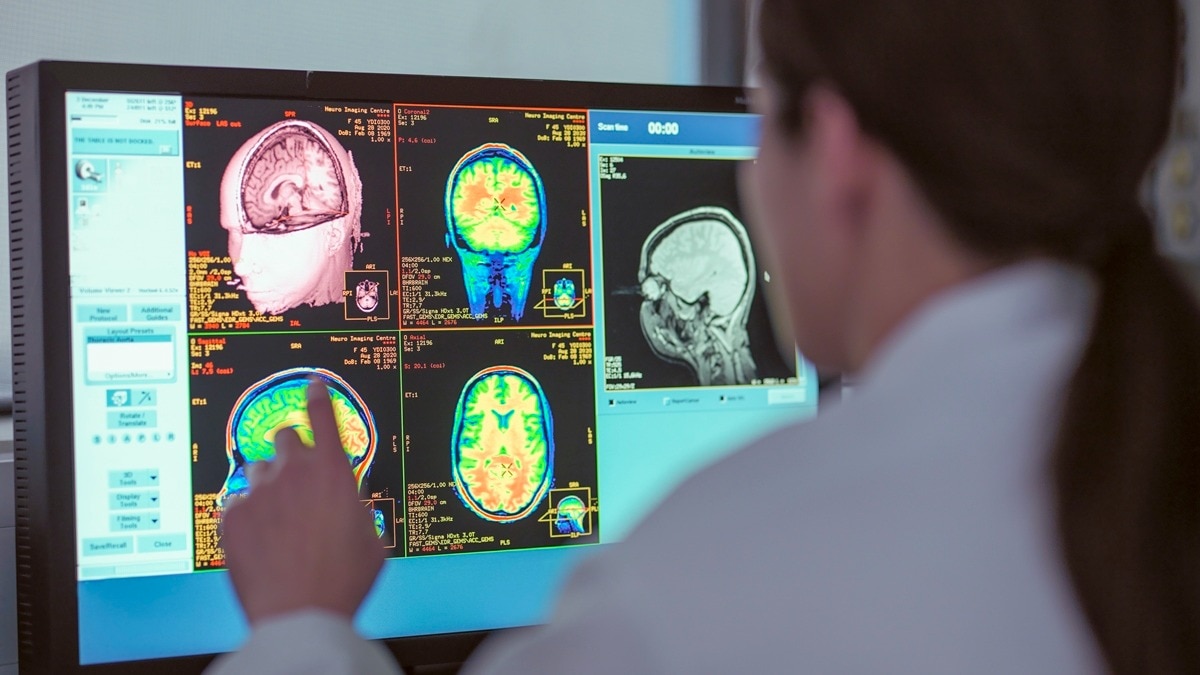
The hindbrain, meanwhile, handles some of the body's most basic but essential functions. It helps control breathing and heartbeat, regulates sleep and hunger, and controls muscles involved in facial movements, speaking and swallowing. The discovery challenges a long-held understanding of how the brain develops. (Photo: Getty)
Scientists had assumed that all these parts ultimately came from the same kind of early developing cell.
Researchers found that the front and back of the brain begin developing from two different groups of cells very early in an embryo's development. These two groups follow separate paths and do not merge into one another.
"It's the first time we've shown that the front of the brain arises from a totally different progenitor cell than the back of the brain," said Kyle Loh, a Stanford developmental biology researcher and senior author of the study.
The finding also helps explain a problem that has frustrated scientists for years: why it has been so difficult to grow human hindbrain cells in the laboratory.
Researchers had been trying to turn cells destined to become the front part of the brain into hindbrain cells. But the new findings suggest that these cells are fundamentally different from the beginning. The new research finding shows that the human brain consists of two ancient nervous systems. (Photo: Getty)
Using this new understanding, the Stanford team successfully produced working human hindbrain motor neurons in the laboratory from stem cells. These cells showed electrical activity and produced proteins characteristic of neurons involved in controlling facial and swallowing muscles.
The researchers then looked at species ranging from chickens and zebrafish to acorn worms and found evidence of the same two-part developmental pattern. This suggests that the split is extremely ancient.
The discovery could be particularly important for studying Amyotrophic lateral sclerosis (ALS) and spinal muscular atrophy (SMA) diseases in which certain brainstem neurons gradually stop working.
Scientists cannot easily obtain these cells from living patients, but growing them in the laboratory could provide a way to study what goes wrong and test potential treatments.
The researchers now want to investigate whether other parts of the nervous system, including the spinal cord, also have similarly ancient developmental origins.- EndsPublished By: Sibu Kumar TripathiPublished On: Sep 18, 2026 18:10 IST