Hungary Is Undoing Orbán’s Legacy—But Not His Trump Ties, Top Diplomat Says - Newsweek
As Hungary undergoes an extensive policy remodeling after 16 years under the leadership of former Prime Minister Viktor Orbán, a close ally of U.S. President Donald Trump, much focus has been on the new administration's efforts to uproot corruption, liberalize state institutions and rebuild ties with European allies.
This effort by Prime Minister Péter Magyar, who bested the longtime right-wing populist incumbent in an April election, has prompted a deluge of comparisons to a potential U.S. blueprint for a post-Trump era in the United States.
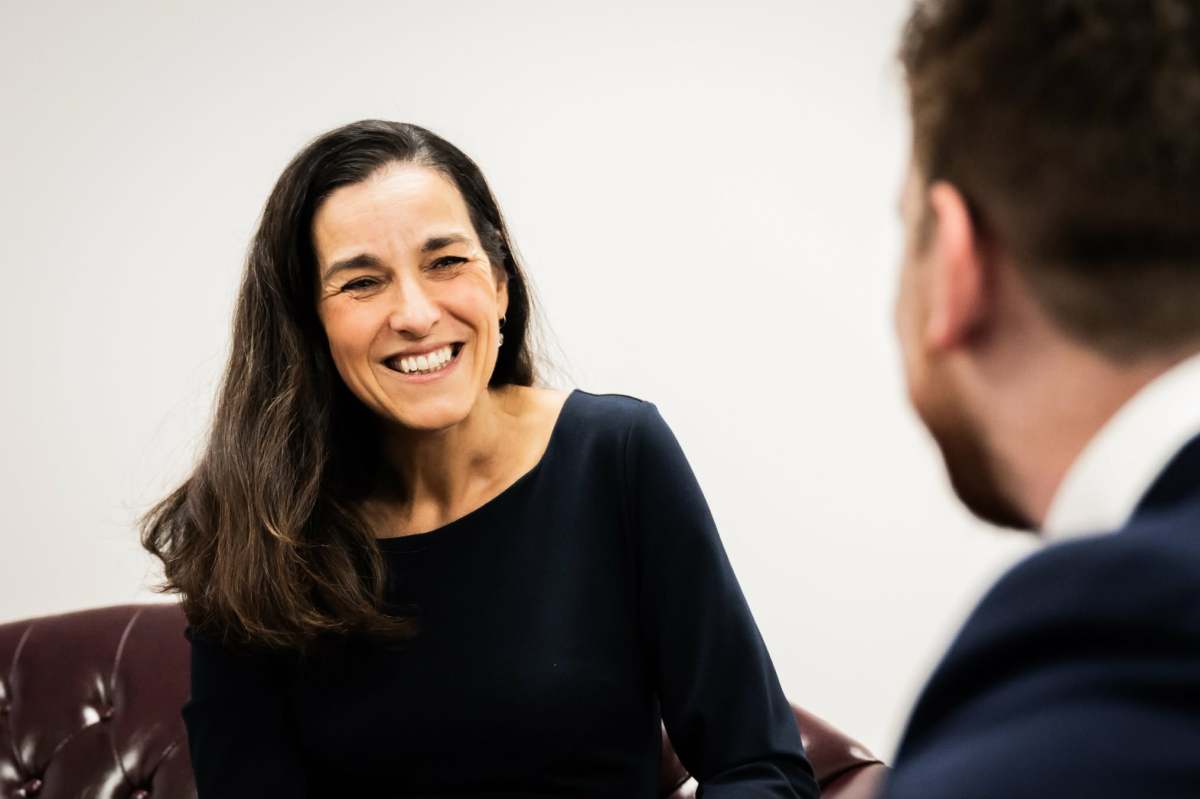
But as Hungarian Foreign Minister Anita Orbán—no relation to the former prime minister—told Newsweek, pursuing close ties with Trump would be one of several areas spared from the new government's major overhaul.
"The relationship between the two countries is solid," Anita Orbán said during an interview on the sidelines of the United Nations General Assembly in New York. "The main alliance, which provides the framework, is, of course, NATO. So, the new Hungarian government aims to have an intensive, solid partnership with the U.S. administration."
"We thankfully also inherited a couple of agreements or proposals or MOUs negotiated between the previous administration and the Trump administration," she added. "We are looking into all those, and we aim to progress with all those."
The comments came amid strained ties between Trump and a number of European countries which have been subject to frequent bouts of criticism from the White House.
Since assuming office for a second non-consecutive term last January, Trump has accelerated rhetoric targeting trans-Atlantic allies with accusations of contributing too little on defense, maintaining unfair economic policies and pursuing harmful stances on immigration and other social issues.
Until earlier this year, Viktor Orbán stood as an outlier who largely aligned with Trump's worldview. The former prime minister and his administration regularly charged the European Union with seeking a globalist, federalist agenda that would undermine Hungary's sovereignty and argued that European NATO members were prolonging the war in Ukraine launched by Russia, with which the former Hungarian administration cultivated strong ties.
The Trump administration openly threw its weight behind Viktor Orbán's re-election, with Vice President JD Vance traveling to Budapest to support his campaign days before the vote. After the outcome, Trump said he "wasn’t that involved" in the effort to keep his ally in office, though he referred to Viktor Orbán as "a good man."
Trump used the same description for Magyar, telling reporters at the time that "I think the new man's going to do a good job — he's a good man."
Now, Anita Orbán said there was reason to believe the two countries would continue to find common ground as "we aim to have the same institutional, solid relationship" enjoyed under the previous administration.
"In terms of values, we are aligned in quite many things," Anita Orbán said. "We are a conservative government, very much pro-faith. We are very strong on protecting children and families."
Another key area she highlighted was the ongoing effort to tackle illegal migration, one of Viktor Orbán's strongest areas of alignment with Trump.
"We will be strongly defending all borders and fences," Anita Orbán added. "So, the mandate of the electorate that the Tisza government received is overwhelming, it's resounding, but we need to be very clear where the mandate is continuity and where the mandate is change, even 180 degrees change."
The Magyar administration's efforts to strike the right balance on its transformation of Hungarian politics also intersects with a sensitive debate on the degree to which the EU and other institutions would exert influence within the Central European nation being welcomed back into the fold.
Anita Orbán said the strategy of rebuilding partnerships would not preclude voicing concerns when necessary.
"We are going to represent the national interest of Hungary toward every country and national interest how we define it, what is good for Hungary's security, stability for the Hungarian people, for the Hungarians companies," Anita Orbán explained. "And what we saw is that the previous Hungarian administration was pulling out from the natural alliances Hungary belongs to, and that's EU and NATO."
"And one of the flagship things that we announced is that we want to return to our alliances, which is EU and NATO as a trusted, constructive partner, which does not mean that we are not defending our national interests," she added. "It does not mean that we're not speaking up."
She argued that the issue of sovereignty had been misrepresented under the previous government, used to justify dealings with foreign entities that did not represent Hungarian interests and promote influence campaigns to bring like-minded parties to power in other European countries.
Under the new administration, Anita Orbán said the focus would be on promoting domestic initiatives, including economic rejuvenation, improved access to education, better healthcare programs and other areas.
Fulfilling such promises, she said, could also provide momentum to mainstream parties under fire elsewhere in Europe, where movements more closely aligned with agendas promoted by Trump and Viktor Orbán are gaining substantial ground.
"We had quite many years of experience with illiberal democracy and the experience of the Hungarian electorate was that there were words, words, and there was no delivery," Anita Orbán said.
She attributed Magyar's electoral success in his ability to channel grassroots issues, speak plainly and avoid his rival's tendency to constantly frame his rhetoric around a fight with an "external enemy."
"If we are successful, that can be for anybody," Anita Orbán said. "Anybody can vote right, left, mainstream, but anybody who would like to vote mainstream is looking now at the Hungarian story that we are really successful in creating, and bringing the country back in terms of an economic growth, in terms of a societal growth, and in terms of a stable foreign policy."
And yet, as Europe contends with a wave of internal political shifts trending away from mainstream parties, leaders are increasingly pointing to an outside threat, one posed by Russian President Vladimir Putin.
Tensions related to the Russia-Ukraine war are spilling over into NATO territory, with a number of European officials warning of a potential major escalation from Moscow amid a growing number of drone sightings and other suspicious incidents.
Trump has largely downplayed the concerns since a surprise visit by CIA chief John Ratcliffe to Moscow last month fanned further speculation over a looming Russian test of NATO's resolve. That the U.S. leader has repeatedly teased a withdrawal from NATO has only exacerbated European anxieties.
But Anita Orbán did not share these worries. Rather, she read Trump's comments as a means of pushing European allies to contribute more on security, a principal with which she agreed, noting Hungary has already exceeded the 2 percent defense budget baseline for NATO members.
"I would say that we need to adjust to the new realities and hear what the U.S. is saying and one of the consequences of this is really the burden shifting that European countries need to take a bigger stake in defending their own territory," Anita Orbán said. "It's not a concern at all that U.S. could withdraw."
But whereas the previous government largely avoided direct criticism of the Kremlin, the Magyar administration has repeatedly spoken out, an approach Anita Orbán described as fundamental to upholding the alliance's unity, strength and capacity for deterrence.
"We fully respect, of course, the sovereignty and territorial integrity of Ukraine within its internationally recognized borders and we do find the Russian activities alarming toward Europe," Anita Orbán said.
This extends to "hybrid" warfare as well, in which she said Hungary had garnered "a lot of experience just from the campaign of interference" of pro-Viktor Orbán campaigns that Magyar has attributed to Moscow.
Now, she asserted, "we do need to make sure that we are protecting our societies, protecting also the societies against disinformation and misinformation which has been widespread also in Hungary and protecting our borders."
At the same time, even after Hungary expelled 10 Russian diplomats earlier this month, she emphasized that "the diplomatic channel has to be open, and it is open" with Russia despite most other European powers aiming to isolate the Kremlin.
"Russia remains a supplier of energy to Hungary and remains an important regional player," Anita Orbán said. "So, of course, diplomatic channels have to be open."
Contact Newsweek editors on this story: Jason Lemon and Cristina Diciu.