
‘I can’t even save Rs 300 a month’: Why Delhi’s bus drivers are on strike - The Indian Express
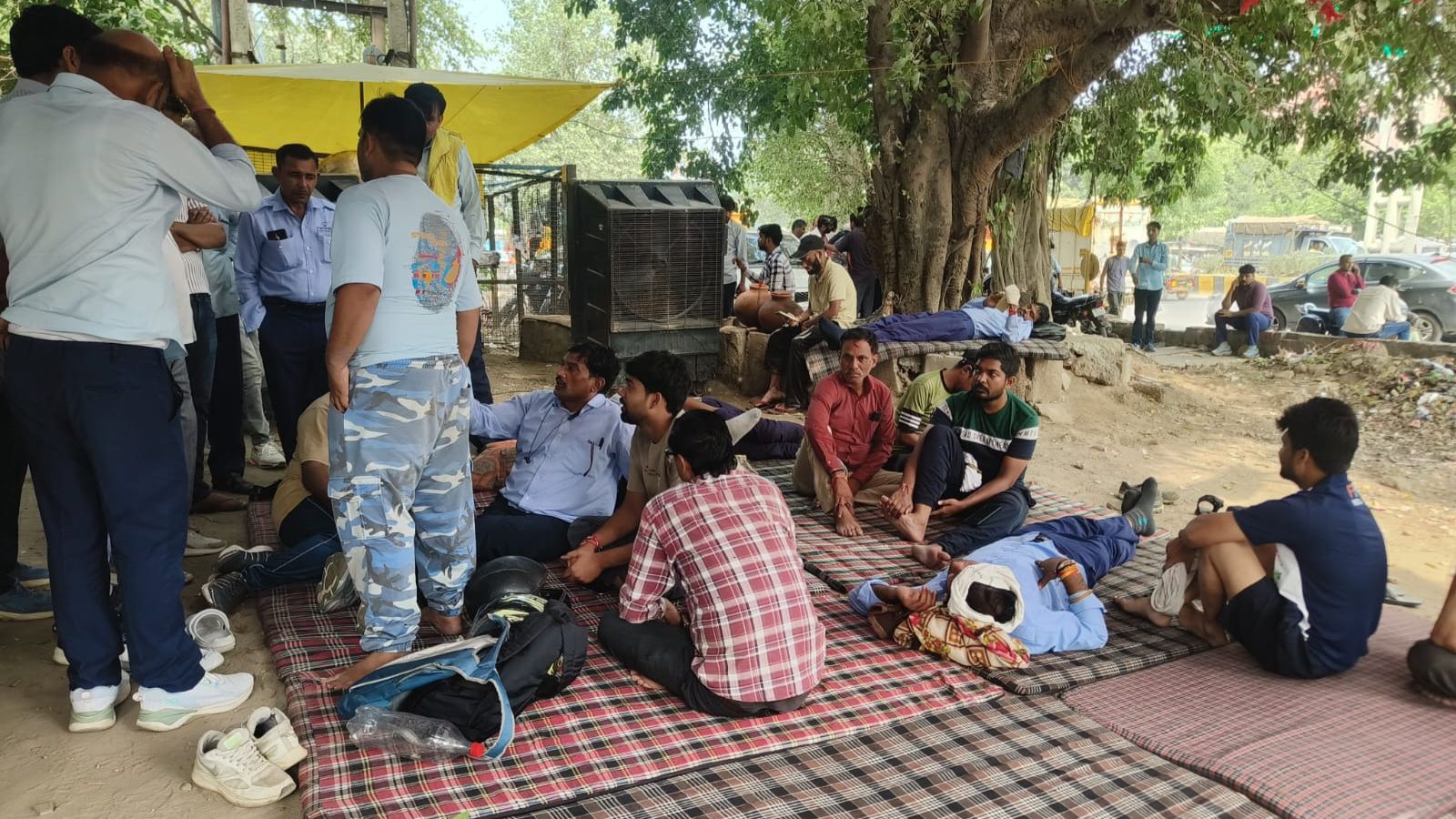
The Wazirpur bus depot in Northwest Delhi was unusually still on Thursday afternoon. All 150 DTC buses stood parked inside, while drivers sat outside on mattresses.
It was the third day of the Delhi Transport Corporation (DTC) bus drivers’ and conductors’ strike.
The city-wide strike, which began on Tuesday, has disrupted transport services across the Capital and left commuters scrambling for other options. But striking drivers and conductors said that their wages – Rs 862 per day – and service conditions have necessitated this move.
Read: https://t.co/rkgaNhf7WE pic.twitter.com/cDuanmbBF3
Joginder Singh, 36, said he has been working as a DTC driver for three years now and the stagnant wage has made raising his family a challenge.
“I need to support my two children, whose school fees are between Rs 2,500 and Rs 3,000 per month. Things are so difficult that even traveling to work everyday is a strain on my monthly expenses. I travel by bus from Jhajjar every day, which costs me Rs 80 — one-tenth of my pay,” he said.
He drives 105 km everyday, making three rounds between the Wazirpur and Nand Nagri terminals.
He said every month ends without savings. “I am currently asking friends to pay the EMI for my motorbike,” he said.
The scene was nearly identical at the GT Karnal depot, where 121 buses stood.
There, Ashu Panchal, 28, said he supplements his daily wage with taking up work on a gig-ride platform while riding his motorbike back home to Sonipat every day.
“I can’t even save Rs 300 a month. Every day, I spend Rs 200 on petrol on my bike to travel to work and back, and another Rs 100 on food. That leaves me with just about Rs 500 every day. My son is just two years old, and I worry about how I’ll raise him,” he said.
The DTC Karamchari Ekta Union, which has called for this strike, said the wage being paid to the drivers and conductors is the minimum wage fixed by the Delhi government which, they said, is typically meant for daily-wage labourers, factory workers or employees of small companies.
“The dearness allowance, revised every six months under rules, had not been increased in the last one-and-a-half years, and the basic increment, due every five years, was last implemented in 2019, and has been due since 2024,” said Lalit Chaudhary, president of the union.
The union’s main demands include a minimum daily wage of Rs 2,000 for equal work, payment for all government holidays, an annual bonus, and social security including a medical scheme.
On Wednesday, Transport Minister Pankaj Singh had said, “We have directed the private concessioners managing the DTC electric buses to sort the issues with drivers immediately.”
But the union claimed no government representatives have reached out to them. It said agencies operating DTC buses earn from the government on a per-kilometre basis but are bound only to pay the minimum wage, with no obligation to pay higher wages commensurate with drivers’ qualifications.
Devansh Mittal is a Correspondent at The Indian Express, based in the New Delhi City bureau. He reports on urban policy, civic governance, and infrastructure in the National Capital Region, with a growing focus on housing, land policy, transport, and the disruption economy and its social implications. Professional Background Education: He studied Political Science at Ashoka University. Core Beats: His reporting focuses on policy and governance in the National Capital Region, one of the largest urban agglomerations in the world. He covers housing and land policy, municipal governance, urban transport, and the interface between infrastructure, regulation, and everyday life in the city. Recent Notable Work His recent reporting includes in-depth examinations of urban policy and its on-ground consequences: An investigation into subvention-linked home loans that documented how homebuyers were drawn into under-construction projects through a “builder–bank” nexus, often leaving them financially exposed when delivery stalled. A detailed report on why Delhi’s land-pooling policy has remained stalled since 2007, tracing how fragmented land ownership, policy design flaws, and mistrust among stakeholders have kept one of the capital’s flagship urban reforms in limbo. A reported piece examining the collapse of an electric mobility startup and what it meant for women drivers dependent on the platform for livelihoods. Reporting Approach Devansh’s work combines on-ground reporting with analysis of government data, court records, and academic research. He regularly reports from neighbourhoods, government offices, and courtrooms to explain how decisions on housing, transport, and the disruption economy shape everyday life in the city. Contact X (Twitter): @devanshmittal_ Email: devansh.mittal@expressindia.com ... Read More

