I drove my overheating car for a few kilometres on the 401. Did I wreck the engine? - Toronto Star
Permanent damage is possible — and the initial service may have been entirely unnecessary.
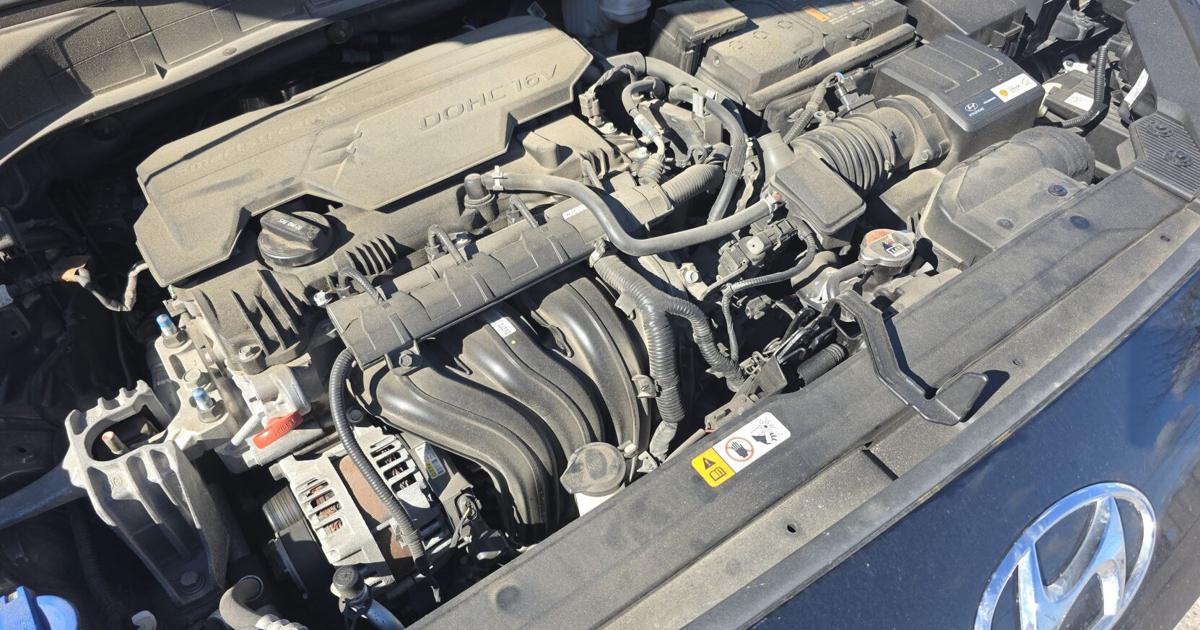
The engine bay of a 2019 Hyundai Kona with the non-turbo 2.0 litre engine. Visible just to the left of the warning sticker (lower centre) is the cap for the coolant reservoir. The radiator pressure cap is the round item diagonally right, beside the hood release lever. Other engines used in this model have a common cooling system cap.
I took my 2022 Hyundai Kona to get an oil change, and the lube shop suggested a radiator fluid flush, to which I agreed. I drove away after and made it maybe 2 or 3 kilometres before my car was overheating. I was on the 401 and had no safe place to pull over, so I did have to drive another kilometre or so with my engine overheating before I was able to exit. I then waited 45 minutes for the manager to arrive on site. He stated they did not fill my radiator and filled only my reservoir … and then later stated that maybe the cap just wasn’t placed on tight enough. Either way, should I be concerned about this damaging my engine? I am not going to get myself worked up, but I do worry my car may have damage that I cannot see just yet?
You don’t say which engine your Kona has, however only the base 2.0 litre non-turbo has both a reservoir and a separate radiator cap; the available 1.6 litre turbo and the 2.0 turbo “N” model have a surge tank with an integrated pressure cap. We’re going to assume from your recounting of the manager’s suggestion that the reservoir was filled and not the rad, that you have the far more common base engine.
We’re also going to assume that rather than using a flush machine (which exchanges new coolant with the old coolant in the engine and cooling system via teeing into one of the radiator hoses, usually the upper one), they drained your rad to change your coolant. It’s a common, accepted service procedure for most automakers. (There are pros and cons for both techniques.)
If, after draining the radiator, they then only filled the overflow tank and sent you on your way, there would be only a small quantity of coolant still left in your engine — not good. With either method, your car should never make it out of the service bay without the tech verifying that the coolant thermostat had opened and that any air in the system was bled out.
Seen to the right of this 2015 GMC Sierra HD pickup is a coolant flush machine. By Tee-ing into the upper radiator hose with adapters, this machine uses a built-in pump and reservoir to exchange fresh coolant with the used coolant coming out of the engine. While this greatly reduces the amount of air introduced to the cooling system, the technician would still need to ensure that air had been removed.
On the other hand, if the cooling system was filled/bled properly, and the radiator cap left loose or off, that’s a very different scenario, as there would still be a large quantity of coolant in your engine. It’s also highly unlikely that your car would have overheated in just a few minutes driving time as a consequence of that oversight …
Door Number Three is that it was filled but not bled properly; overheating is entirely possible in that case.
Without knowing which is true, there are several possibilities. When you say “overheated,” are we talking temperature gauge reading well into the hot zone, steam from under the hood, or both?
Steam from coolant loss is not just possible, it’s likely from a loose or missing rad cap. If there was coolant sprayed all over your engine, probably accompanied by steam and smell, but your gauge didn’t indicate abnormally hot while this was all occurring, engine damage is unlikely.
If the gauge indicated hot, accompanied by a volcano of coolant at engine shut-down, audible boiling, or steam whistling, but at no time did the engine develop a knocking or ticking, or have reduced power, and it starts, runs, and sounds normal now, it likely had enough coolant in it to survive its ordeal. There’s an asterisk to that supposition that I’ll note momentarily.
Whether or not the gauge indicated fully hot, if there was (or still is) a loss of power, noticeable engine noise, or if the engine cranks for longer than it did before when starting (especially cold), it has most likely been permanently damaged.
Seen in use on a 2009 Hyundai Santa Fe, this special funnel that has adapters that fits where the radiator pressure cap goes allows technicians to maintain a full coolant level while purging the air from the cooling system. If the system is opened for maintenance or repair, air can become trapped throughout, and it must be removed for proper operation.
No engine enjoys being overheated, but modern aluminum engines really don’t tolerate it well. Cylinder heads and engine blocks can warp, head gaskets fail and today’s low-tension piston rings can lose their ability to seal properly, especially if the cylinder walls were scored by heat-swollen pistons.
Assuming that all seems well now, keep an eye on your oil consumption for the next while, as that cylinder wall or piston ring damage could manifest in greatly increased oil burning. If you’re having to add several litres of oil between changes, your motor did not escape unscathed, and you’ll need to seek compensation.
A 2018 Hyundai Kona, simlar to the Reader’s 2021 model.
To add insult to injury, Hyundai’s recommended service interval for coolant in that model is 192,000 km or 10 years, so this may have been an unnecessary service to begin with.
Ask a Mechanic is written by Brian Early, a Red Seal-certified Automotive Service Technician. You can send your questions to wheels@thestar.ca. These answers are for informational purposes only. Please consult a certified mechanic before having any work done to your vehicle.