
I Watched Trump TV for a Day—This Is What I Learned - Newsweek
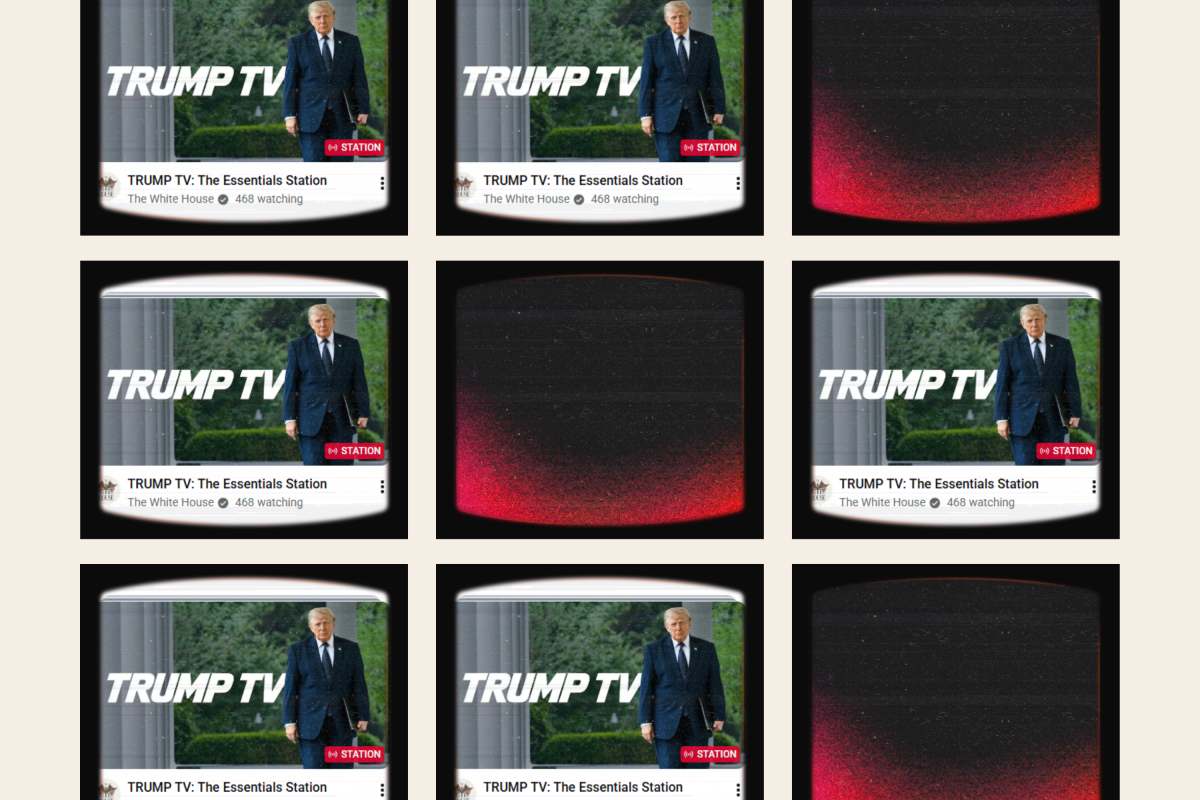
At 10:31 a.m. on Tuesday, President Donald Trump was addressing the United Nations General Assembly in New York. The White House and other broadcasters were carrying his remarks live.
Trump TV, the new 24-hour YouTube stream dedicated to the president and his administration, was showing a recording of the National Prayer Breakfast from February.
The channel eventually aired Trump’s U.N. speech shortly after midday, but the delay exposed an ambiguity at the heart of the White House’s new venture: Is Trump TV a live channel, an archive or an around-the-clock presidential highlight reel?
After spending much of the day watching it, I found something less polished than its branding suggests.
The White House describes Trump TV: The Essentials Station as a place to watch the administration’s "biggest moments," with "top videos, major remarks, and must-see highlights" streaming continuously and "updated in real time." White House digital strategist Kaelan Dorr has called it a livestream of the administration’s "greatest hits, unfiltered."
In practice, it functions more like a continuously shuffled White House playlist, mixing archived speeches, policy announcements, promotional films and appearances by administration officials. There are no anchors, interviews or reporters examining the claims being made. Often, there was little on screen to tell viewers when an event happened or why it was selected.
I tuned in at 5:34 a.m., partway through a press conference featuring Vice President JD Vance and Mehmet Oz discussing alleged fraud in federal health programs.
It was a substantive event. It was also several months old. With all due respect to Vance and Oz, I could see why it had been placed at 5:30 in the morning.
At 6:20 a.m., the feed moved to Trump’s 2025 commencement speech at the University of Alabama. By 6:48 a.m., he was on his ninth life lesson, of how many I was not sure, and I found myself searching YouTube to establish how much longer the speech had left.
That became a recurring feature of the experiment. Trump TV supplied the footage, but I often had to look elsewhere to understand what I was watching.
The stream moved abruptly through Trump inspecting giant White House flagpoles, meeting troops in Tokyo and greeting a DoorDash driver during an event promoting "no tax on tips." Then came first lady Melania Trump at the International Women of Courage Awards.
At one point, Trump appeared aboard Air Force One with a Gulf of America map behind him. Turning up the sound provided little immediate context. Some digging established that the footage came from the day he signed a proclamation recognizing Gulf of America Day.
If anything, the channel demonstrated how many presidential moments disappear into the news cycle after Trump says or does something else. A commencement speech, a policy event, a flagpole installation and a visual stunt had all become equally "essential."
At 9 a.m., I tuned in from a treadmill at the gym, admittedly a strange place to listen to a Trump rally.
During footage from Kentucky, the president said: "I wanna watch myself on television."
It was difficult to imagine a better slogan for Trump TV.
The channel launched amid an escalating confrontation between the administration and the press.
Trump barred CNN, MS NOW and Politico from the White House after objecting to their reporting. The organizations sued, alleging that their exclusion violated the First Amendment and their due-process rights. The White House said the First Amendment protected the outlets’ right to publish but did not entitle them to a hard pass, briefing-room seat or place in the press pool.
ABC, CBS, CNN, Fox News and NBC then suspended pooled television coverage of presidential events. The networks said the public had "a vital interest in receiving accurate, independent information about its government" and that an administration should not restrict an organization because it objects to its reporting.
Against that background, Trump TV is more significant than an ordinary YouTube playlist. It gives the administration a direct pipeline to viewers while access for some independent news organizations is being restricted.
That does not make the footage worthless. Full recordings are useful primary-source material and preserve exchanges that might otherwise be reduced to short clips. But "unfiltered" is not the same as unselected. The White House still determines which videos appear, how they are ordered and when viewers see them.
Shortly before 10 a.m., the stream moved from Melania Trump discussing artificial intelligence to Donald Trump speaking at the National Prayer Breakfast.
At 10:17 a.m., the president had arrived at the U.N. Trump TV stayed with the old recording.
At 11:10 a.m., I discovered that the original prayer-breakfast broadcast lasted about 90 minutes. That explained its continued presence on screen, but not why a channel promising major remarks "updated in real time" had declined to interrupt it for one of the day’s biggest presidential appearances.
I emailed the White House to ask why Trump TV was not showing the president live.
A White House official said that the channel’s purpose was to replay what the administration regards as the president’s "greatest hits," including moments it believes the media intentionally fails to cover fairly. The official said the U.N. address would air later that day and encouraged viewers to tune in.
That answer clarified the editorial purpose. Trump TV was not necessarily intended to abandon its playlist whenever the president appeared live. It was closer to a curated showcase of the moments the White House wanted audiences to see again.
But it also exposed a tension in its branding. A "greatest hits" channel can reasonably operate on delay. A service promising material "updated in real time" and telling viewers to "stay up to date" creates a different expectation.
At 11:27 a.m., the prayer breakfast gave way to a slickly produced montage of Trump’s first six weeks in office. That was followed by an economic presentation from August 2025 examining Bureau of Labor Statistics data, then a September 2025 Vance event promoting tax cuts.
Trump TV eventually aired the U.N. address shortly after midday, as promised.
After more than six hours, I had seen speeches, rallies, flagpoles, a food delivery, a prayer breakfast and political promotion. What I had not seen was a schedule or much explanation of why those moments were essential that morning.
Trump TV generated significant online discussion, but viewership numbers reported by multiple outlets appeared relatively modest compared with established news channels or major presidential addresses. As a spectator, I saw the stream attract several thousand viewers during its launch window before declining substantially afterward. Still, after watching the stream, it was difficult to conclude that Trump TV currently represents a transformational media product. At this stage, it resembles a repackaging of content the White House already produces rather than a fundamentally new form of communication.
The administration has not detailed long-term programming plans, staffing arrangements or whether additional original content is coming.
When I began watching before dawn, I expected Trump TV to reveal which of the president’s moments the White House regarded as essential. By midday, I had my answer.
The essential moments were not necessarily the newest or even the ones happening live. They were the moments the White House wanted viewers to see, in the order the White House wanted to show them.
Newsweek’s reporters and editors used Martyn, our AI assistant, to produce this story. Learn more about Martyn here.

