IEC warns parties could forfeit council seats over candidate shortages - IOL
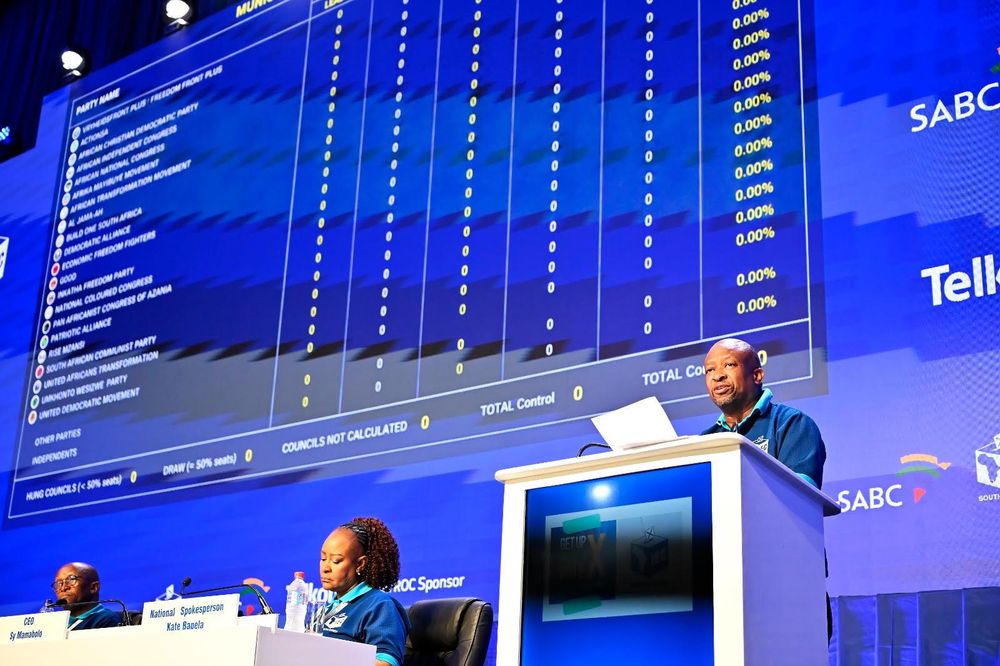
The Electoral Commission is working through the final processes to declare councillors elected and pave the way for the inaugural sittings of municipal councils following the 2026 Local Government Elections.
Political parties that fail to provide enough candidates to fill the proportional representation seats they won in the 2026 Local Government Elections risk forfeiting those positions if the shortage prevents their councils from forming a quorum.
The Electoral Commission of South Africa (IEC) said it had notified affected parties of the shortfalls and given them until 5pm November 11 to submit additional names before the final list of elected councillors is published in the Government Gazette.
However, the commission made it clear that the process could not be used to change existing candidate nominations.
"The opportunity was for parties to provide candidates to make up the shortfall and it was not an opportunity for parties to change their lists or replace candidates," the IEC said.
Parties may only change their lists or replace nominated candidates a day after the date of the first council sitting, it said.
The commission must also resolve cases involving candidates who qualify for more than one seat.
Political parties must indicate which position such candidates should occupy, while independent candidates facing the same situation must also make an election.
The consequences of failing to do so could extend to the removal of candidates from the final lists.
"If a party or independent candidate fails to exercise an election, the name of the candidate must be deleted from the list," the commission said.
Where the affected candidate was due to occupy a ward seat, the deletion would result in a by-election.
The IEC will gazette the final names of elected councillors once both outstanding processes have been concluded.
The publication of the councillors' names will pave the way for the inaugural sittings of councils.
Under the Local Government: Municipal Structures Act, municipal managers are required to convene the first meeting of their respective councils within 14 days of councillors being declared elected.
The election results were announced on November 8, setting in motion the remaining administrative processes to conclude the electoral cycle.
Four ward contests were determined by lot after candidates received equal numbers of votes.
The Local Government: Municipal Structures Act provides for this procedure where two or more ward candidates receive the same number of votes.
The affected contests were Ward 7 in Mnquma Municipality in the Eastern Cape, Ward 14 in Maluti-a-Phofung Municipality in the Free State, Ward 5 in Ba-Phalaborwa Municipality in Limpopo and Ward 17 in Steve Tshwete Municipality in Mpumalanga.
The constitution of district councils is another outstanding process in concluding the 2026 elections.
Of the 10,526 seats available, 8,825 are local council seats, comprising 4,485 ward seats and 4, 340 proportional representation seats.
The remaining 1,701 positions are district council seats, consisting of 707 directly elected and 994 indirectly elected councillors.
The IEC said 707 district council seats, representing 40% of the total, had already been filled through the district proportional representation ballot.
The remaining 994 seats will be filled through elections in which local councillors choose representatives from among themselves to serve on district councils.
The commission will manage this process, it said.
"The Electoral Commission urges elected representatives, and political parties to closely follow the unfolding final processes and adhere to the prescribed deadlines to ensure the timely constitution of the new municipal councils."