IFP, ANC trade barbs over Mbizana statue and service delivery
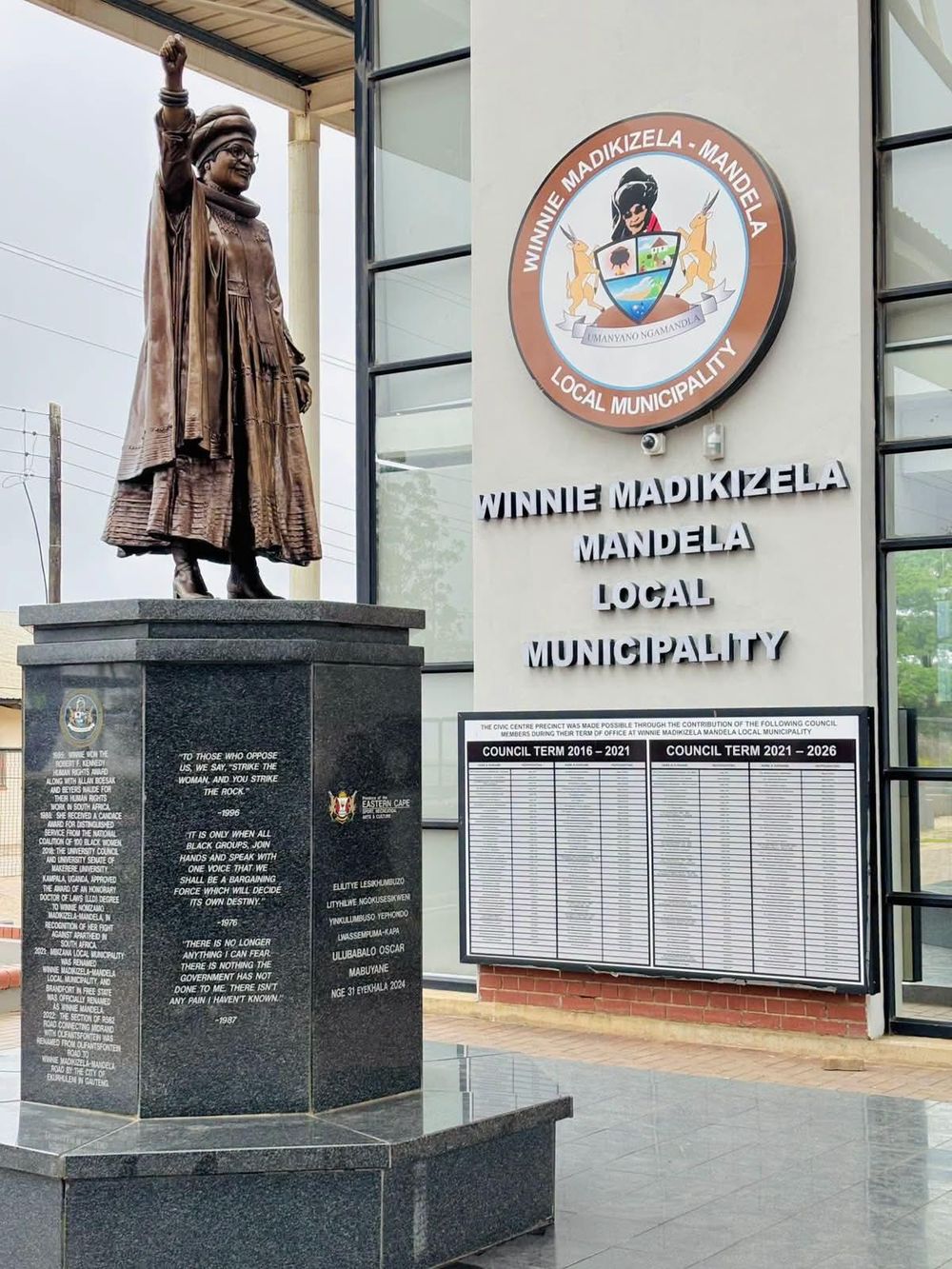
The statue of late struggle icon Winnie Madikizela-Mandela in Mbizana, Eastern Cape, is at the centre of a political war of words between the ANC, IFP and traditional leaders over spending priorities.
Barely a week after the Inkatha Freedom Party (IFP) sought to establish a political foothold in territory long associated with the African National Congress (ANC), the governing party put its historical ties to Mbizana in the spotlight with the unveiling of a statue honouring liberation icon Winnie Madikizela-Mandela.
The sequence of events has brought competing political narratives into sharp focus in one of the Eastern Cape’s most historically significant political landscapes.
The IFP held its Heritage Month commemoration at Luphilisweni in Mbizana last week, using the occasion to criticise the municipality’s infrastructure and service-delivery record. The party’s event was held on September 25.
Days later, the unveiling of the Madikizela-Mandela statue gave the ANC an opportunity to foreground its historical association with the area.
IFP president Velenkosini Hlabisa said it was shameful that a town associated with some of South Africa’s most celebrated liberation figures remained plagued by deteriorating roads and infrastructure.
Hlabisa argued that Mbizana, the birthplace of political giants including Madikizela-Mandela and Oliver Reginald Tambo, should reflect the stature of the figures whose legacies are deeply embedded in the area.
He questioned how residents, businesses and prospective investors could be expected to have confidence in a municipality where roads were deteriorating and the urban landscape was visibly in disrepair.
Mbizana occupies an important place in South Africa’s political history, having produced Madikizela-Mandela and Tambo, whose legacies remain prominent in the country’s political discourse.
Inkatha Freedom Party President Velenkosini Hlabisa during the party's Heritage Day in Mbizana event last week.
The IFP’s intervention comes as parties campaign ahead of the November 4 local government elections, with established political loyalties in parts of the Eastern Cape facing renewed contestation.
At the same time, the unveiling of the Madikizela-Mandela statue placed the ANC’s historical connection to the area firmly back in the public spotlight.
Human Settlements Minister Thembi Simelane delivered the Winnie Madikizela-Mandela Legacy Commemorative Lecture and led the official unveiling of the statue on September 29. The event was attended by representatives of government, traditional leaders, the Madikizela-Mandela family and community members.
Simelane placed women’s leadership at the centre of her address.
“You find peace in places where women lead,” she said.
She said the occasion was particularly significant because the municipality was led by a woman mayor, arguing that political infighting under male leadership had, in some instances, descended into violence and division, undermining institutions and impeding service delivery.
“Here we are celebrating the unveiling of our own comrade in peace and unity because the leader of this municipality, the mayor, is a woman,” Simelane said.
“We always experience infightings where men lead that result in shootings, deaths and grudges dividing institutions and also hinder or sabotage service delivery. It is for this reason we say South Africa should take women leadership seriously.”
Her remarks placed the symbolism of Madikizela-Mandela’s statue within a broader argument about the role of women in political and public leadership.
But the political contestation did not end with the competing narratives around infrastructure and liberation history.
At the IFP’s Mbizana gathering, Inkosi Njingalwazi Sigcau turned his attention to the relationship between traditional leadership and the Eastern Cape government under Premier Oscar Mabuyane.
Sigcau criticised what he described as the marginalisation and undermining of traditional leaders, saying the treatment of amakhosi in the province had left some questioning whether traditional leadership would receive greater recognition and institutional respect elsewhere.
He also urged communities to use their electoral power to support political parties prepared to address their concerns.
Days later, the Alfred Nzo District Municipality convened its two-day 2026 District Traditional Leadership Summit at Mzamba from Wednesday to Thursday. The summit brought traditional leaders, municipalities, government departments and other stakeholders together under the theme: “Strengthening Partnership Between Local Government and Traditional Leadership for Inclusive Rural Development, Social Cohesion and Improved Service Delivery.”
Significantly, Sigcau also attended the summit.
Rather than retreating from his position, he continued to articulate his concerns about the treatment and institutional standing of amakhosi.
The summit, however, provided the provincial government and municipalities with a platform to emphasise partnership between traditional leadership and local government, a theme that contrasted with the sharper political rhetoric emerging from the IFP’s Bizana gathering.
The statue has meanwhile become a subject of controversy on social media, with some residents questioning the expenditure involved in its construction and arguing that municipal resources could instead have been directed towards pressing service-delivery problems, including potholes and deteriorating infrastructure.
A figure of R15 million has been cited in the political criticism surrounding the project. However, Mbizana Mayor Daniswa Mafumbatha disputed that figure, saying the municipality put the cost of the statue at R1.1 million.
“The Statue of our mama Winnie is indeed part of the leadership heritage of Mbizana. We renamed our municipality after her remarkable life and contribution in our country."Having her symbol in Mbizana is a source of pride and fulfilment that has no monetary value to us. We remain satisfied with what has been done, we are determined to continue doing similar historical projects when the community and our Municipal Council resolves as such. However, the total cost of the statue is only R1.1m the amount of R15m is not known to the municipality.”
IFP Mbizana mayoral candidate Dr Ntsizakalo Ngalo described the unveiling as a public-relations exercise, arguing that the municipality’s deteriorating infrastructure should have taken precedence.
Ngalo said the community could honour Madikizela-Mandela’s legacy without spending what he alleged were millions of rands on a statue while basic municipal infrastructure remained in poor condition.
“We love Mama Winnie through her struggle in the liberation of the country and naming that municipality after her alone is a big thing that we highly appreciate as AmaMpondo rather than to waste money in a town engulfed with potholes, as some are even right in front of the municipality’s building where the mayor goes on a daily basis,” Ngalo said.
He further characterised the traditional leadership summit as a political response to the IFP’s growing presence in the area, alleging that the ANC was becoming increasingly concerned about the party’s campaign.
“Once we take over, these meetings that are being held in Mzamba will come to an end,” Ngalo said.
Ngalo, who also served as an adviser to the late Mpondo King Zanuzuko Sigcau, said money allegedly spent on constructing the statue would have been better directed towards addressing the chronic water crisis in Mbhongweni rural village, where Madikizela-Mandela was born and raised.
He said residents in the area were still forced, in some instances, to share water sources with livestock, exposing vulnerable communities to health risks, while the local clinic remained dysfunctional and electricity supply was frequently interrupted.
Concerns over the area’s living conditions were also raised by ANC leaders during Madikizela-Mandela’s funeral, when poor road conditions made it difficult for vehicles to reach the community.
The political exchange over the statue and service delivery adds another layer to the contest for influence in an area where liberation history, traditional leadership and local government remain closely intertwined.